
This post contains affiliate links. If you make a purchase, I may earn a commission.
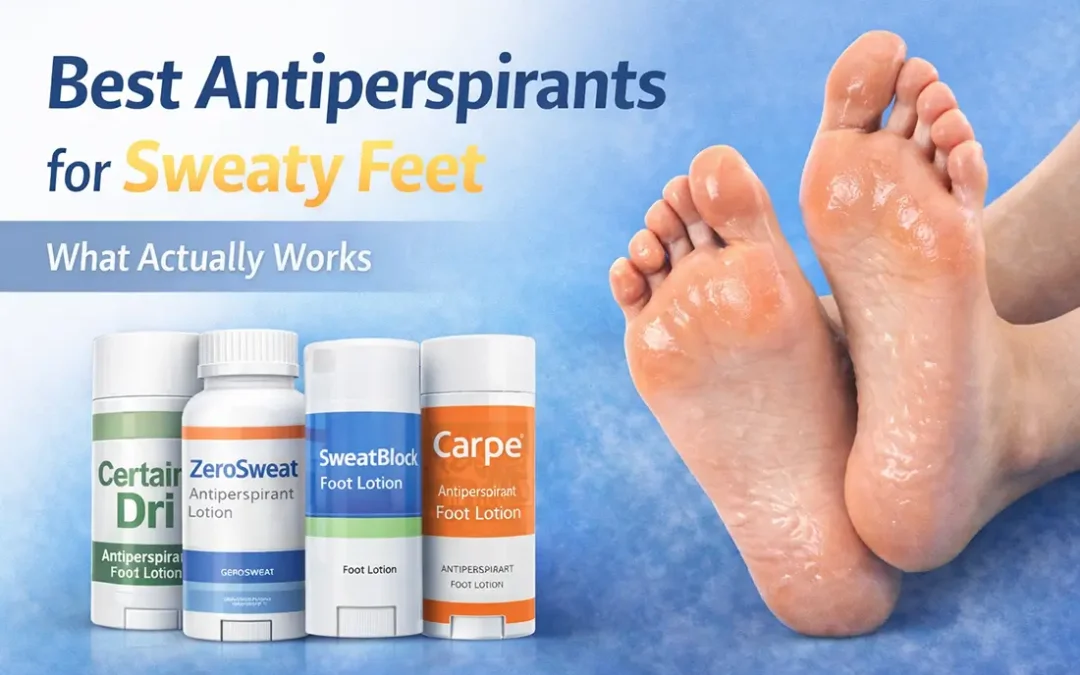
Sweaty feet aren’t just uncomfortable — they can lead to odor, fungal infections, ruined shoes, and constant frustration. If regular foot powders and deodorants haven’t worked for you, it’s likely because you’re using the wrong type of product.
Antiperspirants, not deodorants, are what actually stop sweat at the source.
In this guide, I’ll break down the best antiperspirants for sweaty feet, explain how they work, and help you choose the right option based on how severe your foot sweating is.
| Product | Best For | Strength | Pros | Cons |
|---|---|---|---|---|
| Certain Dri Antiperspirant Foot Lotion | Severe Foot Sweating | Very Strong | Clinical-level sweat reduction, long-lasting | May irritate sensitive skin |
| ZeroSweat Antiperspirant Lotion | Sensitive Skin | Strong | Gentler formula, good sweat control | Less effective for extreme sweating |
| SweatBlock Foot Lotion | Daily Foot Sweat Management | Moderate to Strong | Easy to apply, dependable daily control | May require reapplication |
| Carpe Foot Lotion | Mild Sweating & Comfort | Moderate | Skin-friendly, comfortable for everyday use | Not ideal for heavy sweating |
How Antiperspirants Stop Foot Sweat (And Why Powders Fail)
Foot antiperspirants work by using aluminum salts to temporarily block sweat ducts. When applied correctly, they:
-
Reduce sweat output at the source
-
Keep feet drier for longer periods
-
Help prevent odor and fungal growth
Powders and sprays only absorb moisture after sweating starts. Antiperspirants stop the problem before it begins. This doesn't mean powders can't be useful, but using a powder alone will not provide the sweat reduction you're looking for.
👉 If you’re dealing with recurring odor, also see:
Remedy for Foot Smell: How to Get Rid of Smelly Feet for Good
1. Certain Dri Antiperspirant Foot Lotion
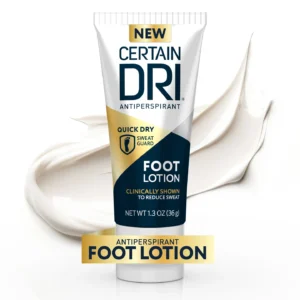
Best Overall for Sweaty Feet
Certain Dri is one of the most well-known clinical-strength antiperspirant brands — and their foot lotion delivers strong results at an affordable price.
Pros
-
Clinical-strength aluminum chloride
-
Effective for moderate to heavy sweating
-
Widely available and affordable
Cons
-
Can cause irritation if overused
-
Not ideal for very sensitive skin
Best for: People whose feet sweat through socks daily but don’t want prescription treatment.
How to use: Apply at night to clean, dry feet. Avoid morning application.
2. ZeroSweat Antiperspirant Lotion
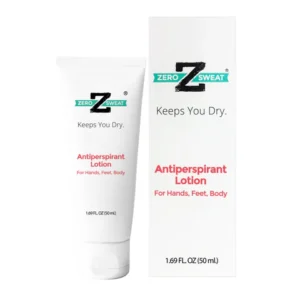
Best for Severe Foot Sweating
ZeroSweat is one of the strongest non-prescription antiperspirants available and is often used by people with hyperhidrosis.
Pros
-
Extremely effective for heavy sweating
-
Long-lasting results
-
Works even in hot environments
Cons
-
Higher chance of irritation
-
Requires careful application
Best for: Severe sweating or feet that soak shoes within hours.
👉 If this sounds like you, read:
How to Tell If You Have Hyperhidrosis
3. SweatBlock Foot Lotion
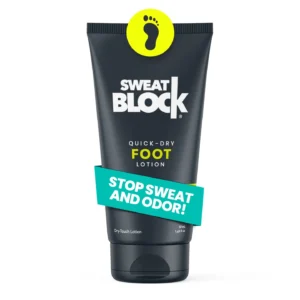
Best for Sensitive Skin
SweatBlock offers a gentler formula that balances sweat reduction with skin comfort.
Pros
-
Lower irritation risk
-
Good balance of effectiveness and comfort
-
Pleasant texture
Cons
-
May not fully stop heavy sweating
-
Requires consistent use
Best for: People who’ve experienced burning or redness from stronger antiperspirants.
4. Carpe Foot Lotion
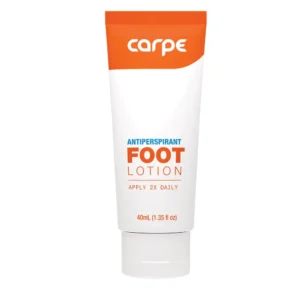
Best for Daily Maintenance & Mild Sweating
Carpe focuses on everyday sweat control rather than clinical-level treatment.
Pros
-
Non-greasy
-
Gentle formula
-
Easy daily use
Cons
-
Not strong enough for severe sweating
-
Requires daily reapplication
Best for: Mild sweating or maintenance after stronger treatments.
How to Apply Foot Antiperspirant Correctly (This Matters)
Most people fail with antiperspirants because of how they apply them.
Correct Method
1. Wash and fully dry feet
2. Apply at night, not in the morning
3. Use a thin layer — more is not better
4. Let dry before socks or bed
5. Wash off in the morning
👉 For a deeper breakdown, see:
How to Apply Antiperspirant Properly
Common Mistakes That Make Foot Antiperspirants Fail
-
Applying to damp skin
-
Using too much product
-
Expecting instant results
-
Switching products too quickly
Antiperspirants often take 3–7 nights to reach full effectiveness.
📌 Understanding the differences between clinical strength vs prescription options can help you decide what to try next if foot sweating persists.
What If Antiperspirants Don’t Work?
If even strong antiperspirants fail, you may need to explore medical-grade solutions:
-
Iontophoresis
-
Prescription antiperspirants
-
Dermatologist-guided treatments
👉 Start here:
Iontophoresis for Sweaty Hands and Feet: Does It Work?
Frequently Asked Questions
Can antiperspirants cause foot irritation?
Yes — especially aluminum chloride formulas. Reduce frequency or switch to gentler options if irritation occurs.
Do foot antiperspirants help with odor?
Indirectly, yes. Less sweat = fewer odor-causing bacteria.
How long do results last?
Anywhere from 24 hours to several days depending on the product and severity.
In some cases, foot antiperspirants fail due to skin thickness or gland activity — this breakdown further explains why antiperspirants may not be enough for some people.
Which Antiperspirant Is Best?
-
Most people: ZeroSweat
-
Severe sweating: Certain Dri
-
Sensitive skin: SweatBlock
-
Mild sweating: Carpe
Start with the least aggressive option that matches your symptoms, and work up only if needed.
If you truly want to enhance the effectiveness, use these in combination with a good pair of moisture-wicking socks and some breathable shoes! Attacking foot sweat from all three angles will make a very significant difference in your comfort level.