
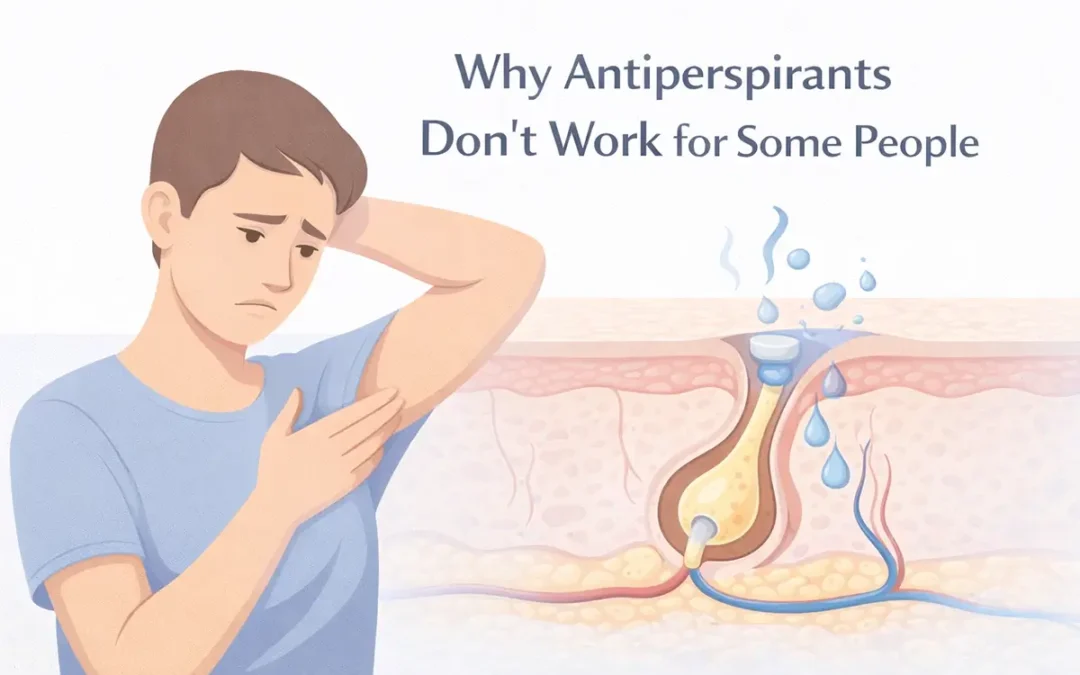
If you’ve tried multiple antiperspirants and still deal with embarrassing sweat, you’re not alone — and you’re not doing anything “wrong.”
For many people, antiperspirants work exactly as intended. For others, they seem completely ineffective, no matter the brand, strength, or price. That disconnect can be frustrating, confusing, and even discouraging.
The truth is: antiperspirants fail for very specific reasons. Once you understand why they’re not working for you, it becomes much easier to find a solution that actually does.
This guide answers the question "Why don't antiperspirants work for me?" and breaks down the most common reasons.
How Antiperspirants Are Supposed to Work
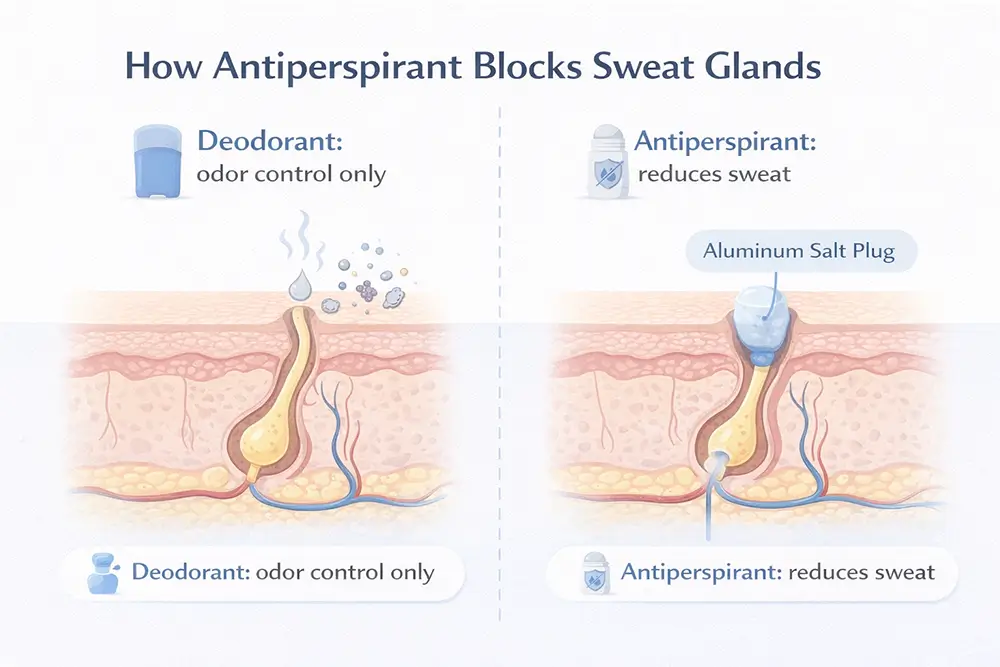
Antiperspirants reduce sweating by temporarily blocking sweat ducts.
Most antiperspirants contain aluminum salts, which dissolve on the skin and form a gel-like plug inside the sweat duct. This plug prevents sweat from reaching the surface of the skin. Over time, the body naturally sheds the plug, which is why antiperspirants need to be reapplied regularly.
For this process to work properly:
-
The skin needs to be dry
-
The product needs time to absorb
-
The aluminum concentration must be strong enough
When any of those factors are off, sweat reduction drops dramatically. With that information in mind, let's go into more detail on why antiperspirants may not be working for you.
7 Common Reasons Antiperspirants Don’t Work
1. You’re Applying It at the Wrong Time
This is the single most common reason antiperspirants fail.
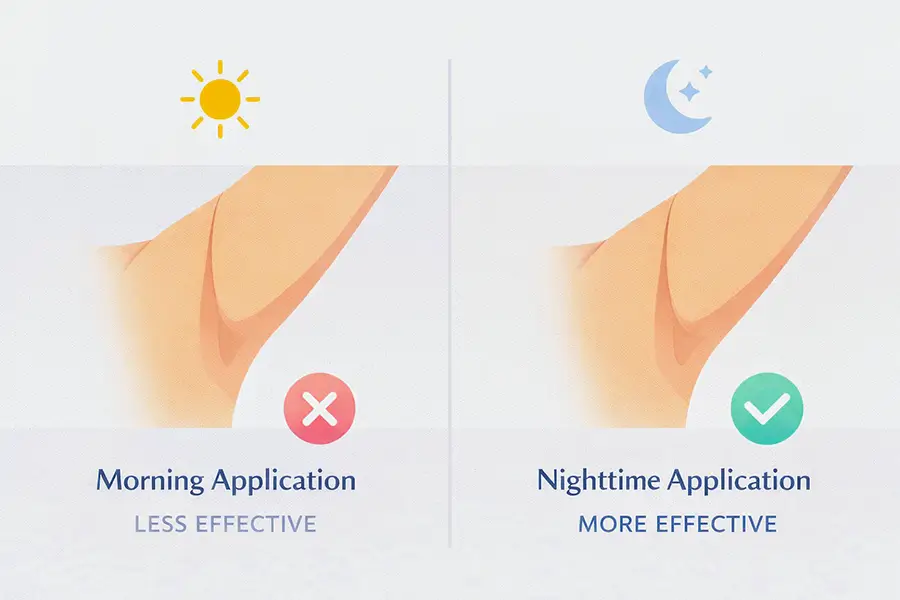
Antiperspirants work best when applied at night, not in the morning. At night, sweat glands are less active, allowing the aluminum salts to form a more effective plug.
Morning application often fails because:
-
Sweat pushes the product out of the ducts before it has a chance to set in
-
The skin is damp which dilutes the product and moves it away from the skin
-
There’s not enough absorption time
If you’re applying antiperspirant right before leaving the house, you’re likely sabotaging its effectiveness.
2. You’re Using Deodorant Instead of Antiperspirant
This is an easy mistake — and a costly one.
Deodorant controls odor. It does not reduce sweat.
Many products marketed as “strong deodorants” or “clinical deodorants” don’t actually contain sweat-blocking ingredients. If sweating is your main issue, deodorant alone will never solve it.
This confusion is especially common for people dealing with hyperhidrosis, where sweat production is the core problem.
⚠️ Many people unknowingly use deodorant when they need sweat control — this post breaks down the difference between deodorant and antiperspirant and explains why that matters.
3. You May Have Hyperhidrosis (Not Just Heavy Sweating)
If you sweat:
-
Frequently
-
Symmetrically (both sides)
-
Regardless of temperature or activity
-
Enough to interfere with daily life
…you may be dealing with hyperhidrosis, a medical condition characterized by overactive sweat glands.
For people with hyperhidrosis:
-
Standard antiperspirants are often too weak
-
Sweat production overwhelms the aluminum plug
-
Results are inconsistent or nonexistent
This doesn’t mean antiperspirants can’t work — but it does mean stronger or targeted options are usually required.
👉 If sweating happens regardless of temperature or activity, it may be worth learning the signs and symptoms of hyperhidrosis rather than assuming antiperspirants are failing.
4. The Product Isn’t Strong Enough for Your Sweat Level
Not all antiperspirants are created equal.
Many over-the-counter products contain relatively low aluminum concentrations designed for mild to moderate sweating. For people with heavy sweating, these products simply don’t provide enough blockage.
In these cases, people often assume:
“Antiperspirants don’t work for me.”
When in reality, the strength is the issue — not the method.
Clinical-strength or prescription antiperspirants are often the next logical step.
5. Your Skin Is Too Wet or Irritated
Antiperspirants need dry, intact skin to work properly.
They often fail when:
-
Applied immediately after showering
-
Applied to sweaty skin
-
Used on freshly shaved or irritated areas
Moisture dilutes the product and prevents proper plug formation. Irritated skin can also trigger more sweating, making the problem worse.
Ironically, applying more product in these situations usually reduces effectiveness, not increases it.
💡 Many antiperspirants fail simply because they aren’t used properly — following a clear guide on how to apply antiperspirant correctly can dramatically improve results.
6. You’re Expecting Immediate Results
Antiperspirants are not instant fixes.
Many people give up after:
-
One or two applications
-
One sweaty day
-
One disappointing experience
In reality, many clinical antiperspirants require:
-
Several consecutive nightly applications
-
3–7 days to reach full effectiveness
Sweat reduction often improves gradually. Expecting overnight results is a common reason people abandon products that would have worked with patience.
7. You’re Using the Wrong Product for the Wrong Body Area
Sweat glands behave differently depending on the body area.
For example:
-
Palms and soles have thicker skin
-
Facial skin is more sensitive
-
Underarms respond differently than feet
A product that works well for underarms may fail completely on hands or feet. This is why body-specific antiperspirants often outperform general-use products.
If you’re using a single product everywhere and seeing mixed results, the issue may be product mismatch, not failure. For example, someone with palmar sweating may need a dedicated antiperspirant for sweaty hands, not a standard underarm formula. Similarly, foot sweating often requires a stronger formulation — these antiperspirants for sweaty feet are designed specifically for thicker skin.
Signs You May Need More Than Standard Antiperspirant
You may need stronger or specialized treatment if:
-
Sweat soaks through clothing regularly
-
You avoid social or professional situations
-
You’ve tried multiple antiperspirants correctly with no success
-
Sweating affects your hands, feet, or face significantly
These signs don’t mean something is “wrong” — they simply indicate that standard solutions may not be sufficient.
👉 If standard products aren’t helping, understanding the difference between clinical strength vs prescription antiperspirant can clarify what to try next.
What to Try If Regular Antiperspirants Don’t Work
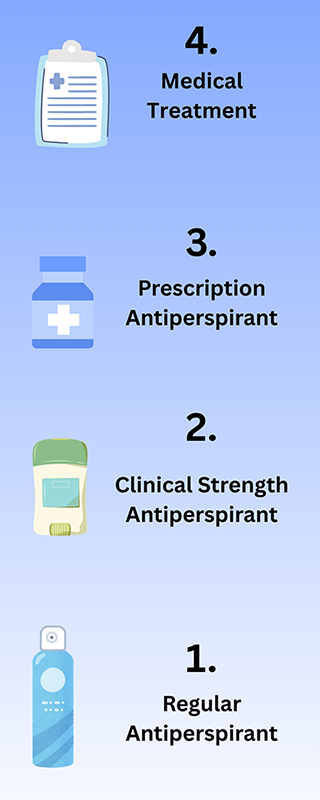
1. Upgrade to Clinical Strength Antiperspirants
Higher aluminum concentrations designed for heavy sweating.
2. Use Body-Specific Products
Hands, feet, and face often require specialized solutions.
3. Consider Prescription Antiperspirants
These offer even stronger formulations for persistent cases.
4. Explore Medical or Device-Based Options
Treatments like iontophoresis for sweaty hands and feet or dermatologist-guided plans may be appropriate for severe cases.
The key is progression, not jumping straight to extreme solutions.
Common Myths About Antiperspirants Not Working
“My body is immune to antiperspirants.”
No evidence supports this. Ineffectiveness is almost always due to strength, usage, or condition-related factors.
“If I sweat more, it means it’s detoxing.”
Sweat is not a detox pathway. Increased sweating usually means increased gland activity.
“Aluminum is dangerous.”
Major health organizations have found no conclusive evidence linking topical aluminum antiperspirants to serious health risks when used as directed.
When to See a Doctor About Excessive Sweating
You may want to speak with a doctor if:
-
Sweating interferes with daily life
-
Over-the-counter options consistently fail
-
You suspect hyperhidrosis
-
Skin irritation becomes severe
A doctor can help confirm whether your sweating is primary hyperhidrosis or related to another condition — and guide appropriate treatment.
Key Takeaways
-
Antiperspirants fail for specific, fixable reasons
-
Application timing and strength matter more than brand
-
Hyperhidrosis changes what “works”
-
Stronger and targeted options exist
-
You’re not out of options — just out of the right match
If you find yourself asking the question "Why don't antiperspirants work for me?", it doesn’t mean they never will. It usually means the approach needs adjusting.
💡 Clothing choice matters too. If you’re dealing with groin or thigh sweat, here are the best moisture-wicking underwear options for men that help keep you dry even when antiperspirants fall short.