
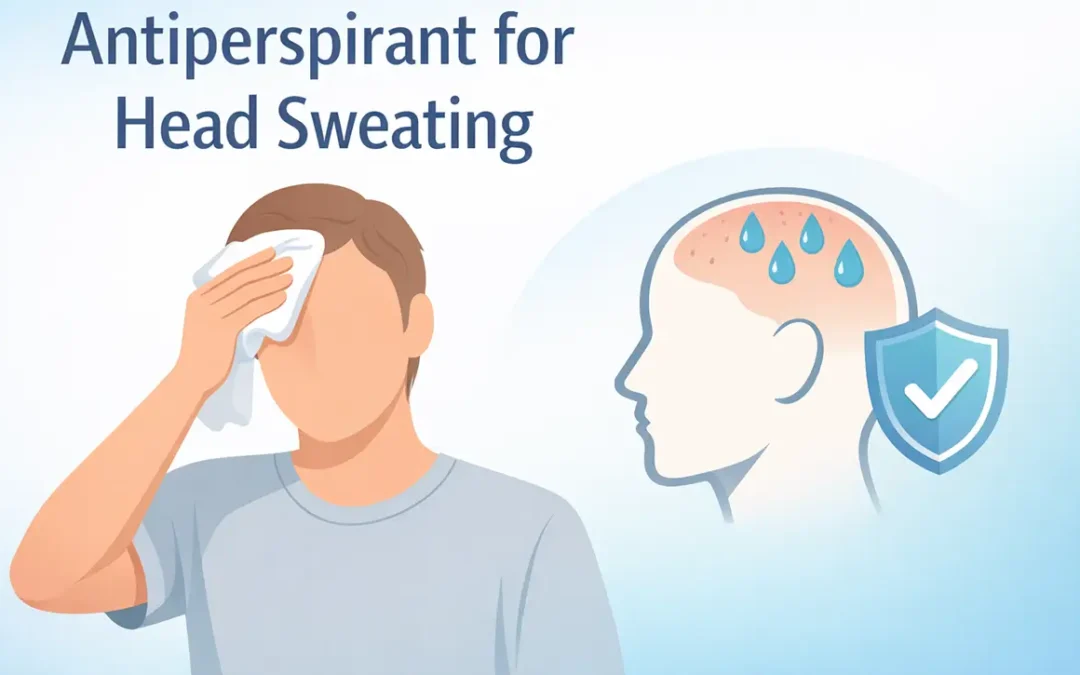
Head sweating is one of the most uncomfortable — and misunderstood — types of excessive sweating. When your scalp, forehead, hairline, or face suddenly pours sweat without heat or exercise, it can feel embarrassing, unpredictable, and impossible to control. Many people don’t realize that antiperspirant is one of the simplest and most effective tools for managing head and scalp sweating, especially when used correctly.
This guide breaks down exactly how to use antiperspirant for head sweating, why it works, what to try next if it doesn’t, and how to choose the right strength. Consider this your comprehensive, practical roadmap for regaining control.
What Causes Excessive Head Sweating?
You don’t have to feel hot to sweat intensely on your scalp or forehead. Several different factors can trigger sweating on the head:
1. Overactive sweat glands (craniofacial hyperhidrosis)
This is the medical term for excessive sweating on the head and face. For some people, the sweat glands are simply more active than average — even at rest.
2. Stress and anxiety
The head and face contain a high concentration of sweat glands that are extremely responsive to stress hormones. This is why people often sweat more before a presentation, interview, or social situation.
3. Heat intolerance or high metabolic activity
Some people naturally heat up more quickly and sweat more as a result.
4. Hormonal changes
Menopause, thyroid conditions, and other hormonal shifts can amplify head sweating.
5. Medications
Some antidepressants, blood pressure medications, and pain relievers list excessive sweating as a side effect.
6. Lifestyle triggers
Spicy foods, caffeine, alcohol, warm environments, and intense physical activity can all contribute. Some people also see improvements by addressing triggers; here’s how diet and lifestyle affect excessive sweating.
Regardless of your cause, antiperspirant for head sweating remains the best first-line treatment option because it addresses the core issue: sweat gland overactivity. For additional information on this topic, here is my more detailed post on why people experience excessive face sweating.
How Antiperspirant Works for Head Sweating
People often assume antiperspirant is only for underarms — but that’s a myth.
Antiperspirant is simply a topical treatment containing aluminum salts that temporarily block sweat ducts. When applied correctly, it works anywhere there are sweat glands, including:
-
scalp (especially hairline and part lines)
-
forehead
-
temples
-
back of neck
-
behind the ears
This makes antiperspirant a powerful and accessible tool.
👉 If you’re new to antiperspirants, here’s a deeper explanation of how antiperspirants block sweat glands and when stronger options may be necessary.
Is it Safe to Use Antiperspirant for Head Sweating?
Yes — when applied correctly.
Dermatologists commonly recommend antiperspirant for facial and scalp hyperhidrosis, with a few precautions:
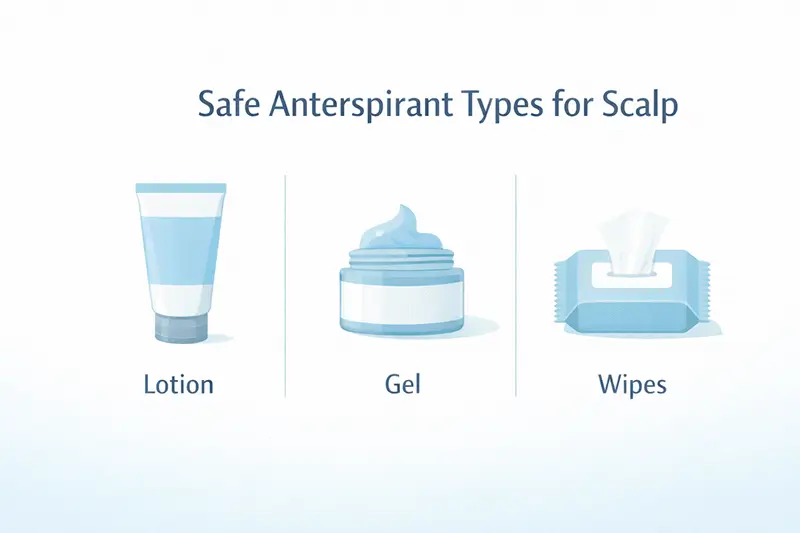
✔ Use low to medium strength on the face
Strong prescription antiperspirants can irritate facial skin.
✔ Stick to clear, smooth formulas
Avoid thick, creamier types that may gum up hair
✔ Patch-test first
Apply a very small amount near the hairline and wait 24 hours before expanding use.
✔ Apply at night
This reduces irritation and improves effectiveness.
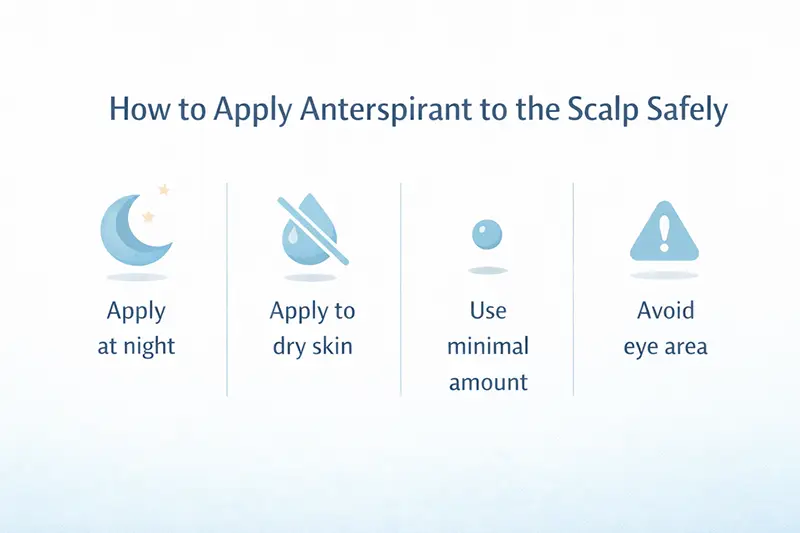
✔ Keep it away from eyes
Use a cotton swab for precision.
Used mindfully, antiperspirant is one of the safest and simplest ways to manage head sweating without medications or procedures.
How to Apply Antiperspirant for Head Sweating (Step-by-Step)
The key isn’t the strength — it’s the technique.
Here’s the dermatologist-approved method:
1. Apply at night (not in the morning)
This gives the active ingredients time to enter and block the sweat ducts.
2. Make sure your skin is completely dry
Moisture causes irritation and weakens the product.
A blow dryer set to cool air works well on the hairline and scalp.
3. Use a minimal amount
For sensitive areas like the scalp and forehead, less is more.
A pea-sized amount is usually plenty.
4. Target precise areas
Common placements:
-
along the hairline
-
in the part line
-
upper forehead
-
temples
-
back of the neck
-
behind the ears
Use a cotton swab for delicate spots.
5. Let it sit overnight
No sweating, no rubbing, no touching.
6. In the morning, rinse or wipe gently
This reduces skin irritation and keeps residues out of your hair.
7. Repeat nightly until sweating improves
Most people need 2–4 nights in a row to lock in results.
Proper timing matters—here’s my in-depth article on how to apply antiperspirant correctly to maximize results.
How to Choose the Right Antiperspirant Strength
Choosing the correct strength saves you time and skin irritation. Here’s the breakdown:
1. Standard Strength (5–10% aluminum)
Best for:
-
mild sweating
-
forehead application
-
sensitive skin
Pros: least irritating
Cons: may not help with moderate hyperhidrosis
2. Clinical Strength (10–15% aluminum)
Best for:
-
moderate sweating
-
scalp/hairline use
-
people who want stronger results without prescription-level irritation
Pros: strong and well tolerated
Cons: may require consistent nightly use
3. Prescription Strength (20%+ aluminum chloride)
Best for:
-
severe sweating that doesn’t respond to clinical strength
Pros: highest effectiveness
Cons: higher chance of irritation on facial skin
Important:
Use prescription formulas carefully. Apply only to thick-skinned areas such as the scalp margin — never directly on the delicate mid-forehead.
👉 If you're looking for relief from face sweating, I have another post covering the top antiperspirants for facial sweating.
Where to Apply Antiperspirant for the Best Results
You don’t need to cover your whole scalp. In fact, you shouldn’t.
The most effective zones include:
✔ Hairline
This is the #1 target for stopping visible sweat droplets.
✔ Part lines
Sweat often travels from deeper scalp areas through the hair part.
✔ Temples
A common stress-triggered sweat zone.
✔ Back of the neck
This area often contributes more than people realize.
✔ Behind the ears
A surprisingly effective control point for craniofacial sweating.
Remember: micro-targeting beats full-area coverage every time.
If Antiperspirant Isn’t Working, Try This Next
Don’t give up too early. You have several effective next steps.
1. Switch strengths
Many people simply need a clinical-strength formula instead of standard.
2. Improve timing
Night application increases effectiveness dramatically.
3. Change format
Stick → cream → wipe
Find the one that spreads best on your scalp.
4. Combine with absorbent powders
This helps especially near the hairline, though avoid white-cast powders if you have darker skin.
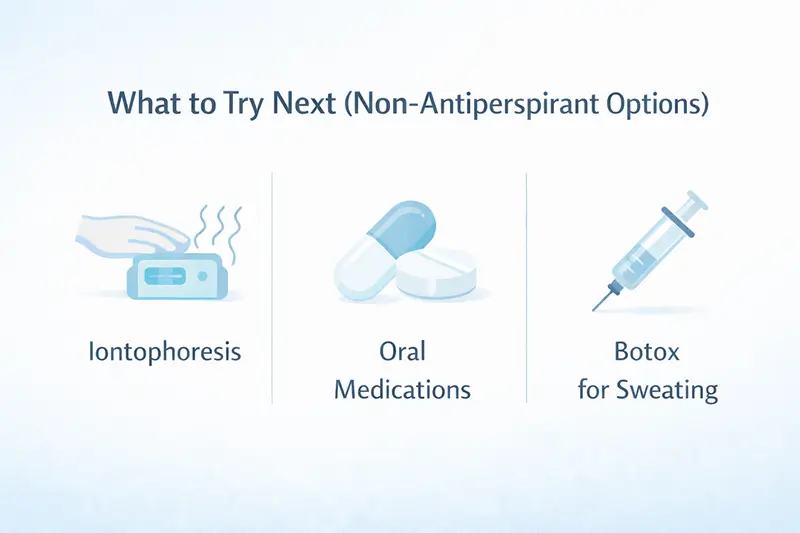
What to Try Next (Non-Antiperspirant Options)
If using antiperspirant for head sweating isn't working after 2–3 weeks of consistent use, you may have more severe craniofacial hyperhidrosis. These are your next options:
1. Prescription oral medications
Dermatologists commonly prescribe:
-
glycopyrrolate
-
oxybutynin
They reduce sweating systemically.
2. Botox injections (forehead, hairline, scalp)
Botox blocks nerve signals to sweat glands and can dramatically reduce sweating for 4–6 months.
3. Iontophoresis
Less common for the head, but some specialists offer it for difficult cases.
3. Laser or energy-based treatments
Intended for reducing sweat gland activity. Availability varies.
4. Specialist evaluation
A dermatologist can confirm hyperhidrosis vs. other causes like:
-
thyroid disorders
-
medication side effects
-
hormonal changes
-
autonomic conditions
It’s worth ruling these out.
If you’re not seeing results, here’s a breakdown of what to try when antiperspirants don't work and how to escalate safely.
Lifestyle Changes That Complement Antiperspirant
Antiperspirant works best when paired with simple adjustments:
✔ Use lightweight, breathable hairstyles
Tighter or heat-trapping styles worsen scalp heat.
✔ Reduce caffeine and alcohol
Both are proven sweat triggers.
✔ Manage stress proactively
Breathing exercises, magnesium glycinate supplementation (talk to your doctor), or short walks can help regulate stress-induced sweat surges.
✔ Wear moisture-wicking headwear when needed
Hats made with technical fabrics can subtly manage moisture without overheating your scalp.
✔ Keep cool wipes on hand
Not antiperspirant — just cooling. They help reset your body’s heat signal.
No single tactic fixes everything, but combining several creates a dramatic effect.
Does Antiperspirant Really Work on Head Sweating? (Realistic Expectations)
Here’s what most people experience:
✔ Mild cases:
Often controlled completely with standard or clinical-strength antiperspirant.
✔ Moderate cases:
Major improvement using clinical or prescription strength, applied correctly.
✔ Severe cases:
Better with antiperspirant but not fully controlled — medical treatments may be needed.
If you’ve always assumed head sweating is “just how your body works,” you might be surprised at how much improvement is possible.
And if you’re unsure whether you’re dealing with normal sweating or something more, here’s how to determine whether you have hyperhidrosis.
FAQs
Can I put antiperspirant directly in my hair?
Yes, if applying to the scalp part line. It won’t damage hair, but avoid thick, sticky formulas.
Will aluminum cause hair loss?
No. There is no evidence linking topical aluminum salts to hair thinning or shedding.
Can I use antiperspirant on my face every day?
Yes — if the formula is gentle and you monitor irritation.
What if antiperspirant burns or stings?
Use less, switch to a smoother formula, or apply over a moisturizer (“buffering”).
Should I use antiperspirant before a workout?
No. Sweat output during exercise overwhelms the formula. Apply the night before instead.
Final Takeaway
Antiperspirant is one of the most effective, affordable, and accessible treatments for head sweating — but only when used consistently, precisely, and at the right strength. For many people with scalp or forehead sweating, this single adjustment creates a dramatic improvement in daily comfort and confidence.
If antiperspirant alone isn’t enough, you still have strong, medically backed next steps. Head sweating is extremely common and very treatable — you just need the right plan.
Many people also struggle with excessive underarm sweating. If that's you, be sure to take a look at my top deodorant options for hyperhidrosis.