
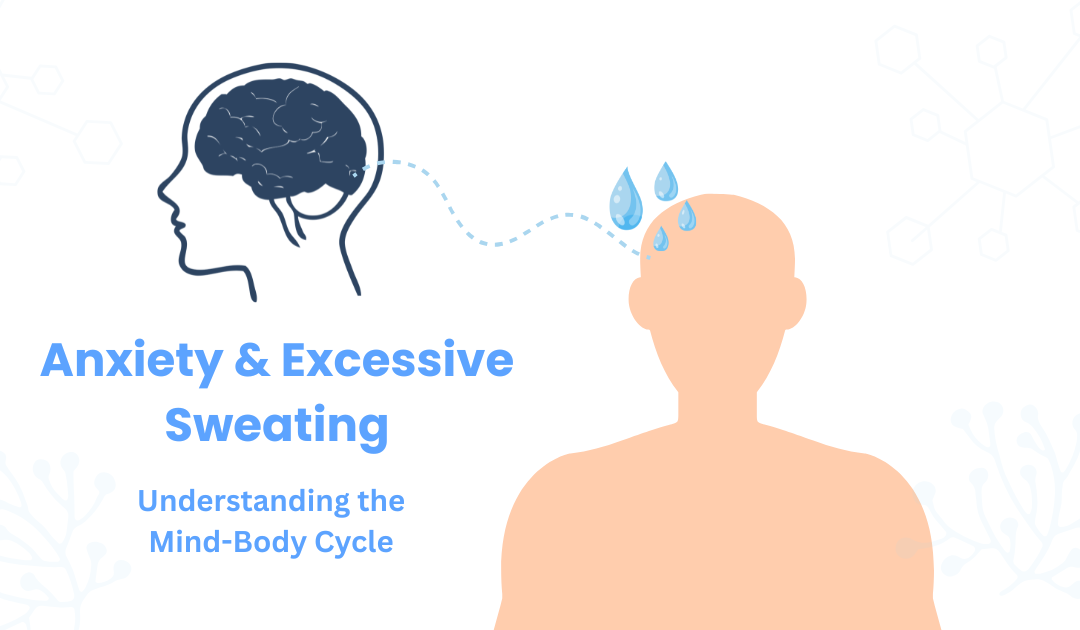
Excessive sweating is one of those symptoms that feels both physical and emotional. It’s uncomfortable, unpredictable, and often shows up at the worst possible times — right before a meeting, during a conversation, or even when you’re just sitting still, minding your own business. But what makes it especially confusing is this question:
Is the sweating happening because you’re anxious… or is the sweating itself creating the anxiety?
For many people, the honest answer is: both.
This post takes a deep dive into the anxiety–sweating connection, why these two issues reinforce each other, how to distinguish anxiety-related sweating from medical hyperhidrosis, and the treatment strategies that genuinely help. The goal is to give you clarity — and maybe even a sense of relief — by helping you understand what your body is actually trying to do, and how you can take back control.
What’s Actually Happening When Your Body Sweats?
To understand why anxiety and sweat are so intertwined, it helps to understand how sweat works in the first place. Sweating isn’t random, and it’s not a personal flaw — it’s a built-in cooling system designed to protect you.
Two Types of Sweat Glands
Your body contains millions of sweat glands, but the ones most relevant to anxiety are:
1. Eccrine Glands
- Found almost everywhere
- Produce the watery, temperature-regulating sweat
- Activated by heat, physical activity, or fever
If you want a deep dive into why certain areas sweat more than others, see: Why Do My Hands and Feet Sweat So Much?
2. Apocrine Glands
- Located in the underarms and groin
- Connected to hair follicles
- Activated mainly by stress and emotion
- Produce thicker sweat that mixes with bacteria more easily (hello, odor)
When you're hot, your eccrine glands handle the bulk of the work.
When you're stressed, embarrassed, nervous, or under pressure?
Your apocrine glands take over — and they’re fast.
Your Nervous System Is Driving the Bus
Sweating is controlled by the sympathetic nervous system — the same part that handles the fight-or-flight response. This means emotional sweating can happen:
- In seconds
- Without warning
- Even when your mind isn’t consciously aware of stress
This is why some people start sweating before a speech or during social interactions — their nervous system is simply doing its job.
How Anxiety Triggers Excessive Sweating
Even mild anxiety can activate a cascade of physical responses. If you’ve ever wondered, “Why do I sweat when I’m not even hot?” — this is the reason.
Here’s what happens behind the scenes:
- Your brain detects stress — real or imagined.
- It releases adrenaline and cortisol.
- Your heart rate rises.
- Breathing becomes shallow.
- Sweat glands switch on immediately.
This chain reaction is an evolutionary survival strategy meant to help you escape danger. But in modern life, the “danger” your brain reacts to might just be:
- Giving a presentation
- Meeting someone new
- Sitting in an interview
- Wearing a light-colored shirt
- Anticipating being looked at
Your body reacts as if something is genuinely threatening, even when the threat is… social discomfort.
If you want a more detailed understanding of triggers, see:
How Diet, Hydration, and Lifestyle Affect Excessive Sweating

Why Emotional Sweating Feels Stronger
Unlike heat-induced sweat, stress sweat appears faster and in more noticeable areas:
- Underarms
- Palm of the hands
- Soles of the feet
- Face and scalp
These are high-stakes areas — places you can’t easily hide. This alone can create a sense of panic or embarrassment, which instantly amplifies the sweating.
Anxiety About Sweating → More Sweating
There’s a unique form of anxiety called anticipatory anxiety, where the fear of sweating causes more sweating.
If you’ve ever thought:
“I hope I don’t sweat through my shirt…”
“Please don’t let my palms be wet when I shake hands…”
“Everyone will notice…”
…your body interprets those thoughts as stress signals.
And the cycle begins.
Can Excessive Sweating Cause Anxiety? Yes — Absolutely.
Sweating doesn’t just respond to anxiety — it can create it.
The Social Pressure Component
Sweating is a normal bodily function, but socially, it can feel loaded. People often worry about:
- Looking nervous
- Appearing unprofessional
- Being judged
- Looking “dirty” or “unhygienic”
- Having visible sweat stains
Even though sweating has nothing to do with hygiene or self-control, it’s easy to feel like it does — especially when it shows up in public or at work.
If sweat stains are one of your biggest frustrations, this guide is gold:
How to Prevent Pit Stains
The Emotional Toll
People who sweat excessively often report:
- Avoiding social interactions
- Avoiding light-colored or fitted clothing
- Feeling embarrassed or ashamed
- Checking themselves constantly
- Staying home during stressful events
- Feeling anxious before even leaving the house
This is especially true for hyperhidrosis, a medical condition where the body produces far more sweat than necessary.
If you’re unsure whether you have it, this is a good starting point:
How to Tell If You Have Hyperhidrosis
Anticipatory Anxiety (Again)
If you’ve ever had a bad sweating episode in public, your brain remembers it. That memory becomes a trigger — meaning sweating itself becomes something you fear.
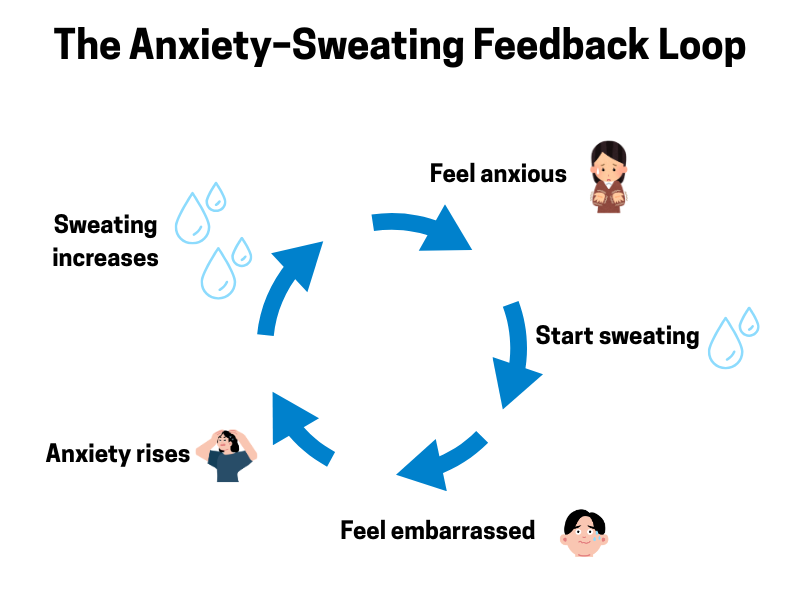
The Anxiety–Sweating Feedback Loop
You may already know this cycle intimately:
- You feel anxious.
- You start sweating.
- You notice the sweat.
- You feel embarrassed or self-conscious.
- Anxiety rises.
- Sweating increases.
The loop can continue until you physically remove yourself from the situation — or until your body calms down on its own.
This loop is powerful, and it’s also solvable.
How to Tell If Your Sweating Is Anxiety, Hyperhidrosis, or Both
Not all sweating is created equal, and identifying the source helps you choose the right treatment.
Signs It’s Primarily Anxiety
Your sweating likely stems from anxiety if it:
- Happens during specific stress-inducing situations
- Improves once the stressful moment is over
- Comes with other anxiety symptoms (shaking, rapid heartbeat, tight chest)
- Doesn’t happen much when you’re relaxed
Signs It Might Be Hyperhidrosis
Hyperhidrosis is more likely if your sweating:
- Occurs even when you’re calm
- Happens in cool temperatures
- Shows up daily or near-daily
- Soaks through clothing or drips
- Seems to “run in the family”
- Occurs in specific areas: hands, feet, underarms, face
People with hyperhidrosis often feel like their sweat has “a mind of its own.” It shows up whether they’re stressed or sitting still.
A Mix of Both Is Extremely Common
Many people fall into a combined category:
- Hyperhidrosis causes baseline sweating.
- Anxiety amplifies episodes.
- The embarrassment from sweating elevates anxiety.
- Anxiety then triggers more sweating.
This doesn’t mean either condition is your fault. It simply means your body is more responsive to stress — and that’s manageable.
When Sweating Becomes a Daily Stressor
Beyond the physical discomfort, sweating can create practical challenges:
- Difficulty gripping objects if palms are sweaty
- Staining clothes
- Feeling cold or uncomfortable after sweat evaporates
- Constantly changing shirts
- Avoiding public speaking or leadership roles
- Trouble with touch-based interactions like holding hands
- Issues with makeup or skincare (for face sweating)
The list goes on and on. These challenges add up — and understandably, they contribute to anxiety.
You’re not overreacting if sweat affects your quality of life. For many people, it genuinely does.
Why Your Body Sweats Even When You Don’t “Feel” Anxious
Sweating sometimes shows up before you emotionally register stress. This can feel puzzling — but the brain often reacts faster than your conscious thoughts.
Here are a few common explanations:
1. Subtle Stressors
Your brain picks up on signals you might not even notice:
- Tight deadlines
- Social interactions
- Conflict
- Uncertainty
- Feeling observed
- Anticipating discomfort
Your mind may be calm, but your body may not be.
2. Previous Embarrassing Experiences
The brain is great at remembering embarrassment.
If sweating has embarrassed you in the past, your nervous system becomes more reactive in similar situations.
3. Habitual Physiological Response
Over time, your sweat glands can learn to “turn on” in situations where they’ve been activated before. This is a form of conditioning, not weakness.
Treatment Options That Actually Work
You don’t have to simply “accept” excessive sweating. There are real solutions, and for many people, relieving the physical symptom is the key to reducing anxiety too.
1. Topical Treatments (Antiperspirants & Prescription Options)
- Over-the-counter clinical-strength antiperspirants
- Prescription options like aluminum chloride hexahydrate
- Prescription wipes and creams for face and scalp
These work well for many people and are often a first-line treatment.
More information on these can be found here:
Clinical Strength vs Prescription Antiperspirant
2. Oral Medications
Certain medications can reduce sweat gland activity. These are typically taken before predictable situations — or daily for chronic sweating.
3. Iontophoresis
Especially effective for:
- Palms
- Feet
This device uses mild electrical currents to reduce sweating over time. Many people use it at home once they’re comfortable with it.
4. Botox Injections
Botox can temporarily “turn off” sweat glands in targeted areas:
- Underarms
- Face
- Scalp
- Palms
Results typically last 4–6 months.
5. Energy- or Heat-Based Procedures
Some devices reduce or destroy sweat glands in the underarms, leading to long-lasting or permanent improvement.
6. Treating Anxiety Directly
If anxiety is fueling the sweat response, addressing it can dramatically reduce symptoms.
Options include:
- Cognitive Behavioral Therapy (CBT)
- Exposure therapy for sweating-related fears
- Somatic therapies for physical anxiety symptoms
- Mindfulness training
- Medication (SSRIs, SNRIs, or beta-blockers for situational anxiety)
Many people find that addressing anxiety and sweat directly creates the biggest transformation.
Lifestyle Adjustments That Make a Real Difference
There are several practical techniques that reduce sweating in the moment and help prevent cycles of anxiety-sweating-anxiety.
1. Cooling Techniques
- Use car air vents or a portable fan before entering a stressful space
- Run cold water over your wrists
- Apply a cool pack to the back of your neck
- Drink cold water before high-pressure events
Cooling lowers sympathetic activation quickly.
2. Clothing and Fabric Strategies
- Moisture-wicking materials
- Dark colors or patterns that camouflage moisture
- Underarm sweat pads
- Breathable natural fibers
These aren’t “solutions,” but they remove some of the fear around being visibly sweaty.
If underarm stains are part of the struggle, check out:
Best Undershirts for Excessive Sweating
3. Reduce Known Triggers
- Caffeine (major sweat stimulant)
- Alcohol
- Spicy foods
- Stressful multitasking
Even a 20–30% reduction in triggers can impact sweating significantly.
4. Breathing Techniques
Slow, diaphragmatic breathing activates the parasympathetic nervous system — the counterbalance to the fight-or-flight response.
Just 60–90 seconds of slow breathing can reduce sweat intensity.
5. Reframing & Cognitive Techniques
Instead of thinking:
“Everyone will notice my sweat.”
Shift toward:
“My body is reacting, but I’m still safe.”
This creates less anticipatory tension, which means less sweat.
When to Seek Professional Help
Consider talking to a healthcare professional if:
- Excessive sweating affects your daily life
- You avoid activities due to sweat
- You’re embarrassed or distressed by sweating
- You suspect hyperhidrosis
- Anxiety feels hard to control
- You’re unsure what’s causing your symptoms
A doctor can help clarify whether it’s anxiety, hyperhidrosis, or both — and guide you toward evidence-based treatment.
If you’re preparing for that conversation, this can help:
How to Talk to Your Doctor About Excessive Sweating
Final Thoughts
Sweating and anxiety aren’t just casual acquaintances — they’re deeply connected. For some people, the connection is mild. For others, it becomes a cycle that looks like this:
Sweating → Anxiety → More Sweating → More Anxiety.
But the good news is that this loop can absolutely be broken.
With the right combination of:
- understanding your triggers
- reducing the physical sweating
- addressing the emotional components
- using tools to calm your nervous system
- adopting practical everyday habits
…you can dramatically reduce symptoms and reclaim confidence in situations that once felt overwhelming.
Sweating isn’t a character flaw. It’s not unprofessional. It’s not a sign of weakness. It’s a physiological response that can be managed, treated, and understood.
And with the right support, you can absolutely get your comfort — and your confidence — back.