

Sweaty palms can be one of the most frustrating and embarrassing forms of excessive sweating. From handshakes and driving to using a phone or keyboard, constantly damp hands can interfere with daily life in ways most people don’t realize.
While antiperspirants are often recommended as a first-line solution, not all antiperspirants work the same way on hands — and many people use them incorrectly or expect unrealistic results.
This guide breaks down the main antiperspirant options for sweaty palms, who they’re best for, and when it may be time to consider other treatments.
Why Sweaty Palms Are Harder to Treat Than Other Areas
Palms contain a very high concentration of sweat glands, and unlike underarms, the skin on your hands is:
-
Thicker
-
More frequently washed
-
Constantly in use
That combination makes sweat control more challenging and explains why products that work well for armpits often fail on hands.
The goal of palm antiperspirants isn’t to eliminate sweat completely, but to significantly reduce moisture and improve daily comfort.
If you're curious about what causes sweaty hands, this article I wrote explains why your hands are sweating so much.
Option 1: Clinical-Strength Antiperspirants for Sweaty Palms
Clinical-strength antiperspirants are usually the first option people try for sweaty hands — and for mild to moderate cases, they can be effective.
How They Work
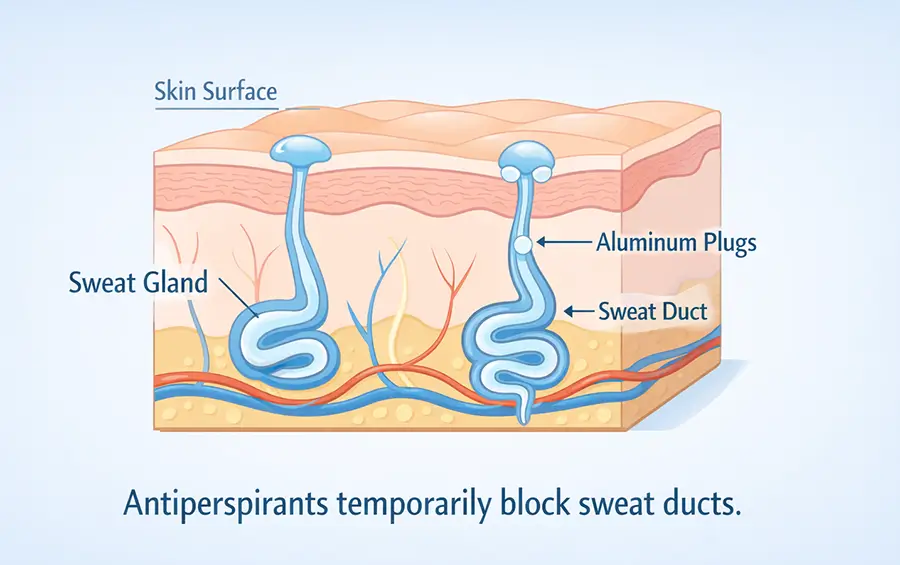
These products rely on aluminum-based compounds that temporarily block sweat ducts. When applied correctly, they reduce the amount of sweat released to the skin’s surface.
Who They’re Best For
-
Mild to moderate palm sweating
-
Situational sweating (driving, work, social settings)
-
People looking for a non-prescription option
Common Downsides
-
Skin irritation or dryness
-
Tingling or burning if over-applied
-
Reduced effectiveness if hands are washed frequently
Some clinical-strength products are marketed specifically for hands, while others are multi-area formulas. Results vary widely depending on application technique and consistency.
If you’re looking for a side-by-side breakdown of the most effective products, see our full guide to the best antiperspirants for sweaty hands.
Option 2: Prescription Antiperspirants
When over-the-counter options aren’t enough, doctors may recommend prescription-strength antiperspirants.
What Makes Them Different
Prescription formulas contain higher concentrations of aluminum salts, which can provide stronger sweat suppression.
Pros
-
More powerful than OTC options
-
Often effective for moderate to severe sweating
Cons
-
Higher risk of irritation
-
Often require careful nighttime application
-
Not suitable for sensitive skin
Prescription antiperspirants are usually best used under medical guidance, especially if irritation becomes an issue.
Option 3: Natural or Aluminum-Free Products (Manage Expectations)
Many people prefer aluminum-free or “natural” products — but it’s important to be realistic about what they can do for sweaty palms.
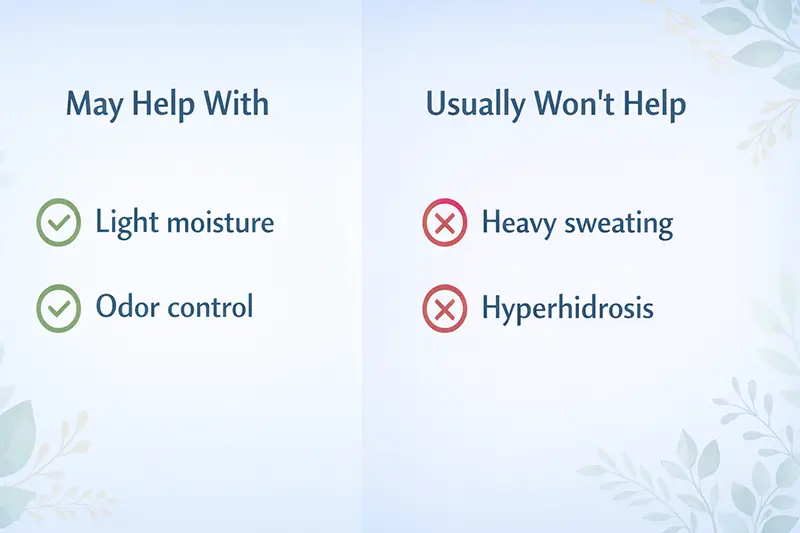
What They Can Help With
-
Mild moisture
-
Odor control
-
Skin comfort
What They Usually Don’t Do
-
Block sweat glands
-
Control hyperhidrosis-level sweating
For people with true palmar hyperhidrosis, natural products rarely provide meaningful sweat reduction. However, they may be useful for very mild cases or as part of a broader routine.
Option 4: When Antiperspirants Aren’t Enough
If antiperspirants don’t provide enough relief, it may be time to look beyond topical solutions.
Other Options to Consider
-
Iontophoresis, a device-based treatment often used for hands and feet
-
Behavioral and lifestyle adjustments
-
Medical evaluation for hyperhidrosis
You can learn more here:
Common Mistakes That Reduce Antiperspirant Effectiveness
Many people give up on antiperspirants without realizing they’re using them incorrectly.
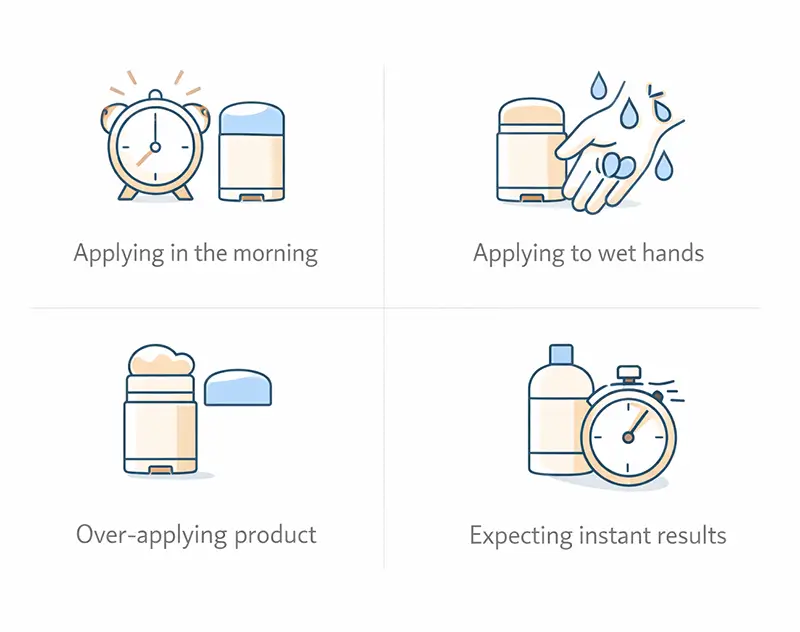
Mistakes to Avoid
-
Applying in the morning instead of at night
-
Applying to damp or sweaty hands
-
Using too much product
-
Expecting instant results
For best results, antiperspirants should typically be applied at night to clean, completely dry hands, allowing them to work while sweat production is lower.
Proper technique matters—this step-by-step guide shows how to apply antiperspirant correctly for best results.
How Long Does It Take to See Results?
Everyone's body reacts differently, but most palm antiperspirants require several consecutive nights of use before noticeable improvement occurs. Initial irritation often subsides as the skin adjusts.
If there’s no improvement after 1–2 weeks of proper use, it’s reasonable to explore stronger treatments.
Looking for a Direct Comparison?
If you want a clear breakdown of specific products — including which options work best for severe sweating, sensitive skin, or daily use — see my full comparison of the best antiperspirants for sweaty hands.
That guide focuses on product performance, pros and cons, and real-world use cases.
Final Note
Sweaty palms are a legitimate medical concern, not a personal failing. Finding the right solution often takes trial and error, but with the right approach, meaningful improvement is absolutely possible.
👉 Also sweat a lot on your head? I have another guide breaking down antiperspirant use for head sweating.