
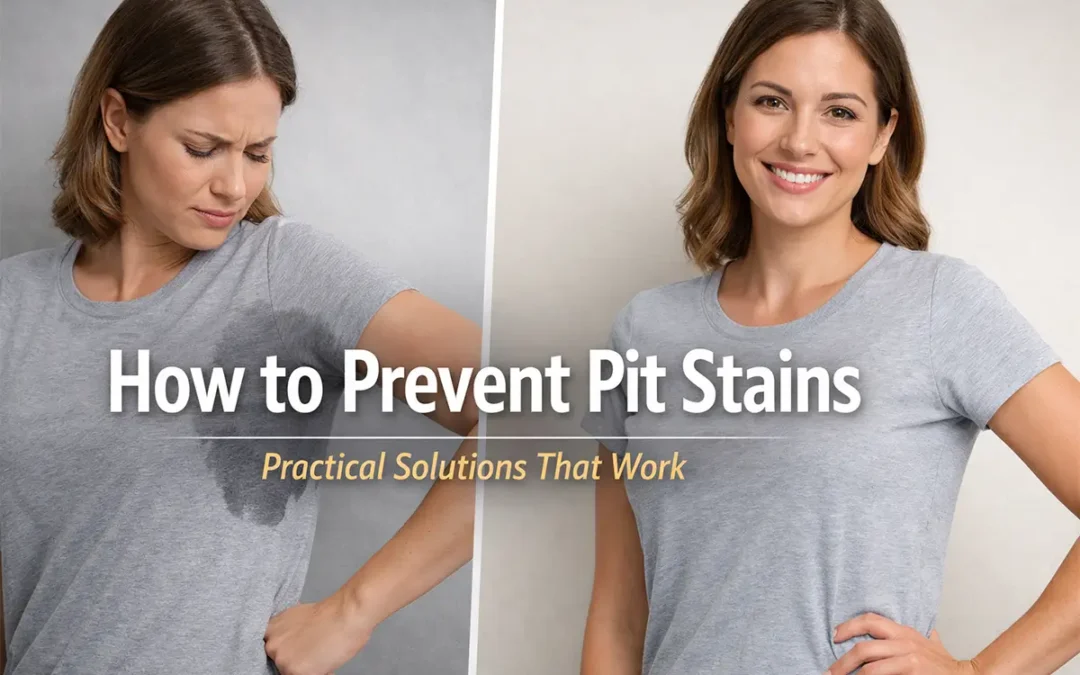
Pit stains can happen even when you’re not exercising or overheating. For some people, underarm sweat quickly soaks through shirts, leaves visible sweat marks, or causes yellow stains that ruin clothing over time.
And while pit stains are incredibly common, they can still feel frustrating and embarrassing — especially during work meetings, social events, dates, presentations, or hot weather.
The good news is that pit stains are usually manageable with the right combination of sweat control, clothing choices, and daily habits.
In this guide, you’ll learn:
- why pit stains happen
- what makes them worse
- how to prevent pit stains before they show through clothing
- what actually works for excessive underarm sweating
Whether you deal with occasional sweat marks or constant underarm moisture, there are practical ways to stay drier and protect your shirts.
Why Do Pit Stains Happen?
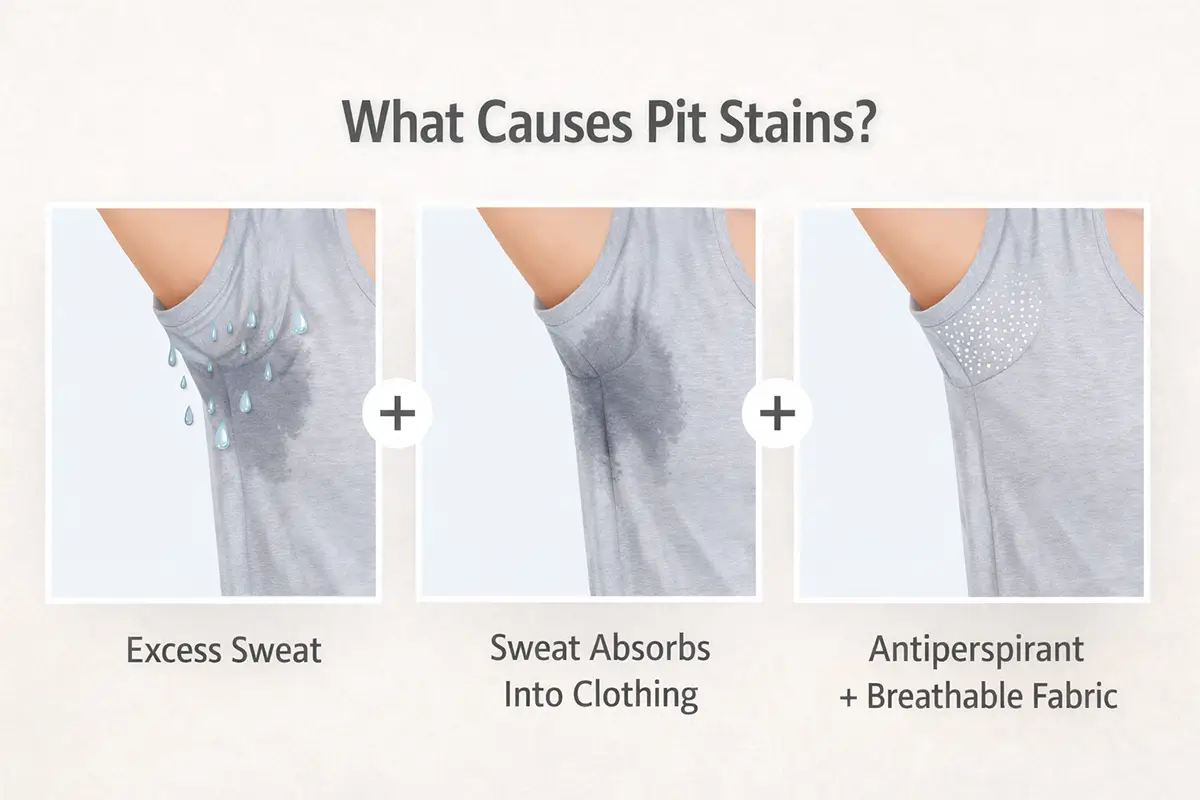
Pit stains happen when sweat soaks into fabric and becomes visible through clothing.
Sweat itself is mostly colorless, but underarm moisture becomes noticeable when:
- fabric absorbs sweat
- sweat spreads through thin material
- sweat mixes with antiperspirant residue and bacteria
For many people, pit stains appear quickly because the underarm area traps heat and moisture throughout the day.
Stress sweating, tight clothing, synthetic fabrics, and excessive sweating can all make the problem worse.
Why Some People Get Pit Stains More Than Others
Some people can wear gray shirts all day without visible sweat marks. Others develop pit stains within minutes.
Several factors influence how noticeable underarm sweat becomes:
- genetics
- overactive sweat glands
- anxiety-related sweating
- body temperature
- humidity
- clothing material
- even body chemistry
People with hyperhidrosis often sweat significantly more than average, even in cool environments or while resting.
For others, stress sweat is the main trigger. Many people notice their underarms become dramatically sweatier during social situations, presentations, interviews, or stressful conversations — even when they aren’t physically hot.
Stress sweat also tends to be thicker and more noticeable on clothing than heat-related sweating.
What Causes Excessive Underarm Sweating?
1. Heat and Physical Activity
This is the most obvious cause. Your body naturally produces sweat to cool itself during:
- exercise
- warm weather
- physical work
- overheating
The underarms contain a high concentration of sweat glands, so moisture often builds up quickly there.
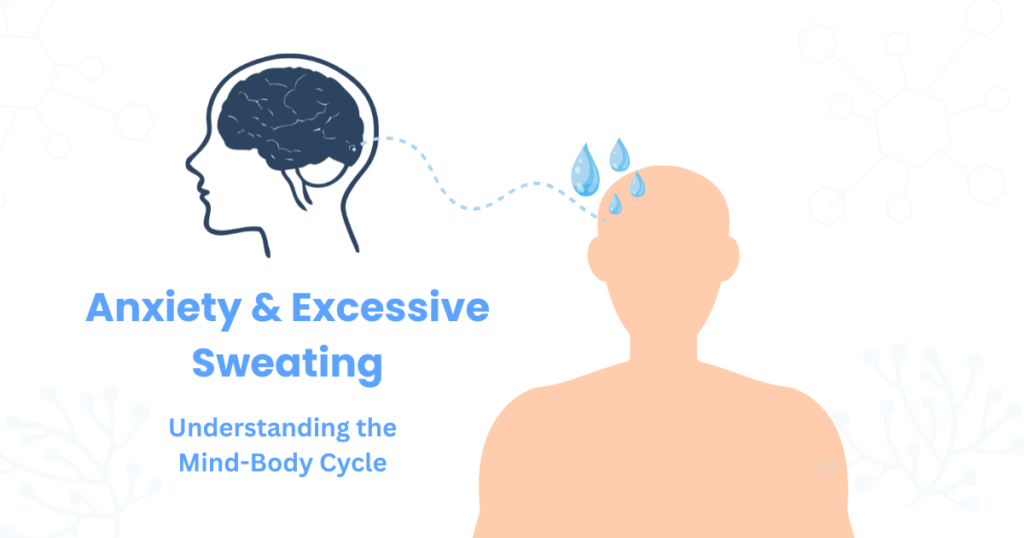
2. Stress and Anxiety
Stress-induced sweating is extremely common and often catches people off guard.
Even if the room feels cool, emotional stress can trigger:
- sudden sweating
- damp underarms
- clammy skin
- rapid sweat stains
This happens because anxiety activates the sympathetic nervous system — your body’s “fight or flight” response.
Many people notice pit stains worsen during:
- meetings
- public speaking
- social anxiety
- interviews
- high-pressure situations
3. Hyperhidrosis
If you sweat excessively regardless of temperature or activity level, you may have axillary hyperhidrosis.
This medical condition causes overactive sweat glands that produce more sweat than necessary for temperature regulation.
Common signs include:
- soaking through shirts quickly
- visible sweat stains in cool environments
- needing frequent clothing changes
- sweating heavily while inactive
Hyperhidrosis affects millions of people and is far more common than many realize.
4. Clothing and Fabric Choices
Some fabrics trap sweat instead of allowing it to evaporate.
Heavy synthetic materials can hold heat and moisture against the skin, making pit stains appear faster and spread more visibly.
Thin fabrics also tend to show moisture quickly once sweating begins.
Quickest Ways to Prevent Pit Stains
If you want the biggest improvement quickly, focus on these high-impact changes first:
- Apply antiperspirant at night
- Wear moisture-wicking undershirts
- Avoid heavy polyester fabrics
- Switch to breathable clothing
- Change shirts after heavy sweating
- Reduce stress triggers when possible
- Use sweat pads during high-pressure situations
For many people, these changes noticeably reduce pit stains within days.
How To Prevent Pit Stains (What Actually Works)
Use Antiperspirant — Not Just Deodorant
This is the single most important step.
Many people use deodorant expecting it to stop sweat, but deodorant only masks odor.
Antiperspirants actually reduce sweat production by temporarily blocking sweat ducts.
If visible sweat stains are the problem, deodorant alone usually won’t solve it.
For best results:
- choose a clinical-strength antiperspirant
- apply it to completely dry skin
- use it consistently
If you struggle with heavy sweating, stronger products designed for hyperhidrosis often work much better than standard drugstore deodorants.
Here are some antiperspirants that work especially well for excessive underarm sweating.
Apply Antiperspirant at Night
This is one of the most overlooked sweat-control strategies.
Most people apply antiperspirant in the morning, but nighttime application is usually far more effective.
At night:
- sweat glands are less active
- skin is drier
- the active ingredients have more time to form temporary sweat-blocking plugs
For best results:
- Shower and dry underarms completely
- Apply a thin layer before bed
- Allow it to dry fully
- Reapply lightly in the morning if needed
Over-applying can actually increase residue and staining without improving sweat control.
Wear Sweat-Friendly Fabrics
Fabric choice has a huge impact on whether sweat becomes visible.
Some materials trap heat and moisture, while others allow airflow and evaporation.
Best Fabrics for Preventing Pit Stains
Better options include:
- bamboo
- merino wool
- lightweight cotton blends
- moisture-wicking performance fabrics
These materials help move sweat away from the skin instead of letting it pool under the arms.
Moisture-wicking undershirts can also help absorb sweat before it reaches your outer clothing.
Fabrics That Often Make Pit Stains Worse
Some fabrics are notorious for trapping moisture and highlighting sweat marks.
Common problem fabrics include:
- heavy polyester
- nylon
- rayon
- thin synthetic blends
These materials often:
- trap heat
- reduce airflow
- make sweat stains more noticeable
Best Shirt Colors for Hiding Pit Stains
Some colors reveal sweat immediately, while others hide moisture surprisingly well.
Best Colors for Hiding Underarm Sweat
More forgiving colors include:
- black
- navy
- charcoal
- white
- heathered fabrics
Patterns and textured materials also help camouflage moisture.
Worst Colors for Pit Stains
These tend to show sweat fastest:
- light gray
- pastel colors
- thin solid fabrics
- bright lightweight materials
Gray shirts are especially notorious for highlighting underarm sweat.
Use Sweat Pads or Sweat-Proof Undershirts
Sweat pads create a physical barrier between your skin and your clothing.
They can:
- absorb sweat before it reaches your shirt
- reduce visible moisture
- protect clothing from stains
These products are especially useful during:
- presentations
- weddings
- interviews
- long workdays
- stressful social situations
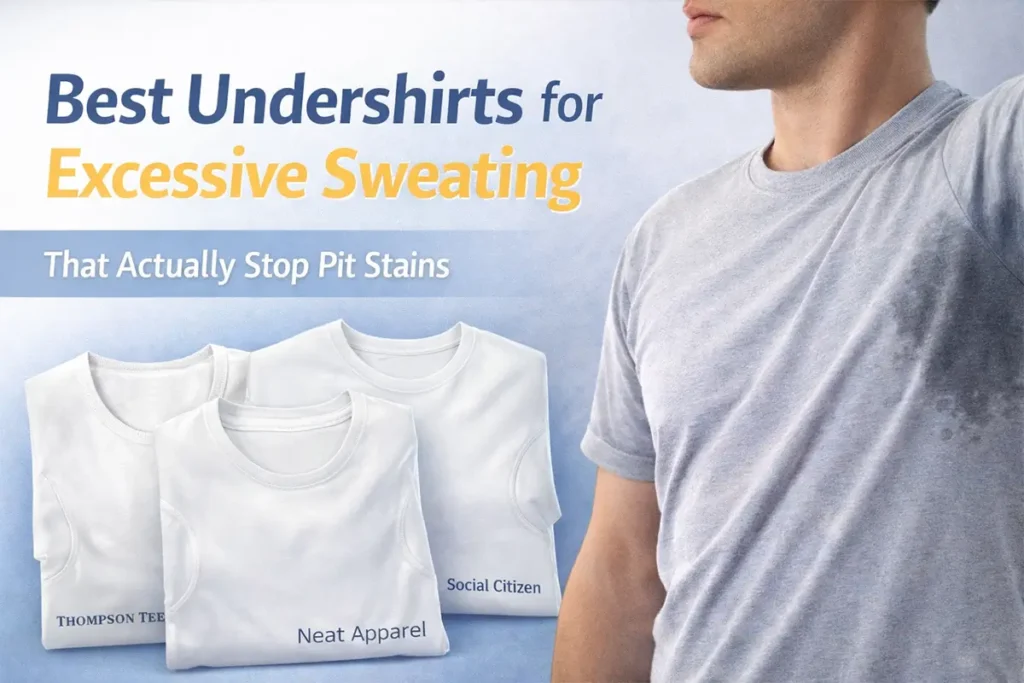
Sweat-proof undershirts designed for excessive sweating can also make a major difference by absorbing moisture before it spreads to outer layers.
How To Prevent Yellow Pit Stains
Not all pit stains are caused by sweat alone.
Yellow underarm stains often happen when sweat reacts with aluminum compounds found in antiperspirants.
Over time, residue builds up in fabric and becomes difficult to remove.
To reduce yellow pit stains:
- avoid excessive antiperspirant buildup
- let products dry fully before dressing
- wash shirts promptly after sweating
- avoid leaving sweaty clothing unwashed for long periods
Using too much product can actually increase staining without improving sweat protection.
Wash Shirts Properly After Sweating
Laundry habits matter more than most people realize.
Once sweat and antiperspirant residue set into fabric, stains become harder to remove.
Helpful tips include:
- washing shirts soon after wearing
- avoiding heavy fabric softeners
- pretreating underarm areas
- avoiding excessive dryer heat on stained fabric
Baking soda and white vinegar are commonly used to help break down buildup in underarm areas.
When Pit Stains May Be a Medical Issue
For some people, pit stains are more than a clothing issue.
You should consider speaking with a healthcare provider if you:
- sweat excessively in cool environments
- regularly soak through shirts
- experience sweating that interferes with daily life
- notice symptoms worsening over time
Persistent underarm sweating may point to axillary hyperhidrosis or another underlying condition.
Medical Treatments for Excessive Underarm Sweating
If lifestyle changes and antiperspirants aren’t enough, medical treatments may help reduce sweating significantly.
Prescription Antiperspirants
Prescription-strength products contain higher concentrations of active ingredients than over-the-counter antiperspirants.
Botox for Underarm Sweating
Botox injections can temporarily block sweat signals in the underarms for several months at a time.
Many people with severe hyperhidrosis see major improvement from this treatment.
You can learn more in this guide to Botox for excessive sweating.
Oral Medications
Some medications help reduce overall sweating. Since this is not a targeted approach, you will likely still need to pair the medication with a higher strength antiperspirant. Also be aware that medications can come with side effects.
MiraDry and Other Treatments
Some dermatology clinics offer treatments designed to permanently reduce underarm sweat glands.
A dermatologist can help determine which option makes the most sense based on symptom severity.
Frequently Asked Questions About Pit Stains
Why do my armpits sweat so easily?
Some people naturally have more active sweat glands. Stress, anxiety, heat, genetics, and hyperhidrosis can all increase underarm sweating.
How do I stop pit stains from showing through shirts?
Using antiperspirant correctly, wearing moisture-wicking fabrics, and avoiding sweat-trapping materials are some of the most effective strategies.
Can deodorant cause yellow pit stains?
Yes. Yellow stains are often caused by a reaction between sweat and aluminum compounds in antiperspirants.
What colors hide pit stains best?
Black, navy, white, charcoal, patterns, and heathered fabrics usually hide sweat better than light gray or pastel colors.
Do undershirts help prevent pit stains?
Yes. Sweat-proof undershirts and moisture-wicking layers can absorb sweat before it reaches outer clothing.
Is excessive underarm sweating a medical condition?
Yes. Chronic excessive underarm sweating may be caused by axillary hyperhidrosis, a medical condition involving overactive sweat glands.
Why do I sweat through shirts even when I’m cold?
Stress sweating and hyperhidrosis can cause heavy underarm sweating even in cool environments.
Final Thoughts
Pit stains are frustrating, distracting, and often embarrassing — but they’re also extremely common.
For most people, the biggest improvements come from:
- better sweat control
- smarter fabric choices
- proper antiperspirant use
- reducing trapped moisture throughout the day
And if excessive sweating continues to interfere with daily life, medical treatments and stronger sweat-management strategies are available.
The important thing to remember is this: underarm sweating is a physical process, not a personal failure. With the right approach, most people can dramatically reduce pit stains and feel far more comfortable in their clothing.