
Excessive sweating can feel overwhelming—socially, professionally, and physically. When antiperspirants, clinical-strength formulas, and lifestyle adjustments don’t cut it, many people start looking into medical treatments. One of the most effective mid-tier treatments is Botox for hyperhidrosis. While most people know Botox as a wrinkle smoother, it’s also FDA-approved to treat severe underarm sweating and widely used off-label for palms, feet, face, scalp, and other trouble spots.
This in-depth guide explains exactly how Botox works, what it costs, what the procedure is like, who it helps most, and when it may not be the right option. Consider this your comprehensive, medical-grade overview—presented in plain language.
What Is Botox for Hyperhidrosis?
Botox is the brand name for botulinum toxin type A, a purified neurotoxin that temporarily interrupts nerve signals. When injected into areas that produce sweat, it blocks the chemical messenger (acetylcholine) that activates sweat glands. The result: dramatically less sweating in the treated area.
The treatment is FDA-approved by the U.S. Food and Drug Administration for severe underarm hyperhidrosis that doesn’t respond to topical antiperspirants. Dermatologists also use it off-label for hands, feet, face, scalp, and other regions.
Botox doesn’t cure hyperhidrosis, but it can provide meaningful relief—especially for people whose sweating interferes with daily life, clothing choices, work, or social comfort.
💡 If you're unsure whether you have hyperhidrosis, read my guide outlining the most common symptoms of hyperhidrosis.
How Botox Reduces Sweating
To understand how Botox helps, it’s useful to understand the basics of sweat-gland function.
Sweating is controlled by the sympathetic nervous system. When your body receives a signal to cool down—or when you experience emotional or stress-based sweating—nerve endings release acetylcholine, which tells sweat glands to produce moisture.
Botox interrupts that communication.
Step-by-step what happens after injection:
- Botox is placed just under the skin where sweat glands are concentrated.
- The neurotoxin binds to nerve endings.
- It blocks the release of acetylcholine.
- Sweat glands temporarily “switch off,” producing far less sweat.
- Skin stays noticeably drier in that area for months.
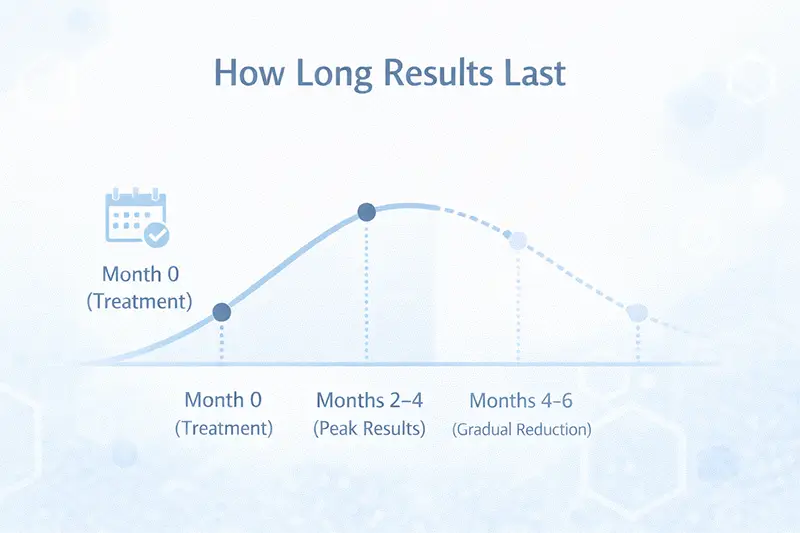
Most people begin noticing improvement within 3–7 days, with full results visible at about the two-week mark.
How long it lasts
Most patients experience drier skin for 4–6 months, though some enjoy 7–9 months before sweating begins to return. Underarms typically last longest. Palms and feet often have shorter durations due to stronger nerve activity and larger treatment areas.
❓ Some people curious about Botox might also be interested in exploring natural remedies for excessive sweating.
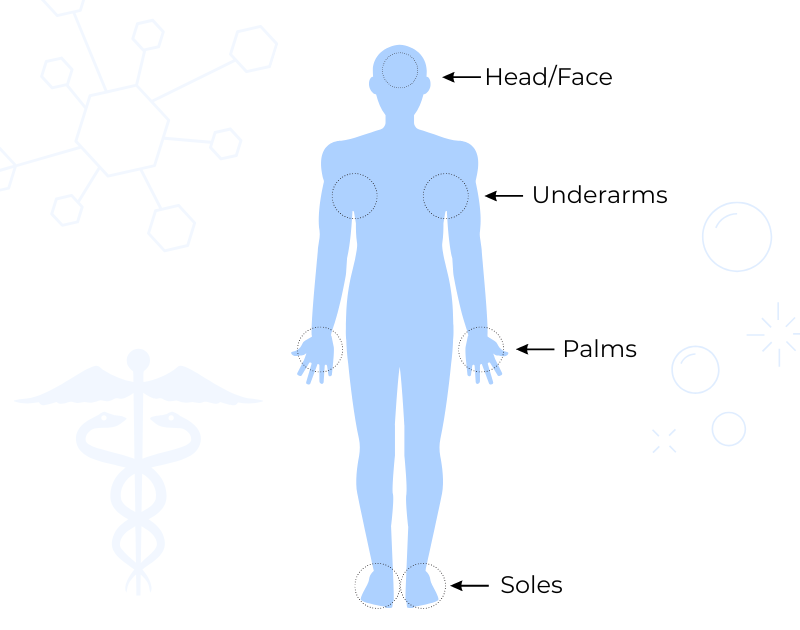
What Areas Botox Can Treat for Hyperhidrosis
Botox is remarkably versatile for sweat-reduction, but each body area has unique benefits and considerations.
1. Underarms (Axillary Hyperhidrosis)
FDA-approved, widely studied, and often the easiest area to treat.
Pros: Fast results, minimal pain, long duration.
Challenges: Cost varies; may require multiple vials.
2. Palms (Palmar Hyperhidrosis)
Sweaty palms affect daily life—handshakes, paper handling, touchscreens.
Pros: Noticeable dryness; improves grip.
Challenges: More painful injections; temporary hand weakness can occur.
3. Feet (Plantar Hyperhidrosis)
Botox can reduce sweating between toes and on soles.
Pros: Helps with slipping in shoes; reduces odor/moisture.
Challenges: Very sensitive area; injections can be uncomfortable; sometimes shorter-lasting.
4. Face (Facial Hyperhidrosis)
Botox is used around the hairline, forehead, and nose.
Pros: Significant sweat reduction.
Challenges: Must be done by an expert to avoid affecting expression.
5. Scalp / Head
Useful for people whose head sweating interferes with hair styling or drips down the forehead.
Pros: High satisfaction when done correctly.
Challenges: Multiple injections needed; cost varies widely.
6. Other Areas (Individualized)
Dermatologists may treat the back, chest, groin folds, or other localized areas in severe cases.
This requires an experienced provider and is evaluated case-by-case.
Pros and Cons of Using Botox for Sweating
Before committing to Botox, it’s important to understand both the advantages and limitations. This helps set realistic expectations and supports informed decision-making.
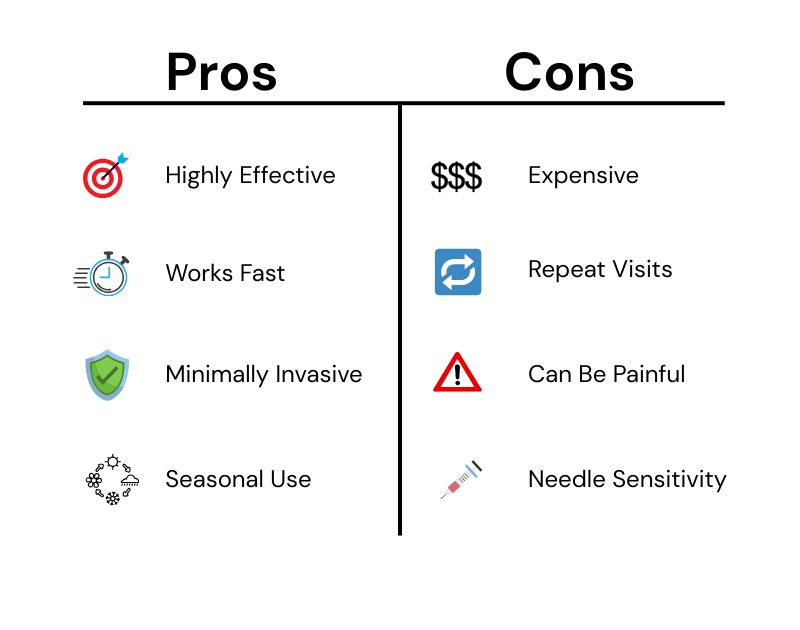
Pros
1. Highly Effective for Most People
Success rates for underarm hyperhidrosis are extremely high. Many patients experience 70–90% sweat reduction.
2. Works Quickly
You don’t have to wait months. Most people feel relief within a week.
3. Non-Surgical and Minimally Invasive
No incisions, no downtime, and you can return to normal activities quickly.
4. Helps When Antiperspirants Fail
Botox is an excellent next step for people who didn’t respond to clinical-strength or prescription antiperspirants.
5. Useful for Specific Events or Seasons
Some people get Botox seasonally—before summer, weddings, performances, or major professional events.
6. Clothing Stays Clean
Unlike antiperspirants, Botox won’t leave residue or stains.
Cons
1. It’s Expensive
Cost varies, but it’s one of the pricier hyperhidrosis treatments. (More details below.)
2. Not Permanent
You’ll need repeat treatments every 4–7 months.
3. Can Be Painful in Some Areas
The palms and feet can be uncomfortable, even with numbing.
4. Temporary Muscle Weakness—Mostly in Hands
If used on palms, some people experience mild grip weakness for a few weeks.
5. Access and Availability May Be Limited
Not all clinics or dermatologists treat all body areas.
6. Needle Sensitivity
It requires multiple small injections—typically 15–25 per underarm, and more for larger areas.
How Much Does Botox for Excessive Sweating Cost?
Costs vary widely depending on the practitioner, city, and body area. Here’s what you should expect.
National Average Price Range
Botox is typically charged either per unit or per treatment area.
Per Unit Pricing
-
$10–$18 per unit
-
Underarms often require 50–100 units total
-
Palms and feet may require more, increasing cost
Typical Total Cost by Body Area
-
Underarms: $900–$1,800
-
Palms: $1,200–$2,000
-
Feet: $1,200–$2,200
-
Scalp / face: $800–$1,800 depending on area
Botox for sweating is almost always more expensive than cosmetic Botox because larger doses are needed.
Factors That Influence Price
-
Geography (large cities are more expensive)
-
Dermatologist vs. med spa
-
Skill and experience of provider
-
Number of injections required
-
Units needed for coverage
-
Treatment area size
Insurance Coverage
The FDA approval for underarm hyperhidrosis means insurance may cover part of the treatment for severe cases—but many plans still require:
-
Documentation of excessive sweating
-
Failed trials of clinical or prescription antiperspirants
-
A diagnosis from a dermatologist
-
Prior authorization forms
-
Sweat-stain or quality-of-life impact documentation
Insurance rarely covers Botox for hands, feet, face, or scalp—these are off-label uses.
What to Expect During the Procedure
Botox appointments for sweating are straightforward, but it helps to know what will happen.
Before Your Appointment
-
You’ll discuss your symptoms, history, and areas of concern.
-
The provider may mark sweat gland-dense areas with a grid or starch-iodine test.
-
In some clinics, topical numbing cream is applied 15–30 minutes beforehand.
During the Injection Process
-
The provider creates small, evenly spaced injection points.
-
A tiny needle delivers small amounts of Botox just beneath the skin.
-
You’ll feel quick pinches—generally mild in the underarms, more intense in palms/feet.
-
The process takes 10–20 minutes depending on size of area.
Pain Level by Body Area
-
Underarms: Mild, often barely noticeable
-
Face/scalp: Mild–moderate
-
Palms: Moderate–strong
-
Feet: Often strong without nerve blocks
Experienced providers can offer ice, numbing cream, vibrational distraction devices, or nerve blocks to make injections more tolerable.
Aftercare
-
You can resume normal activities immediately.
-
Avoid exercising for 24 hours (reduces diffusion risk).
-
Avoid rubbing or massaging the treated area.
How Long Does Botox Last for Hyperhidrosis?
Most patients experience relief for 4–6 months, but duration varies.
Underarms
Often last longest—sometimes 6–9 months.
Palms and Feet
Usually 3–5 months.
Scalp and Face
Typically 4–6 months, depending on sweat distribution.
Over time, many patients notice that repeat treatments become slightly longer-lasting as sweat gland activity decreases.
Side Effects and Risks
Botox is widely used and considered safe, but like any procedure, it carries potential side effects.
Common Mild Side Effects
-
Temporary soreness at injection sites
-
Bruising
-
Mild swelling
-
Small bumps under the skin (resolved within hours)
Less Common but Possible
-
Temporary muscle weakness (especially in palms)
-
Headache (more common with scalp injections)
-
Compensatory sweating elsewhere (rare)
Seek medical attention if you experience:
-
Difficulty swallowing
-
Breathing changes
-
Signs of allergic reaction
These are extremely rare at sweat-reduction doses but should be taken seriously.
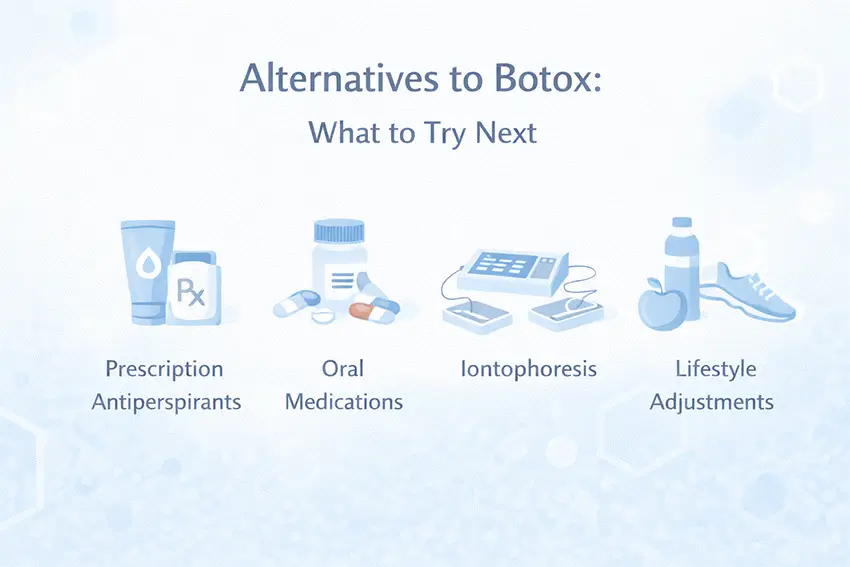
Botox vs Other Hyperhidrosis Treatments
Botox fits in the middle of the treatment ladder—after topical antiperspirants fail but before more aggressive procedures.
Botox vs Clinical-Strength Antiperspirants
-
Antiperspirants are inexpensive and effective for many.
-
Botox is for people who don’t respond or need stronger relief.
👉 If you haven't had success using antiperspirants, here are some of the main reasons why antiperspirants don't work for people.
Botox vs Prescription Antiperspirants
-
Prescription formulas can irritate skin.
-
Botox avoids irritation but is costlier.
Botox vs Oral Medications (Glycopyrrolate, Oxybutynin)
-
Oral meds reduce sweating body-wide.
-
Botox targets one problem area.
-
Oral meds have systemic side effects (dry mouth, constipation).
Botox vs Iontophoresis
-
Effective for hands/feet.
-
Requires frequent sessions.
-
Botox is faster but more expensive.
👉 Some people are curious if ionophoresis can be effective enough. I explore that idea in my article about whether iontophoresis actually works.
Botox vs miraDry
-
miraDry can permanently reduce underarm sweat.
-
More expensive up-front; doesn’t treat hands/feet/face.
-
Botox is reversible and predictable.
Who’s a Good Candidate for Botox?
You’re a strong candidate if you:
-
Have moderate to severe hyperhidrosis
-
Have tried clinical and prescription antiperspirants
-
Want fast results
-
Need dryness for work, events, performance, or social comfort
-
Can handle the cost
-
Are okay with injections every few months
Botox is especially helpful when sweating affects self-confidence, job performance (e.g., hands for professionals handling documents), or daily comfort.
💡 If you're dealing with embarrassment from excessive underarm sweating, take a look at my guide on preventing pit stains.
When Botox Isn’t the Best Option
Botox may not be ideal if:
-
You’re on a tight budget
-
You have mild sweating only
-
You want a permanent solution
-
You’re extremely needle-averse
-
You have certain neuromuscular disorders
-
You’re pregnant or breastfeeding (treatment is typically avoided)
A dermatologist can help determine whether alternative treatments are more suitable.
Common Myths About Botox for Sweating
“Botox prevents your body from cooling down.”
False. Only a small area is treated, and your body has millions of sweat glands.
“If you stop sweating in one area, you’ll sweat more somewhere else.”
Botox doesn’t cause compensatory sweating the way surgical sympathectomy can.
“Botox is toxic.”
Botox is highly purified and used in incredibly small, controlled doses.
“It’s only cosmetic.”
Botox is medically recognized and FDA-approved for severe underarm sweating.
Frequently Asked Questions
How many units are needed?
Underarms typically use 50–100 units total, palms and feet may use more.
Does Botox reduce odor?
Indirectly, yes. Less sweat → fewer odor-causing bacteria.
Does it hurt?
Underarms are mild; palms and feet can be painful but numbing helps.
Can you combine Botox with antiperspirant?
Yes. Many patients use a gentle formula at night for added dryness.
Is Botox safe long-term?
Yes—studies show strong safety data over many years.
Final Thoughts: Is Botox Worth It?
Botox is one of the most effective choices for people with moderate to severe hyperhidrosis—especially when antiperspirants haven’t helped enough. It offers fast, predictable, targeted dryness with minimal downtime. However, the cost, the temporary nature of results, and the need for multiple injections each year mean it’s not the perfect solution for everyone.
If excessive sweating is interfering with your daily life, your confidence, or your career, Botox is absolutely worth discussing with a dermatologist. Many people describe it as “life-changing,” especially for underarms, palms, and scalp.