
If you struggle with excessive sweating, chances are you’ve asked yourself this question at some point:
“Do I need prescription antiperspirant… or will clinical strength actually work?”
The problem is that the terms themselves are confusing.
“Clinical strength” sounds medical.
“Prescription” sounds extreme — maybe even a little scary.
As a result, many people either escalate too quickly and deal with unnecessary irritation, or wait too long while sweating continues to interfere with work, confidence, and daily life.
This guide breaks down the real differences between clinical strength and prescription antiperspirants, what each one does best, and how to decide which option makes sense for you.
💡 For some people, antiperspirants fail entirely — understanding why antiperspirants don’t work for certain people can help determine whether stronger options are necessary.
What “Clinical Strength” Antiperspirant Actually Means
Despite the name, clinical strength antiperspirants are not prescription products. They’re over-the-counter treatments designed for people who sweat more than average — but not necessarily enough to require medical intervention.
What makes an antiperspirant “clinical strength”?
Clinical strength antiperspirants contain a higher concentration of aluminum salts than standard deodorants. These aluminum compounds temporarily block sweat ducts, reducing how much sweat reaches the skin’s surface.
Importantly:
-
There is no regulated definition of “clinical strength”
-
The term is primarily marketing-based, not medical
-
Most products fall in the 15–20% aluminum range
That said, many clinical strength products are very effective, especially when used correctly.
How clinical strength antiperspirants work
Clinical strength antiperspirants work best when applied at night, when sweat glands are less active. This allows the aluminum salts to form plugs inside the sweat ducts, reducing sweat production the following day. - American Academy of Dermatology
This is why application technique matters so much — and why many people think these products “don’t work” when they actually weren’t used correctly.
💡If you'd like some tips, or just want to make sure you're using them correctly, I have a detailed guide dicussing the proper way to use antipespirants.
Where clinical strength works best
Clinical strength antiperspirants are commonly used on:
-
Underarms
-
Hands
-
Feet
-
Occasionally the face (with caution and proper formulation)
For many people, clinical strength is enough to dramatically reduce sweating without moving on to stronger treatments.
👉 Here's my guide on the best antiperspirants for excessive sweating if you're looking for a good place to start!
What Prescription Antiperspirants Are (and Aren’t)
Prescription antiperspirants are the strongest topical sweating treatments available before procedural options like iontophoresis or injections are considered. Prescription antiperspirants typically contain stronger aluminum chloride formulations and are intentionally used when non-prescription products fail to control moderate to severe sweating; they are most effective when applied at night and can cause irritation in some users. - Mayo Clinic
What doctors typically prescribe
Most prescription antiperspirants contain aluminum chloride hexahydrate, usually at concentrations of 20% or higher. This formulation creates a more aggressive blockage of sweat ducts.
Because of their strength, these products are:
-
Typically applied only at night
-
Used less frequently
-
More likely to cause irritation if misused
How prescription antiperspirants work
Prescription antiperspirants shut down sweat production more forcefully than OTC options. Many people see results within 1–3 days, which can feel life-changing if sweating has been severe.
However, the trade-off is increased risk of:
-
Burning or stinging
-
Redness
-
Itching
-
Skin inflammation
This doesn’t mean prescription antiperspirants are dangerous — but they do require more care and guidance.
What prescription does not mean
Using a prescription antiperspirant does not mean:
-
You’re “failing” at treatment
-
You’ll need it forever
-
You’re committing to invasive medical procedures
It’s simply another step on the treatment ladder.
👉 Talking to someone about excessive sweating can be embarrassing for some people (it was for me). I created a guide with some helpful tips and encouragment for speaking with a doctor. Be sure to check it out before you schedule a visit.
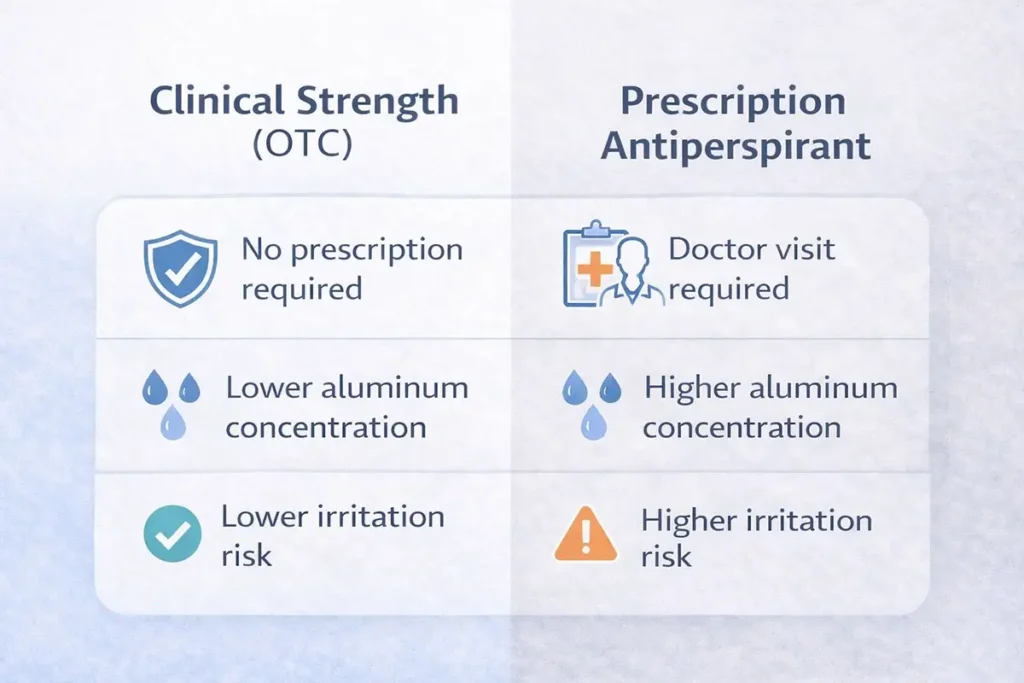
Clinical Strength vs Prescription Antiperspirant: Side-by-Side Comparison
| Feature | Clinical Strength | Prescription |
|---|---|---|
| Availability | Over-the-counter | Prescription only |
| Aluminum Strength | ~15–20% | ~20–25%+ |
| Effectiveness | Mild to moderate sweating | Severe or resistant sweating |
| Speed of Results | 3–7 days | 1–3 days |
| Irritation Risk | Low to moderate | Moderate to high |
| Ease of Use | Simple nightly routine | Strict nighttime routine |
| Common Areas | Underarms, hands, feet | Underarms, hands, feet |
| Long-Term Use | Generally well tolerated | May require breaks |
| Cost | Lower | Higher (insurance may help) |
| Best For | New or moderate cases | Severe cases after OTC failure |
🔑 Key takeaway:
Neither option is “better” across the board. The right choice depends on severity, tolerance, and past results.
Effectiveness vs Side Effects: The Real Trade-Off
The biggest difference between clinical strength and prescription antiperspirants isn’t whether they work — it’s how hard they push your skin.
Sweat reduction
-
Clinical strength products often reduce sweat by 40–70%
-
Prescription options can reduce sweat by 70–90% or more
For some people, that extra reduction is essential. For others, it’s unnecessary.
Skin irritation
Stronger aluminum formulations:
-
Penetrate deeper
-
Stay active longer
-
Are more likely to irritate sensitive skin
This is why prescription products often require:
-
Completely dry skin before application
-
No shaving beforehand
-
Careful wash-off routines in the morning
Long-term use considerations
Many people cycle treatments:
-
Using prescription products short-term
-
Maintaining results with clinical strength afterward
This approach can reduce irritation while preserving effectiveness.

When Clinical Strength Is Usually Enough
Clinical strength antiperspirant is often sufficient if:
-
Sweating is situational (stress, heat, anxiety)
-
Symptoms are mild to moderate
-
You’re new to treatment
-
You want a lower-risk option first
It works particularly well for:
-
Hands
-
Feet
-
Underarms
For many people, this is the sweet spot between effectiveness and comfort.
🔍 Looking to find a good clinical strength antiperspirant? Check out my posts linked below to narrow things down.
When Prescription Antiperspirant Is Worth Considering
Prescription antiperspirant may be appropriate if:
-
You soak through clothing daily
-
Sweaty hands or feet severely interfere with work
-
Multiple OTC products have failed
-
Quality of life is clearly impacted
This is especially common in people with hyperhidrosis. If think you might have hyperhidrosis, here are some signs to look for.
In these cases, escalation isn’t overreacting — it’s practical.
💡 Before comparing prescription options, it’s important to first understand the core difference between deodorant vs antiperspirant for excessive sweating.
Common Myths That Hold People Back
“Prescription means something is seriously wrong with me.”
Not true. Excessive sweating is common and treatable.
“Clinical strength is basically prescription.”
It’s not. The difference in formulation matters.
“Once I start prescription, I can’t stop.”
Many people step down after control is achieved.
“Aluminum is always dangerous.”
Current evidence supports aluminum antiperspirants as safe when used as directed.
Frequently Asked Questions
Should I try clinical strength before prescription?
Yes — and most doctors recommend this first.
Can prescription antiperspirant be used on hands and feet?
Yes, as long as you follow the directions and instruction from your doctor.
Why does prescription burn more?
Higher aluminum concentration + moisture = irritation.
How long should I try clinical strength before escalating?
At least 2–3 weeks of proper nightly use.
Can I alternate between the two?
Yes, many people do with good results.
What if both irritate my skin?
Don't be discouraged! Other options like iontophoresis may be worth exploring.
👉 Here is some information on iontophoresis for excessive sweating if you'd like to learn more about this option.
Final Verdict: Which One Should You Try First?
If you’re deciding between clinical strength and prescription antiperspirant, the smartest approach is simple:
Start conservative. Escalate intentionally.
-
Begin with clinical strength and proper application
-
Give it time to work
-
Move to prescription only if necessary
For many people, clinical strength provides enough relief without unnecessary side effects. For others, prescription treatment is a valuable and appropriate next step.
Either way, understanding the difference puts you back in control — and that’s the real goal.