
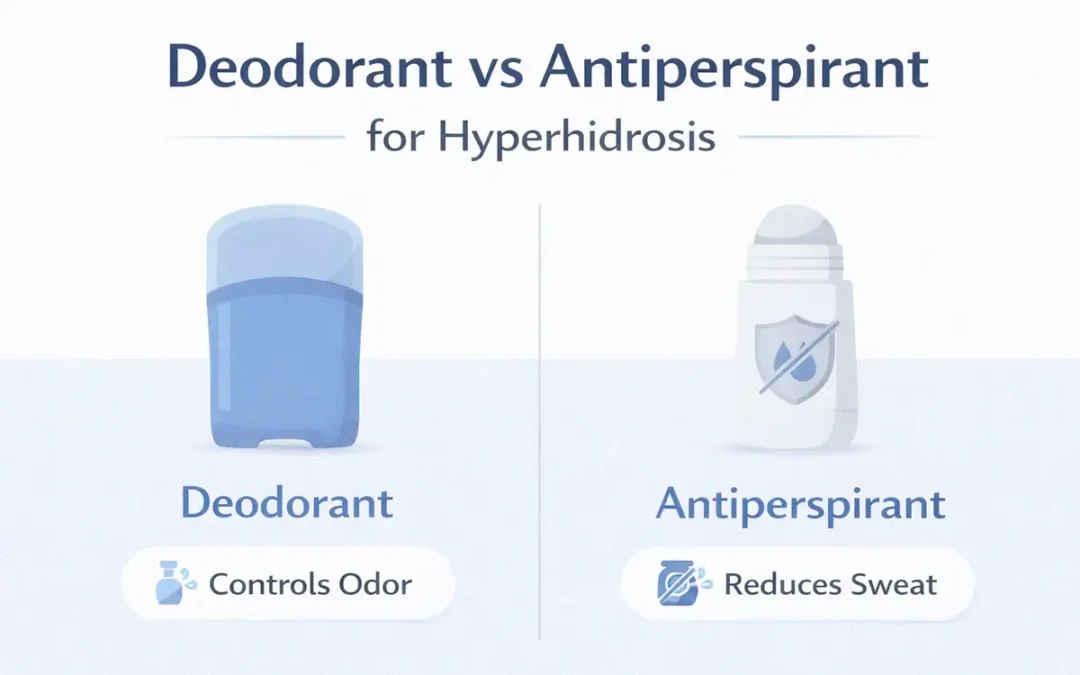
If you have hyperhidrosis, chances are you’ve been told to “just use deodorant” or “switch brands.” Unfortunately, these well-meaning tips often miss the point. While deodorant can help with odor, it does very little to stop the excessive sweating that defines hyperhidrosis.
This article will break down the key differences between deodorant and antiperspirant, explain why one is usually more effective than the other for hyperhidrosis, and give practical guidance on how to use them properly. By the end, you’ll know exactly which product to start with and how to maximize results — without guessing or wasting money.
The Short Answer
✔️ Deodorant controls odor, while antiperspirant reduces sweat — and for hyperhidrosis, antiperspirant is almost always the correct first choice.
What Deodorant Actually Does (And Doesn’t Do)
Deodorant is primarily designed to mask or neutralize odor caused by bacteria breaking down sweat. It contains fragrances or antibacterial ingredients to keep underarms, hands, or feet smelling fresh.
What deodorant does well:
-
Reduces odor temporarily
-
Can be used on multiple areas
-
Often comes in natural or fragrance-focused formulations
What deodorant doesn’t do:
-
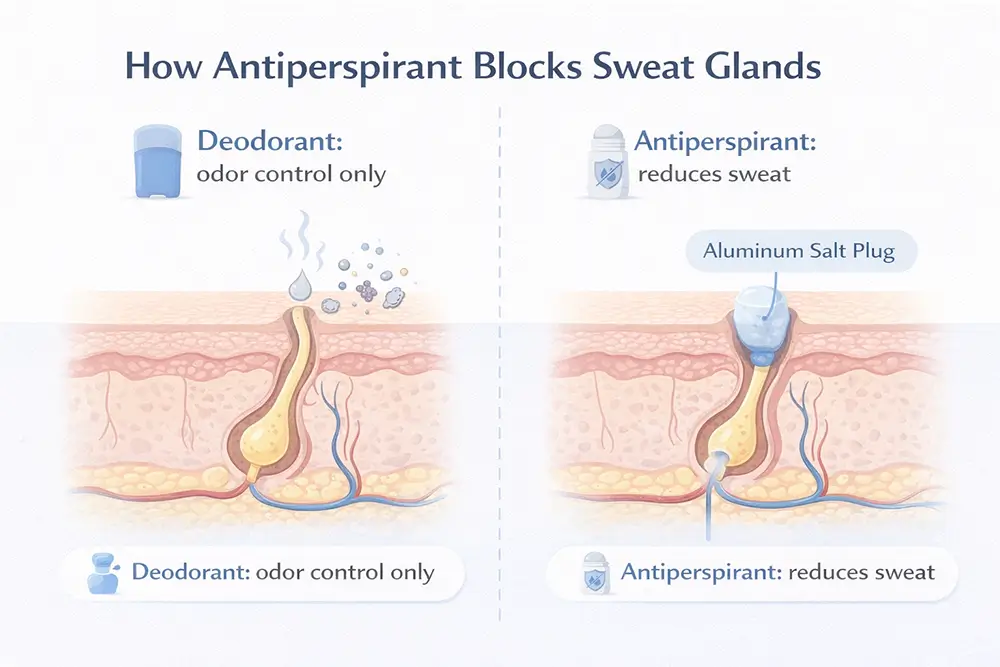
It does not block sweat glands
-
It cannot stop excessive sweating caused by hyperhidrosis
-
Using deodorant alone often leaves you wet and frustrated, even if odor is controlled
When deodorant still helps:
Deodorant can work as a layering product. For example, applying a clinical strength antiperspirant at night and deodorant in the morning can help manage both sweat and odor. More on this below.
👉 Here's another post that breaks down the best deodorant options available right now.
What Antiperspirant Actually Does (And Why It Works)
Antiperspirants are formulated to temporarily block sweat glands using aluminum-based compounds. When applied to dry skin (usually at night), the aluminum reacts with sweat to form a temporary plug in the sweat duct, reducing sweat production.
Key points for hyperhidrosis:
-
Clinical strength antiperspirants contain higher aluminum concentrations, which are more effective for excessive sweating.
-
Nighttime application is crucial — applying to completely dry skin increases efficacy.
-
Antiperspirants reduce sweat, but they do not eliminate odor completely, so combining with deodorant may still be necessary.
❗ If sweat control isn’t improving, it may help to understand why antiperspirants fail even when the right product is used.
Deodorant vs Antiperspirant: Side-by-Side Comparison
| Feature | Deodorant | Antiperspirant |
|---|---|---|
| Primary Function | Controls odor | Reduces sweat |
| Active Ingredient | Fragrances, antibacterial agents | Aluminum salts |
| Effectiveness for Hyperhidrosis | Minimal | Moderate to strong |
| When to Use | Morning for odor | Nighttime for sweat reduction |
| Side Effects | Rare irritation | Mild irritation possible |
| Prescription Option | None | Available if OTC fails |
Quick takeaway: For people with hyperhidrosis, antiperspirant is the clear winner in controlling sweating, while deodorant is mostly cosmetic.
Why Deodorant Alone Fails for Hyperhidrosis
Even the strongest deodorants cannot manage the volume of sweat that comes with hyperhidrosis. The reasons are simple:
1. Sweat overwhelms the deodorant: Once the sweat ducts are active, bacteria thrive, and odor returns despite fragrance.
2. No sweat control: Deodorants do nothing to reduce the actual wetness that can stain clothes or create discomfort.
3. Emotional impact: Relying on deodorant alone often leads to frustration, embarrassment, and self-consciousness — compounding the stress of hyperhidrosis itself.
When Deodorant Still Makes Sense (Layering Strategy)
While deodorant alone isn’t enough, it can enhance an antiperspirant routine. Here’s the optimal approach:
1. Apply a clinical strength antiperspirant at night
-
-
Ensures the aluminum salts have time to form sweat duct plugs
-
Target dry skin for maximum effect
-
2. Apply deodorant in the morning
-
-
Masks odor
-
Provides a fresh scent
-
Works on top of sweat reduction rather than trying to replace it
-
Common Myths About Antiperspirants
Many people hesitate to use antiperspirants due to misconceptions. Let’s clear up a few:
1. “Aluminum in antiperspirants is dangerous”
-
-
Multiple dermatology sources (AAD, Mayo Clinic) state aluminum salts are safe when used as directed.
-
- “Antiperspirant makes sweating worse”
-
Using properly does not increase sweating. It temporarily blocks sweat ducts, giving relief.
-
- “Only prescription antiperspirants work”
-
OTC clinical strength products often suffice for mild to moderate hyperhidrosis. Prescription is needed only if OTC fails.
-
What People With Hyperhidrosis Should Use First
Here’s a step-by-step guide:
1. Start with a clinical strength antiperspirant
-
-
Roll-on or lotion format works best
-
Nighttime application is key
-
2. Monitor results for 2–3 weeks
-
-
Track sweat reduction
-
Adjust frequency or application if needed
-
3. Escalate to prescription only if necessary
-
-
Prescription antiperspirants are stronger but can cause mild irritation
-
Consult a dermatologist if symptoms persist
-
Try the 7-Day Sweat Control Reset
A simple, easy to follow daily routine to help manage hyperhidrosis. No gimmicks or huge time investment. Just practical steps that are proven to be effective.
Frequently Asked Questions
Can deodorant stop excessive sweating?
No — deodorant only masks odor. It cannot block sweat glands.
Is antiperspirant safe for daily use?
Yes — clinical strength antiperspirants are safe when applied to dry skin as directed.
Can I use both deodorant and antiperspirant?
Absolutely — antiperspirant at night, deodorant in the morning works best.
Why does deodorant stop working?
Sweat volume often overwhelms deodorant, especially for hyperhidrosis.
Do natural deodorants work for hyperhidrosis?
They may help with odor but do not reduce sweating.
When should I see a doctor?
If clinical strength antiperspirants don’t provide relief after proper use, consult a dermatologist.
Are prescription antiperspirants safe?
Yes, when used as directed. Mild skin irritation is the most common side effect.
Conclusion
Hyperhidrosis can feel frustrating and embarrassing, but the solution is not complicated. Understanding the difference between deodorant and antiperspirant gives you clarity and control.
Key takeaways:
-
Deodorant controls odor but does not stop sweating
-
Antiperspirant, especially clinical strength, reduces sweat effectively
-
Layering antiperspirant at night and deodorant in the morning often works best
-
Prescription is only needed if OTC options fail
By following this approach, you can get better control on sweat with less stress and frustration.
❓ Also struggle with sweaty feet? Check out my post covering the most helpful antiperspirants for sweaty feet.