
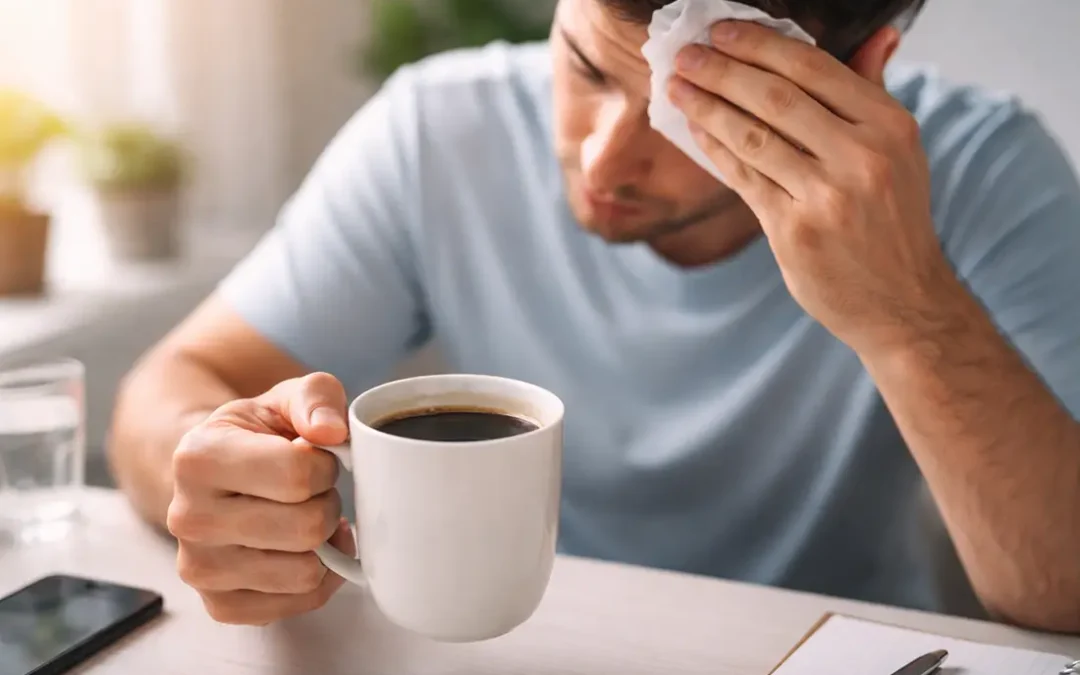
If you’ve ever noticed your hands, face, or underarms start sweating shortly after drinking coffee, you’re not imagining it.
For people dealing with excessive sweating, even a small daily habit like your morning cup of coffee can feel like it’s making things worse. But is caffeine actually to blame—or is it just a coincidence?
The truth is, coffee can make sweating worse for some people, especially if you already deal with excessive sweating. The good news is that you don’t necessarily have to give it up completely.
In this guide, we’ll break down exactly why coffee can trigger sweating, how it affects people with hyperhidrosis, and what you can do to reduce the impact without sacrificing your routine.
👉 Curious if other foods can impact sweating? Check out my post discussing how diet, hydration, and lifestyle can affect excessive sweating.
Does Coffee Make Hyperhidrosis Worse?
Yes—coffee can make hyperhidrosis worse for some people.
Caffeine stimulates your nervous system, increases heart rate, and can activate your sweat glands. If you already have overactive sweating, this added stimulation can make symptoms more noticeable or easier to trigger.
That said, not everyone reacts the same way, and the effect often depends on how much caffeine you consume and how sensitive your body is to it.
Why Coffee Can Make You Sweat More
To understand the connection, it helps to look at what caffeine is actually doing in your body.
Caffeine Stimulates the Nervous System
Caffeine activates your “fight or flight” response—the same system that kicks in when you’re stressed or under pressure. This response naturally increases sweating as your body prepares for action.
Increased Heart Rate and Body Temperature
After drinking coffee, your heart rate rises slightly and your body temperature can increase. Even small changes like this can signal your body to start cooling itself through sweat.
Activation of Sweat Glands
Caffeine can directly stimulate your sweat glands, especially in areas like your palms, face, and underarms. These are also the areas most commonly affected by excessive sweating.
How Caffeine Affects People With Hyperhidrosis
If you have Hyperhidrosis, your sweat glands are already more active than normal.
That means your baseline is different.
Instead of sweating only when your body needs to cool down, your sweat glands may respond more quickly—and more intensely—to triggers like stress, heat, or stimulation.
Caffeine essentially amplifies that response.
So while someone without hyperhidrosis might not notice any change after a cup of coffee, you might experience:
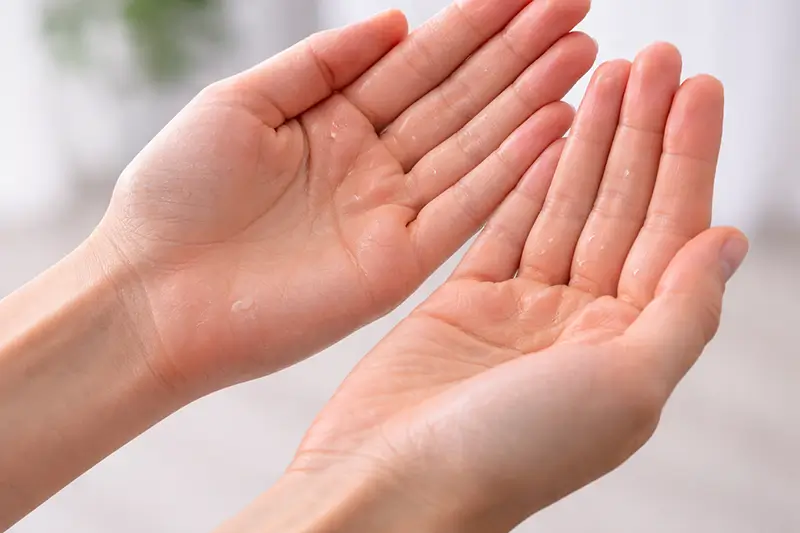
- Sweaty palms while typing or working
- Increased facial sweating
- Damp underarms even in a cool environment
It’s not that coffee causes hyperhidrosis—it just makes an existing tendency more noticeable.
Does Coffee Always Make Sweating Worse?
Not necessarily.
Some people with hyperhidrosis can drink coffee without any noticeable increase in sweating. Others find that even small amounts trigger symptoms.
It usually depends on a few key factors:
- Caffeine tolerance – Regular coffee drinkers may be less sensitive
- Amount consumed – Larger doses are more likely to trigger sweating
- Timing – Drinking coffee during stressful or high-focus situations can amplify the effect
- Environment – Warm rooms or poor airflow can make things worse
This is why the relationship between coffee and sweating can feel inconsistent.
Signs Coffee Might Be Triggering Your Sweating
If you’re unsure whether caffeine is affecting you, look for patterns like these:
- Sweating starts shortly after drinking coffee
- Your hands or face sweat more during focused tasks
- Symptoms are worse on days you drink more caffeine
- You notice improvement when you skip coffee
These patterns are often subtle, but once you notice them, they become hard to ignore.
Should You Stop Drinking Coffee If You Have Hyperhidrosis?
In most cases, you don’t need to quit coffee completely.
Instead, it’s more effective to adjust how and when you drink it.
Reduce Your Intake
Cutting back—even slightly—can reduce how strongly your body reacts.
Switch to Lower-Caffeine Options
Half-caf or smaller servings can give you the benefits without the same intensity.
Time It Strategically
Try avoiding coffee before situations where sweating is more noticeable, like meetings, gaming sessions, or social events.
The goal isn’t perfection—it’s finding a balance that works for you.
How to Drink Coffee Without Making Sweating Worse
If you’re not ready to give up coffee (and most people aren’t), there are simple ways to reduce its impact.
Limit the Amount
Stick to one cup instead of multiple throughout the day.
Avoid Drinking on an Empty Stomach
Caffeine hits harder when your stomach is empty, which can intensify its effects.
Stay Cool
Your environment matters more than you think. A cooler room or better airflow can offset some of caffeine’s effects.
Stay Hydrated
Dehydration can make your body work harder to regulate temperature, which may increase sweating.
Try Decaf or Half-Caf
You can often reduce symptoms significantly without eliminating coffee entirely.

Alternatives to Coffee That May Reduce Sweating
If coffee consistently triggers sweating, you might want to experiment with alternatives:
- Decaf coffee
- Herbal teas
- Lower-caffeine drinks
You don’t have to replace coffee permanently—but testing alternatives can help you understand how your body responds.
When Sweating Might Be More Than Just Caffeine
If you notice that sweating:
- Happens daily
- Occurs regardless of caffeine intake
- Interferes with daily activities
…it may not be about coffee alone.
In those cases, your symptoms are more likely tied to underlying hyperhidrosis rather than a specific trigger. Identifying triggers like caffeine is still helpful—but it’s only part of the picture.
FAQ: Coffee and Sweating
Can caffeine cause sweating even without hyperhidrosis?
Yes. Caffeine can increase sweating in anyone, but the effect is usually more noticeable in people with sensitive or overactive sweat glands.
Why do my hands sweat after coffee?
Your palms are highly responsive to nervous system stimulation. Caffeine can trigger that response, leading to sweaty hands.
Does decaf coffee cause sweating?
Decaf contains much less caffeine, so it’s less likely to trigger sweating—but it can still happen in very sensitive individuals.
How long does caffeine affect sweating?
Caffeine can stay in your system for several hours, so its effects on sweating may last longer than you expect.
Quick Summary
- Coffee can make hyperhidrosis worse for some people
- Caffeine stimulates your nervous system and sweat glands
- The effect depends on your sensitivity and intake
- You don’t need to quit—small adjustments can help
Final Thoughts
If you’ve been wondering whether coffee is making your sweating worse, there’s a good chance it’s playing a role—at least to some degree.
The key isn’t to eliminate every possible trigger. It’s to understand how your body responds and make small, practical adjustments that improve your comfort.
For many people, that means keeping coffee in their routine—just with a little more awareness and control.