
Pit stains are more than a laundry issue — for many people, they’re a confidence killer. Whether you’re at work, on a date, or just trying to get through a normal day, visible sweat marks under your arms can make you feel self-conscious, uncomfortable, and constantly on edge.
If you’ve ever asked yourself “Why do my armpits sweat so much?” or “How can I stop pit stains from showing through my clothes?”, you’re not alone. Excessive underarm sweating is extremely common, and for some people, it’s caused by a medical condition called hyperhidrosis.
The good news? Pit stains are preventable — or at least dramatically reducible — with the right combination of products, clothing choices, and sweat-management strategies.
In this guide, you’ll learn:
-
Why pit stains happen
-
What makes them worse
-
How to prevent pit stains using proven, practical methods
-
When excessive underarm sweating may be a medical issue
-
Long-term solutions for chronic sweating
Whether you deal with occasional sweat marks or constant underarm moist
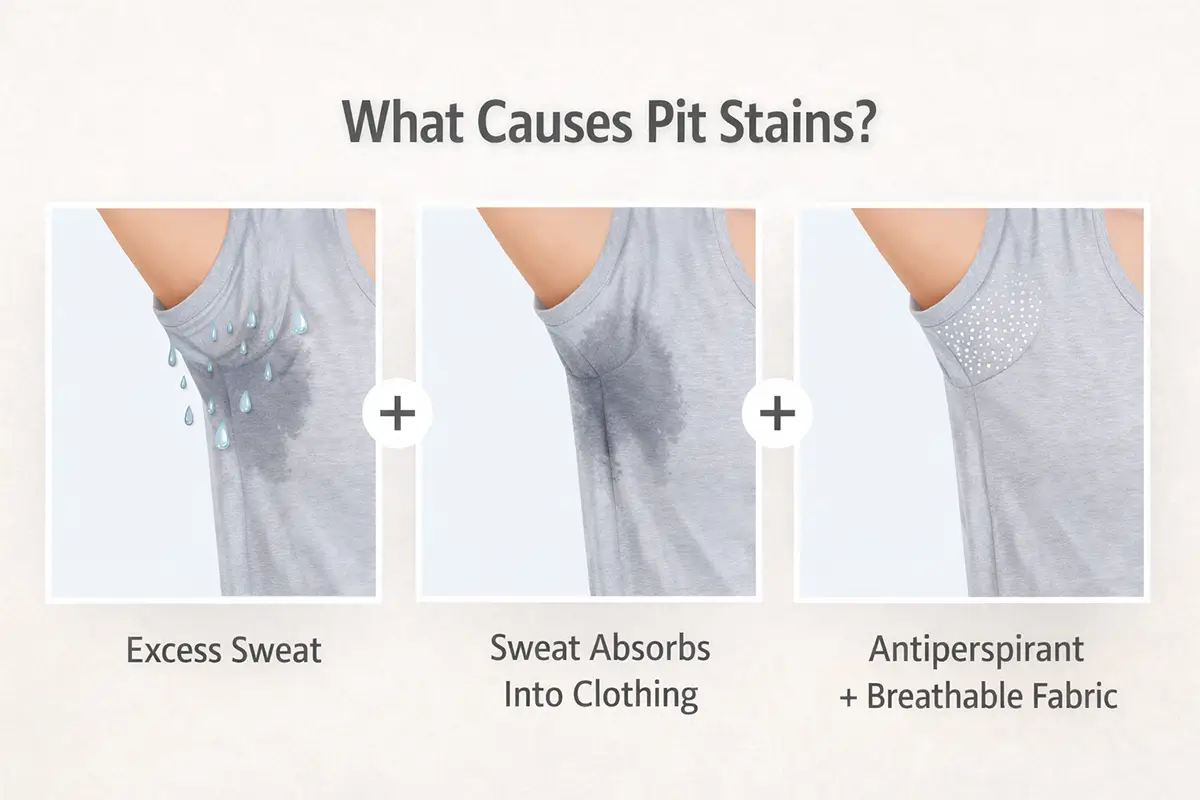
What Causes Pit Stains?
Before you can prevent pit stains, it’s important to understand what’s actually causing them.
Pit stains form when sweat mixes with fabric and becomes visible through clothing. Sweat itself is colorless, but several factors can make it noticeable:
1. Sweat Gland Activity
Your underarms contain two types of sweat glands:
-
Eccrine glands (produce watery sweat for temperature regulation)
-
Apocrine glands (produce thicker sweat that reacts with bacteria)
When these glands are overactive, sweat accumulates quickly and soaks into clothing.
2. Heat, Stress, and Anxiety
Even if you’re not physically hot, emotional triggers like stress, nervousness, or embarrassment can cause intense underarm sweating — especially during meetings, presentations, or social situations. Stress-induced sweating can often be worse than heat sweating for people with sensitive sweat responses.
3. Antiperspirant Residue
Ironically, some pit stains are caused not by sweat alone, but by a reaction between sweat and aluminum-based antiperspirants, which can leave yellowish stains on white shirts.
4. Hyperhidrosis
If you sweat excessively even when resting or in cool environments, you may be dealing with primary axillary hyperhidrosis — a condition that causes chronic underarm sweating without an obvious trigger.
How to Prevent Pit Stains (What Actually Works)
Preventing pit stains isn’t about one magic product — it’s about layering smart strategies that work together.
1. Use Antiperspirant (Not Just Deodorant)
This is the single most important step.
-
Deodorants control odor
-
Antiperspirants reduce sweat production
If pit stains are your problem, deodorant alone will not help.
Tips for best results:
-
Look for products labeled clinical strength or prescription strength
-
Apply antiperspirant at night, not just in the morning
-
Apply to completely dry skin
Night application allows the active ingredients to block sweat ducts more effectively while you sleep.
👉 If you need a good antiperspirant, check out this post I wrote detailing the best antiperspirants for excessive sweating.
2. Apply Antiperspirant Correctly
Many people use antiperspirant incorrectly, which makes it far less effective.
Correct method:
1. Shower and dry underarms completely
2. Apply a thin, even layer
3. Let it dry before putting on clothing
4. Reapply lightly in the morning if needed
Over-applying can actually increase residue and staining without improving sweat control. Using antiperspirant correctly is critical, especially if you’re trying to prevent pit stains long-term.
3. Wear Sweat-Friendly Fabrics
What you wear matters as much as what you apply to your skin.
Best fabrics to prevent pit stains:
-
Bamboo
-
Merino wool
-
Moisture-wicking performance blends
Fabrics to avoid:
-
Polyester (traps sweat)
-
Nylon
-
Rayon
Breathable fabrics allow sweat to evaporate instead of pooling under your arms.
4. Choose Colors and Patterns Strategically
While this doesn’t stop sweating, it dramatically reduces visibility.
Most forgiving colors:
-
Black
-
Navy
-
Charcoal
-
White
Worst colors for pit stains:
-
Light gray
-
Pastels
-
Thin solid colors
Patterns, heathered fabrics, and darker tones are far more forgiving than flat, light colors.
5. Use Sweat Pads or Underarm Shields
Sweat pads act as a physical barrier between your skin and your shirt.
They:
-
Absorb moisture before it reaches clothing
-
Protect shirts from stains
-
Reduce embarrassment in high-stress situations
Options include disposable adhesive pads or reusable washable shields sewn into shirts.
These are especially helpful for:
-
Work presentations
-
Weddings
-
Job interviews
-
Long travel days
👉 One of the most reliable ways to prevent pit stains is by wearing sweat-proof undershirts designed for excessive sweating that block moisture before it reaches your outer clothing.
6. Manage Stress-Induced Sweating
Stress sweating is very real — and often worse than heat sweating.
Helpful techniques include:
-
Deep breathing exercises
-
Mindfulness or meditation
-
Limiting caffeine
-
Wearing breathable layers during stressful events
Reducing the trigger can reduce the sweat.
7. Wash Clothes Properly to Remove Residue
Once pit stains set in, they’re harder to remove.
Laundry tips:
-
Wash shirts promptly after wearing
-
Avoid fabric softener (traps residue)
-
Use baking soda or white vinegar for underarm areas
-
Don’t overdry shirts with existing stains
Preventing buildup helps future sweat marks stay less visible.
When Pit Stains May Be a Medical Issue
If you experience:
-
Constant underarm wetness
-
Sweat dripping from armpits
-
Pit stains even in cool environments
-
Sweat soaking through layers
You may have axillary hyperhidrosis.
This condition affects millions of people and often starts in adolescence or early adulthood.
Medical & Long-Term Solutions for Chronic Pit Stains
If standard prevention methods aren’t enough, medical treatments may help.
Prescription Antiperspirants
Stronger formulations than over-the-counter options, often containing higher aluminum chloride concentrations.
Oral Medications
Some medications reduce overall sweating but may have side effects.
Botox Injections
Botox can temporarily block sweat signals to the underarms for 4–6 months. More detailed information can be found in my article on Botox for excessive sweating.
Iontophoresis
A treatment more commonly used for hands and feet, but sometimes adapted for underarms.
A dermatologist can help determine the best option.
Frequently Asked Questions About Preventing Pit Stains
Why do pit stains show even when I’m not hot?
Stress, anxiety, and hyperhidrosis can trigger sweat independent of temperature.
Can deodorant make pit stains worse?
Yes. Deodorants don’t reduce sweat and may contribute to residue buildup.
Are yellow pit stains caused by sweat?
They’re usually caused by a reaction between sweat and aluminum-based antiperspirants.
Is excessive underarm sweating normal?
Occasional sweating is normal. Constant, excessive sweating may be hyperhidrosis.
Final Thoughts: You’re Not Alone
Pit stains can feel embarrassing, but they’re incredibly common — and manageable.
With the right combination of:
-
Proper antiperspirant use
-
Smart clothing choices
-
Sweat-absorbing tools
-
Medical support when needed
You can dramatically reduce pit stains and regain confidence in your daily life.
At Sweaty Living, the goal is to normalize these conversations and provide real solutions — because excessive sweating isn’t a personal failure. It’s a physical condition that deserves understanding and support.