
If you have sweaty hands or feet, you’ve probably reached the point where regular antiperspirants just don’t cut it anymore.
Maybe you’ve found yourself thinking:
-
“My hands are always damp no matter what I do.”
-
“I can’t shake hands without worrying.”
-
“My feet sweat even when I’m just sitting.”
-
“I’ve tried everything—does iontophoresis actually work?”
If your hands or feet sweat constantly—even when you’re not hot or nervous—you may be dealing with a medical condition called hyperhidrosis. In this guide I explain how to recognize the signs of hyperhidrosis.
Iontophoresis is one of those treatments that gets mentioned a lot, but rarely explained in a way that feels honest and relatable. Let’s break down what it really is, what it’s like to use, and whether it actually helps people with sweaty hands and feet.
💡 Most dermatologists recommend trying prescription antiperspirant treatment before moving on to advanced options like iontophoresis.
What Is Iontophoresis (In Plain English)?
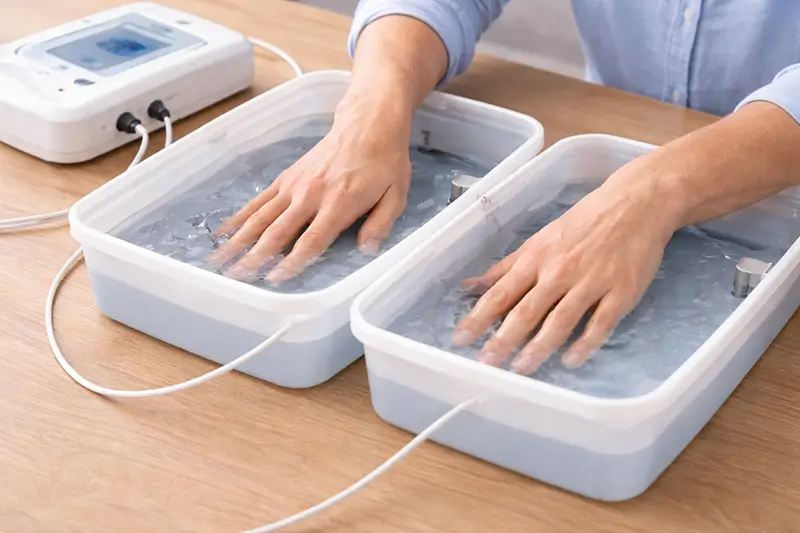
Iontophoresis is a treatment that uses mild electrical currents passed through water to reduce sweating in the hands and feet.
That description alone usually triggers mixed reactions:
-
“Electricity? That sounds intense.”
-
“Is that safe?”
-
“Does it hurt?”
In reality, the sensation is usually described as:
“Tingly.”
“Weird at first.”
“Uncomfortable, but not painful.”
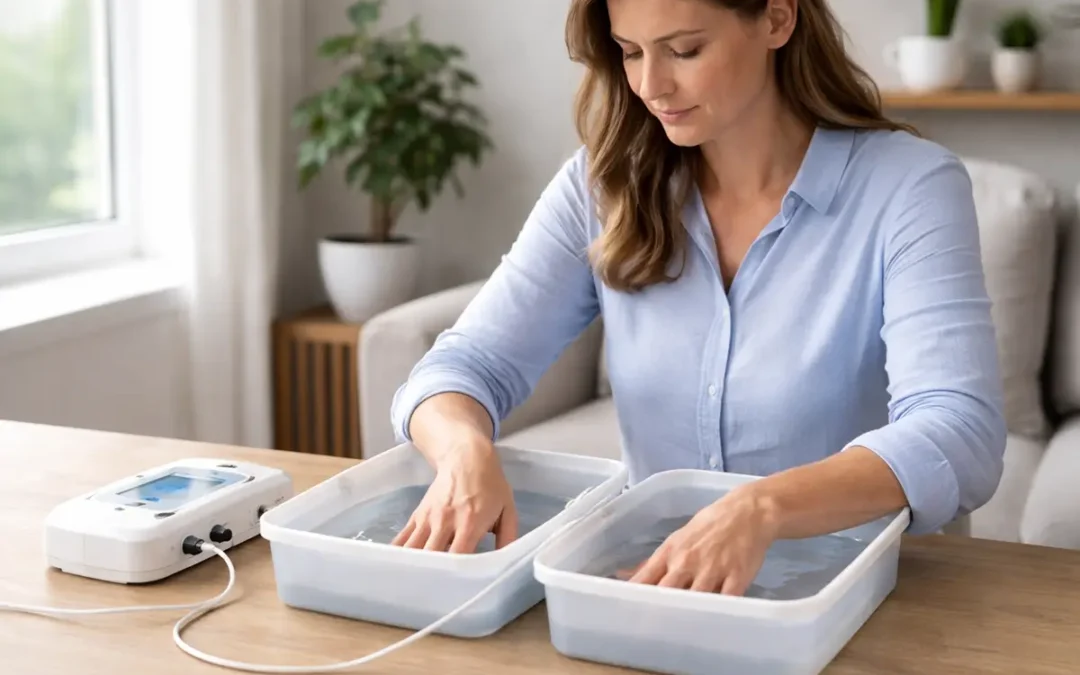
Your hands or feet are placed in shallow trays of water, and a low electrical current is applied for a set period of time. Treatment sessions typically last 20-30 minutes and you have the ability to adjust the intensity of the current as you proceed.
Why Iontophoresis Is Often Recommended for Hands and Feet
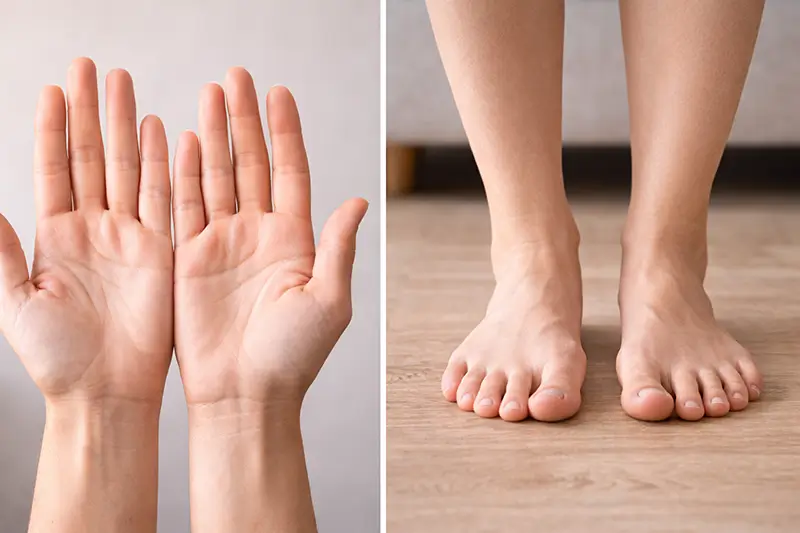
Palmar (hands) and plantar (feet) hyperhidrosis tend to respond better to iontophoresis than other areas.
People often say:
“Nothing worked on my hands until I tried this.”
“It’s the first thing that actually slowed my sweating.”
It's an effective treatment that people can administer themselves from within the comfort of their own home. That’s why dermatologists frequently suggest iontophoresis after antiperspirants fail, but before more invasive options.
Does Iontophoresis Actually Work?
Short answer: Yes—for many people. But not everyone.
Here’s the most honest way to put it: Iontophoresis works when you stick with it.
What People Who See Results Usually Say
-
“My hands are finally dry enough to function.”
-
“It didn’t stop sweating completely, but it made it manageable.”
-
“I can shake hands now without panic.”
- "I can finally type without sweating."
What People Who Struggle Often Say
-
“It worked, but I stopped keeping up with it.”
-
“It helped at first, then the sweating came back.”
-
“The schedule was hard to maintain.”
Consistency matters more than anything with this treatment. It does require time and effort, especially during the initial phase.
How Long Does It Take to See Results?
This is one of the most common questions—and frustrations.
Most people don’t see results after one session.
Typical experiences:
-
Initial sessions: “Nothing is happening yet.”
-
After 1–2 weeks: “I think my hands are slightly drier.”
-
After 3–4 weeks: “Okay, this is actually working.”
If someone quits too early, they often conclude it “didn’t work,” when in reality they just didn’t reach the maintenance phase.
What Using Iontophoresis Is Really Like
This part matters, because brochures don’t tell the whole story.
People commonly mention:
-
Time commitment (multiple sessions per week initially)
-
Minor skin dryness or irritation
-
Tingling or pins-and-needles sensation
-
Frustration during the early weeks
But they also say:
“Once it becomes routine, it’s not a big deal.”
“I do it while watching TV.”
Is Iontophoresis Permanent?
No—and this is important to understand.
Iontophoresis does not cure hyperhidrosis.
What it does:
-
Reduces sweat output
-
Helps control symptoms
-
Requires ongoing maintenance
Once treatments stop, sweating usually returns.
This is why some people get frustrated and give up on it. It's a way to manage hyperhidrosis, not a way to permanently stop it.
Some people wonder if they’ll eventually “outgrow” excessive sweating and won’t need treatments like this forever. I explore that question in detail in my article on whether hyperhidrosis goes away with age.
Who Is Iontophoresis Best For?
With these things in mind, let's determine if you might be a good candidate for this type of treatment. Iontophoresis tends to work best for:
-
People with sweaty hands and/or feet
-
Those willing to follow a routine
-
People who prefer non-medication options
It may not be ideal if:
-
You want a one-time solution
-
You struggle with consistency
-
You have certain medical implants or conditions (always check with a doctor)
If your sweating is mild or just starting, clinical-strength antiperspirants may be enough. I cover the best options and how to apply them properly in my guide on antiperspirants for excessive sweating.
So...Is It Worth Trying?
For many people with sweaty hands and feet, the answer is yes!
Especially if you’ve reached the point where:
-
Social interactions feel stressful
-
Daily tasks are harder than they should be
-
You’re tired of hearing “just use antiperspirant”
If you're willing to commit to the routine, iontophoresis can be a very effective solution. Many people who have found success with it wish they had tried it sooner.
Last Thing: Honest Expectations Matter
Iontophoresis isn’t magic. It doesn’t work overnight. And it isn’t effortless.
But for the right person, it can be life-changing in subtle, meaningful ways:
-
Less anxiety
-
More confidence
-
Fewer daily frustrations
- A sense of relief
If you go into it with realistic expectations—and patience—it’s one of the most effective non-invasive options for sweaty hands and feet.