
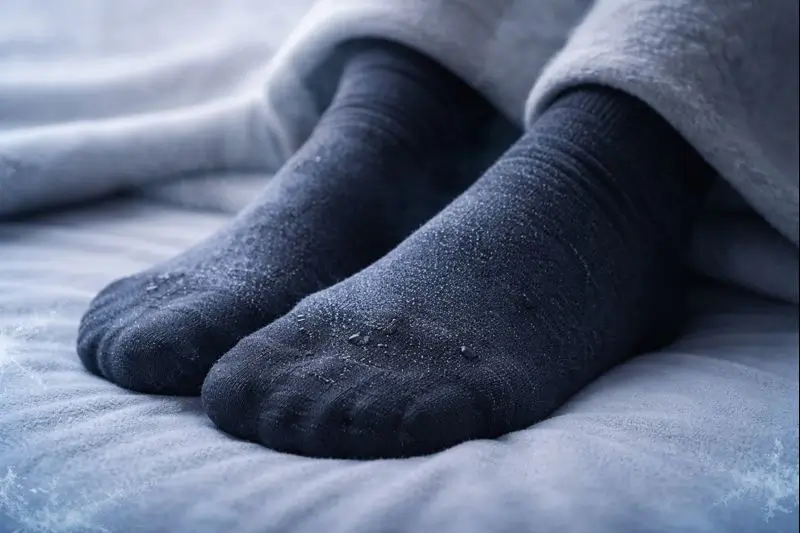
Cold and sweaty feet can happen at the same time — and it’s more common than many people realize. Your feet may feel icy, clammy, damp, or constantly uncomfortable even when you’re indoors or wearing socks.
For some people, it happens occasionally during stress or cold weather. For others, cold sweaty feet are a daily frustration linked to excessive sweating, circulation issues, anxiety, or footwear choices.
The good news: in many cases, there are practical ways to improve symptoms.
In this guide, you’ll learn:
- what causes cold and sweaty feet
- why feet can feel cold even while sweating
- when symptoms may point to an underlying condition
- and what actually helps keep feet warmer and drier
Why Are My Feet Cold and Sweaty?
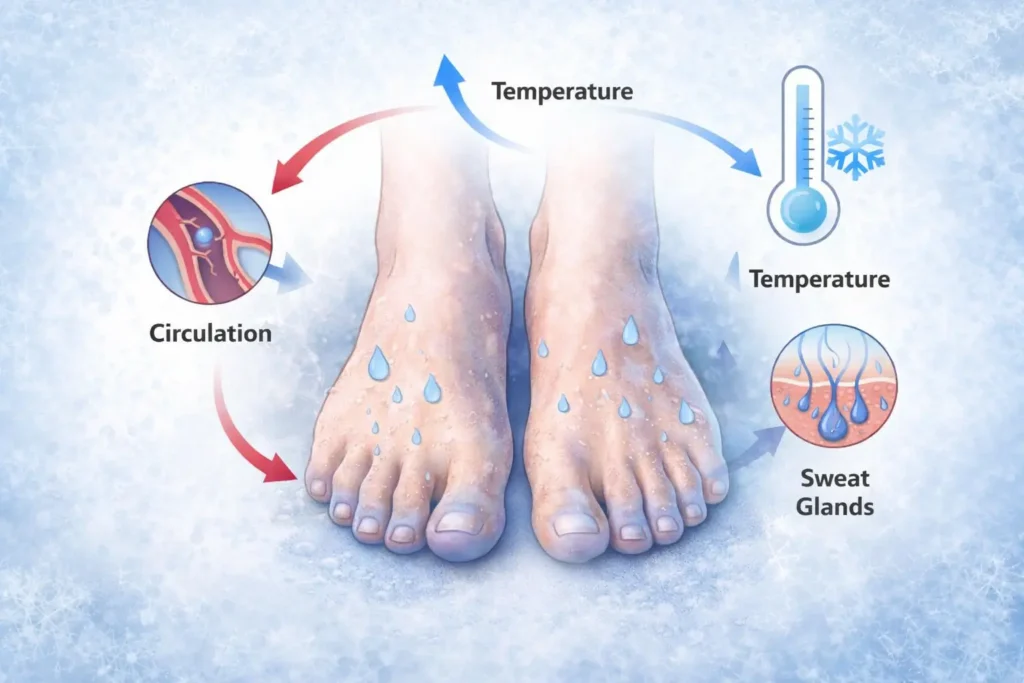
Cold sweaty feet usually happen when your body’s temperature regulation, circulation, and sweat glands aren’t working together properly.
Here’s what’s often happening:
- Your body is trying to conserve heat, making your feet feel cold
- Your sweat glands continue producing moisture anyway
- Sweat evaporates from the skin, creating an additional cooling effect
- Shoes and socks trap moisture against the skin
The result is the classic cold-and-clammy feeling many people experience throughout the day.
Some people notice symptoms most after removing their shoes at night. Trapped sweat cools rapidly once exposed to air, which can make feet suddenly feel even colder.
What Causes Cold and Sweaty Feet?
1. Hyperhidrosis (Excessive Foot Sweating)
One of the most common causes of cold sweaty feet is plantar hyperhidrosis, a condition that causes excessive sweating on the soles of the feet.
With hyperhidrosis, sweat glands remain overactive regardless of temperature. Even when your feet feel cold, they may continue sweating heavily.
As sweat evaporates, it cools the skin — which can make feet feel even colder than they actually are.
Common signs of plantar hyperhidrosis include:
- damp socks throughout the day
- sweaty toes
- slippery feet in shoes
- persistent moisture
- increased foot odor
If sweating is severe, constant, or interfering with daily life, hyperhidrosis may be the primary issue.
For a deeper explanation of the condition, see the What Is Hyperhidrosis guide.
2. Poor Circulation
Reduced blood flow to the feet can leave them feeling cold, especially when sitting for long periods or during colder weather.
Poor circulation may be linked to:
- sedentary lifestyle
- smoking
- tight shoes or socks
- cardiovascular conditions
- or diabetes-related circulation issues
When blood flow decreases, your feet may struggle to stay warm — even while sweat glands continue functioning normally.
Cold feet combined with numbness, tingling, or skin discoloration may point more strongly toward circulation-related problems.
3. Anxiety and Stress
Stress and anxiety can absolutely cause cold and sweaty feet.
When your body enters a “fight or flight” response, the sympathetic nervous system activates. This can lead to:
- sweaty palms and feet
- constricted blood vessels
- colder skin temperature
- clammy skin
Many people notice cold clammy feet during:
- stressful situations
- panic attacks
- social anxiety
- periods of chronic stress
For some people, stress-triggered sweating becomes a repeating cycle:
anxiety causes sweating → sweat cools the skin → feet feel colder → discomfort increases.
Managing stress triggers can sometimes reduce symptoms significantly.
4. Raynaud’s Phenomenon
Raynaud’s phenomenon causes blood vessels to constrict excessively in response to cold temperatures or stress.
Although it’s more commonly associated with fingers, it can also affect the toes and feet.
Symptoms may include:
- cold toes
- pale or bluish skin
- tingling
- numbness
- sweating as circulation returns
Some people experience both Raynaud’s and hyperhidrosis simultaneously, which can make symptoms especially frustrating.
5. Wearing the Wrong Shoes and Socks
Footwear plays a much bigger role than many people realize.
Non-breathable shoes and moisture-trapping socks create an environment where sweat builds up and cools against the skin.
This often creates a cycle like this:
Sweat → trapped moisture → cold skin → more discomfort
Cotton socks are a common problem because they hold moisture instead of moving it away from the skin.
Poor airflow inside shoes can also make sweating worse throughout the day.
6. Cold Weather and Temperature Changes
Cold outdoor temperatures can constrict blood vessels in the feet while sweat glands continue producing moisture.
This is one reason some people experience sweaty feet even during winter.
Rapid temperature changes — like moving between heated indoor spaces and cold outdoor air — may also worsen symptoms temporarily.
7. Diabetes and Nerve Issues
In some cases, cold sweaty feet may be connected to diabetes or nerve-related conditions.
Diabetes can affect:
- circulation
- nerve function
- sweat regulation
Some people develop abnormal sweating patterns while also experiencing coldness, tingling, or numbness in the feet.
If symptoms are persistent or worsening, it’s important to speak with a healthcare provider.
Other Symptoms That Often Happen With Cold and Sweaty Feet
Cold sweaty feet are often accompanied by other symptoms, including:
- foot odor
- numbness or tingling
- pale or bluish toes
- damp socks
- sweaty hands
- burning sensations
- cold hands and feet
- slippery feet inside shoes
The combination of symptoms can sometimes help identify the underlying cause.
Is It Normal to Have Cold and Sweaty Feet?
Occasional cold sweaty feet are fairly common, especially during:
- stressful situations
- colder weather
- long workdays
- periods of inactivity
However, symptoms that are constant, severe, or worsening may point to an underlying issue worth addressing.
You should consider speaking with a healthcare provider if you experience:
- persistent numbness
- pain
- skin discoloration
- swelling
- ulcers
- worsening circulation symptoms
- excessive sweating that interferes with daily life
What Helps Most for Cold and Sweaty Feet?
For many people, the biggest improvements come from:
- reducing sweat buildup
- improving airflow around the feet
- wearing moisture-wicking materials
- improving circulation
- identifying stress triggers
Small daily changes often make a noticeable difference over time.
How to Manage Cold and Sweaty Feet
The good news: most people can significantly improve symptoms with the right combination of footwear, materials, and daily habits.
1. Wear Breathable Shoes
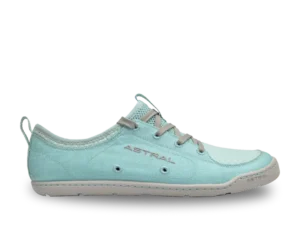
Breathable shoes help heat and moisture escape instead of trapping sweat against the skin.
Look for:
- mesh uppers
- lightweight materials
- moisture-resistant linings
- ventilation-focused designs
Breathable footwear can make a major difference for people with sweaty feet. Certain materials allow moisture to evaporate more effectively and help reduce that cold clammy feeling.
Here are some breathable shoe options that work especially well for excessive foot sweating.
2. Switch to Moisture-Wicking Socks
Your socks matter just as much as your shoes.
Unlike cotton, moisture-wicking materials pull sweat away from the skin instead of holding it against your feet.
Good options include:
merino wool
- alpaca fiber
- bamboo blends
- synthetic performance fabrics
Many people notice that simply switching sock materials dramatically reduces cold clammy feet.
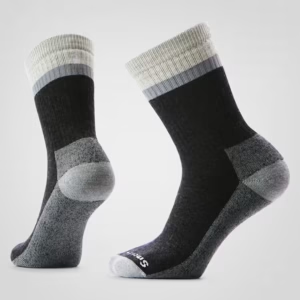
Here are some moisture-wicking sock options designed specifically for sweaty feet.
3. Change Socks During the Day
If your feet sweat heavily, changing socks once or twice daily can help keep your feet drier and warmer.
Keeping an extra pair in your backpack, desk, or car can make a surprisingly big difference.
4. Improve Circulation
Improving blood flow may help reduce persistent coldness.
Helpful habits include:
- standing and moving regularly
- stretching feet and ankles
- avoiding overly tight footwear
- staying physically active throughout the day
Even small movement breaks can help if you sit for long periods.
5. Manage Stress and Anxiety
If anxiety worsens your symptoms, reducing stress responses may help limit flare-ups.
Helpful techniques may include:
- deep breathing exercises
- short walks
- mindfulness practices
- grounding techniques
- improving sleep quality
Stress-related sweating is extremely common and often overlooked.
6. Consider Antiperspirants for Excessive Sweating
Even if your feet feel cold, excessive sweating may still be the main issue driving symptoms.
For people with plantar hyperhidrosis, foot antiperspirants can help reduce moisture buildup significantly.
Here are some antiperspirants that work especially well for sweaty feet.
FAQ About Cold and Sweaty Feet
Can anxiety cause cold and sweaty feet?
Yes. Anxiety activates the body’s stress response, which can constrict blood vessels while simultaneously triggering sweating in the hands and feet.
Can hyperhidrosis make feet feel cold?
Yes. Excess sweat evaporates from the skin and creates a cooling effect, which can make feet feel unusually cold or clammy.
Why are my feet cold even while wearing socks?
If socks trap moisture instead of wicking it away, sweat can cool against the skin and leave feet feeling cold even when covered.
Are cold sweaty feet dangerous?
Usually not. However, persistent symptoms combined with numbness, pain, discoloration, or circulation issues should be evaluated by a healthcare provider.
Why do my feet sweat in winter?
Sweat glands can remain overactive even during cold weather. Heavy socks and insulated shoes may also trap moisture and worsen sweating.
Final Thoughts
Cold and sweaty feet can be frustrating, uncomfortable, and surprisingly difficult to manage — especially when symptoms happen daily.
Whether the cause is hyperhidrosis, anxiety, circulation issues, or simply moisture-trapping footwear, most people can improve symptoms by focusing on airflow, moisture control, and overall foot health.
And if symptoms persist or worsen over time, a healthcare provider can help identify possible underlying causes and discuss treatment options.