
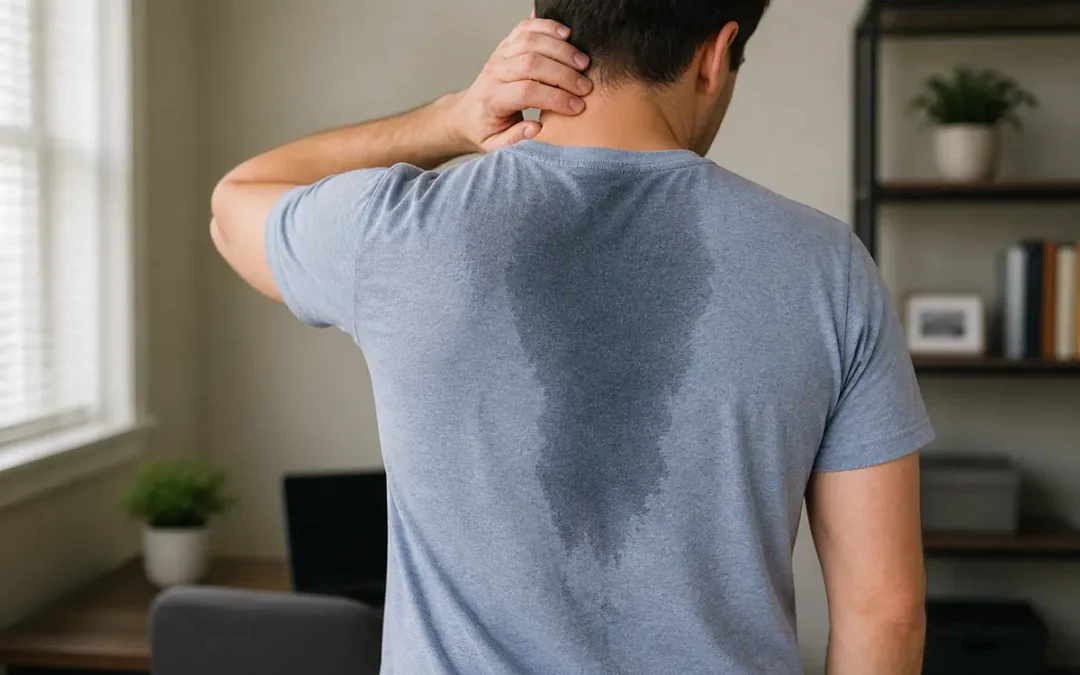
If you’ve ever looked down and noticed a dark patch spreading across your shirt, you’re not alone. Back sweat can show up fast—and often at the worst possible times. Maybe it happens during a meeting, while sitting in class, or even when you’re not doing anything physical at all.
So what’s going on?
If you’re asking why is my back always sweaty, the answer usually isn’t just “because it’s hot.” Your back is one of the easiest places for sweat to build up thanks to heat, clothing, and how your body regulates temperature. And when that moisture gets trapped, it leads to the frustrating problem of sweating through your shirt back, even in mild conditions.
The good news is that back and chest sweating is manageable once you understand what’s causing it. In this guide, we’ll break down the most common reasons it happens—and more importantly, what you can do to actually stop it.
Why Your Back Gets So Sweaty
Back sweating isn’t random. There are a few consistent reasons this area tends to sweat more than others—and most of them have to do with how heat and airflow are handled.
Large Sweat Gland Concentration
Your back has a high density of sweat glands, especially across the upper and mid-back. These glands activate to regulate body temperature, even during low levels of activity.
That means your back can start sweating earlier—and more consistently—than you expect.
Heat + Trapped Fabric
Unlike your arms or legs, your back is almost always covered. That creates a perfect setup for heat to build up under your clothing.
If your shirt doesn’t allow airflow, your body compensates by producing more sweat to cool itself down. The result is a cycle:
heat builds → sweating increases → moisture gets trapped → sweating continues.
Stress and Anxiety
Sweating isn’t just physical—it’s also triggered by your nervous system.
If you’ve ever noticed your back sweating more in social or high-pressure situations, stress is likely playing a role. This type of sweating can feel more sudden and harder to control.
Body Composition and Insulation
Carrying more body mass can increase heat retention, especially in areas like the torso. More insulation means your body has to work harder to cool itself, which leads to more sweating.
Hyperhidrosis (When It’s More Than Normal)
If you’re dealing with excessive back sweating that happens frequently, heavily, or without clear triggers, it could be a form of localized hyperhidrosis.
This doesn’t mean something is wrong—it just means your sweat glands are more active than average.
Is Excessive Back Sweating Normal?
In most cases, yes—excessive back sweating is still within the range of normal, especially if:
- it happens in warm environments
- you’re wearing heavier clothing
- it improves when you cool down
Where it starts to stand out is when:
- sweating happens at rest
- it soaks through clothing regularly
- it feels disproportionate to the situation
That’s when it’s worth paying closer attention and adjusting your approach.
Why You Sweat Through Your Shirt (Even When It’s Not Hot)
One of the most frustrating parts of back sweating is how unpredictable it feels. You’re not exercising. The weather isn’t extreme. And yet, your shirt ends up soaked.
This usually comes down to a combination of trapped heat, poor airflow, and fabric choice—not just how much you sweat.
Your clothing is holding heat against your body
Your back naturally produces heat throughout the day, especially when you’re sitting or leaning against a surface. When you wear tight or non-breathable clothing, that heat gets trapped instead of escaping.
As your skin temperature rises, your body responds by producing sweat to cool you down. The problem is, there’s nowhere for that heat—or the moisture—to go.
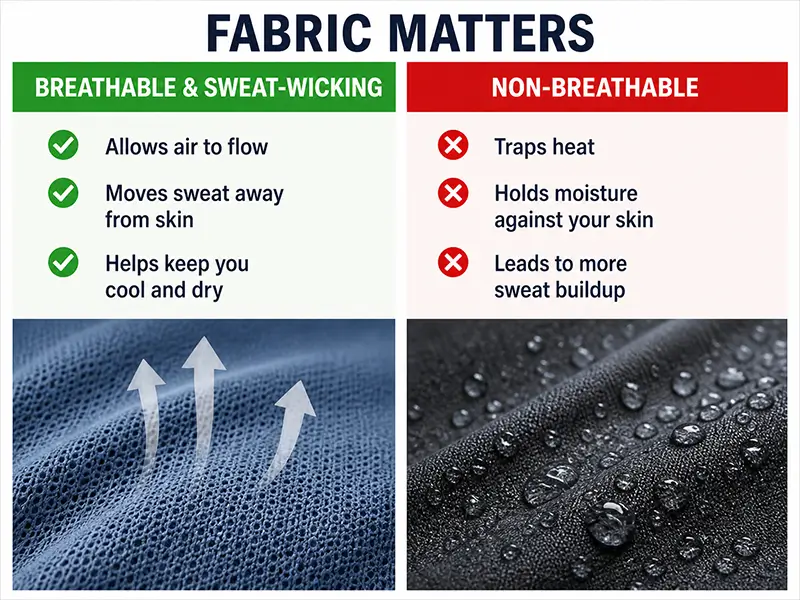
Certain fabrics make sweating worse
Not all shirts handle sweat the same way.
Materials like polyester and other synthetic blends tend to:
- trap heat
- reduce airflow
- hold moisture against your skin
This creates the perfect environment for visible back sweat stains, even if you’re not sweating excessively.
On the other hand, breathable fabrics like cotton or moisture-wicking performance blends can help disperse sweat more evenly, making it less noticeable.
Pressure and contact increase sweat buildup
Back sweat is often worse when you’re:
- sitting in a chair
- leaning against a surface
- wearing a backpack
That constant contact limits airflow and increases heat buildup in one specific area. Over time, sweat collects faster than it can evaporate, which is why you may notice a concentrated patch forming right down the middle of your back.
Layering can either help—or make things worse
Wearing multiple layers might seem like a bad idea, but it depends on what those layers are doing.
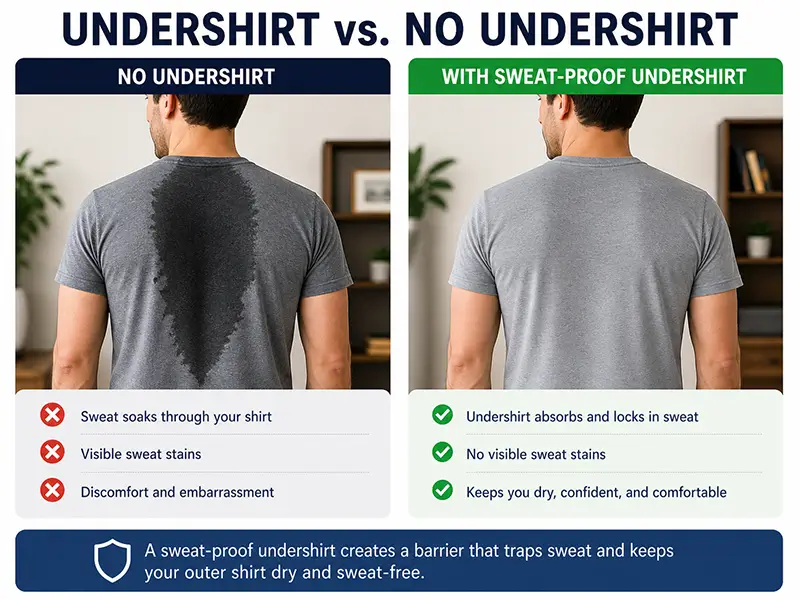
A standard undershirt can actually trap more heat and moisture, making sweating worse. But a sweat-proof or moisture-wicking undershirt is designed to absorb and disperse sweat before it reaches your outer layer.
That’s a key difference—and one of the simplest ways to reduce visible sweating without changing your entire routine.
It’s not always about sweating “too much”
You don’t need to be sweating excessively to sweat through your shirt.
If heat is trapped and moisture can’t evaporate, even normal sweat levels will build up and become visible. That’s why this problem often feels random or out of proportion.
How to Stop Back Sweat (Step-by-Step)
If you want to reduce back sweating, you don’t need to eliminate sweat completely—you need to control heat, airflow, and moisture.
Here’s what actually works.
1. Switch to Breathable, Sweat-Wicking Fabrics
Start with your shirts.
Look for:
- lightweight cotton
- moisture-wicking blends
- athletic fabrics designed for airflow
Avoid thick, heavy materials and anything that traps heat against your skin.
2. Wear Sweat-Proof Undershirts
This is one of the most effective upgrades you can make.
Sweat-proof undershirts are designed to:
- absorb sweat at the source
- prevent it from reaching your outer shirt
- spread moisture out so it’s less visible
If you regularly deal with sweat through your shirt back, this alone can make a noticeable difference.
👉 Check out my full review of the best undershirts for excessive sweating
3. Use Antiperspirant on Your Back and Chest
Most people only think of antiperspirant for underarms—but it can be used on larger areas too.
For back and chest:
- sprays and lotions work best
- apply at night for better results
- focus on high-sweat zones
This helps reduce how much sweat is produced in the first place.
👉 Here are my picks of the best antiperspirants for heavy sweating
4. Reduce Heat and Friction
Small changes go a long way:
- wear looser-fitting clothes
- avoid constant back contact when possible
- limit heavy layering
Less friction + better airflow = less sweat buildup.
5. Manage Stress-Triggered Sweating
If your sweating spikes in certain situations, it’s not just physical.
Simple adjustments help:
- pause and cool down before stressful moments
- avoid rushing when possible
- stay hydrated
You don’t need complicated techniques—just reduce triggers where you can.
How to Stop Chest Sweat (If It’s Not Just Your Back)
Back sweating often overlaps with chest sweating too much, especially in warmer conditions.
The same strategies apply, but with a few tweaks:
- use lightweight, breathable fabrics across the torso
- apply antiperspirant to the upper chest area
- choose undershirts that cover both chest and back zones
If both areas are involved, treating them together works better than isolating one.
Quick Fixes For Back Sweating
Sometimes you need a fast solution.
If your back is already sweating:
- keep an extra shirt on hand to use as a backup. I somtimes keep one in my office or car in case I need to make a quick swap
- bring a small handheld fan with you. These work great for spot cooling (and drying) specific areas on the go
- keep a hand towel in your desk or vehicle
These won’t stop sweating—but they will reduce how noticeable it is.
What Doesn’t Work for Back Sweat
A lot of common advice misses the mark.
Here’s what tends to fail:
- regular deodorant (not designed to reduce sweat)
- thick or heavy fabrics
- home or "natural" remedies
- relying on one quick fix instead of a system
If you’ve tried basic solutions and nothing changed, this is usually why.
When Back Sweating Might Be a Medical Issue
If your sweating is:
- constant
- heavy
- happening without triggers
…it may be worth looking into hyperhidrosis.
You don’t need to jump straight to medical treatments, but recognizing when sweating is outside the norm helps you choose better solutions.
Related Sweating Problems You Might Notice
Back sweating rarely exists on its own.
You might also deal with:
- excessive underarm sweating
- sweaty hands in social situations
- excessive foot sweating
- facial sweating
Addressing multiple areas together often leads to better overall results.
Final Thoughts: You’re Not “Just Sweaty” - There’s a Fix
Back sweating can feel random and frustrating—but it’s not something you just have to live with.
Once you understand what’s driving it—heat, airflow, and moisture—you can start making changes that actually work.
You don’t need a perfect solution. You just need the right combination of:
- better fabrics
- smarter layering
- targeted sweat control
And once those pieces are in place, the problem becomes a lot more manageable.