
Foot smell is embarrassing, frustrating, and far more common than most people realize. If you’ve tried washing your feet, changing socks, or spraying deodorizer only to have the odor return, you’re not alone.
The good news is that there are effective remedies for foot smell — but they work best when you understand what’s actually causing the problem and address it at the source.
This guide covers fast remedies, natural options, and long-term prevention strategies to help you get rid of foot odor for good.
What Causes Foot Smell?
Foot smell doesn’t come from sweat alone. It’s caused by a combination of moisture, bacteria, and the environment your feet live in every day.
Sweat + Bacteria: The Real Reason Feet Smell
Your feet contain more sweat glands than almost any other part of your body. When your feet sweat, moisture builds up inside socks and shoes. Bacteria thrive in warm, damp environments and feed on sweat, producing unpleasant odors as a byproduct.
No bacteria = no smell.
No moisture = no bacteria.
That’s why controlling sweat is key.
If foot odor keeps coming back even after washing and powders, the real issue is often excess moisture — which is why using a clinical antiperspirant for sweaty feet can make a big difference.
Why Foot Odor Is Worse for People Who Sweat More
If you have naturally sweaty feet or foot hyperhidrosis, you’re more likely to struggle with odor. Excess sweat:
-
Soaks into socks
-
Gets trapped in shoes
-
Creates ideal conditions for bacteria and fungus
This is why basic hygiene alone often isn’t enough.
Can Shoes and Socks Make Foot Smell Worse?
Absolutely. Non-breathable shoes, cheap synthetic socks, and wearing the same shoes every day all trap moisture. Even clean feet can start to smell if shoes never fully dry.
Best Remedies for Foot Smell That Work Fast
If you need relief now, these remedies are your best starting point.
Wash Feet Properly (What Most People Do Wrong)
A quick rinse in the shower isn’t enough. To reduce odor:
-
Wash feet daily with soap
-
Focus on the toes and between them
-
Use a washcloth or soft brush to remove bacteria
Antibacterial or antifungal soaps can help if odor is persistent.
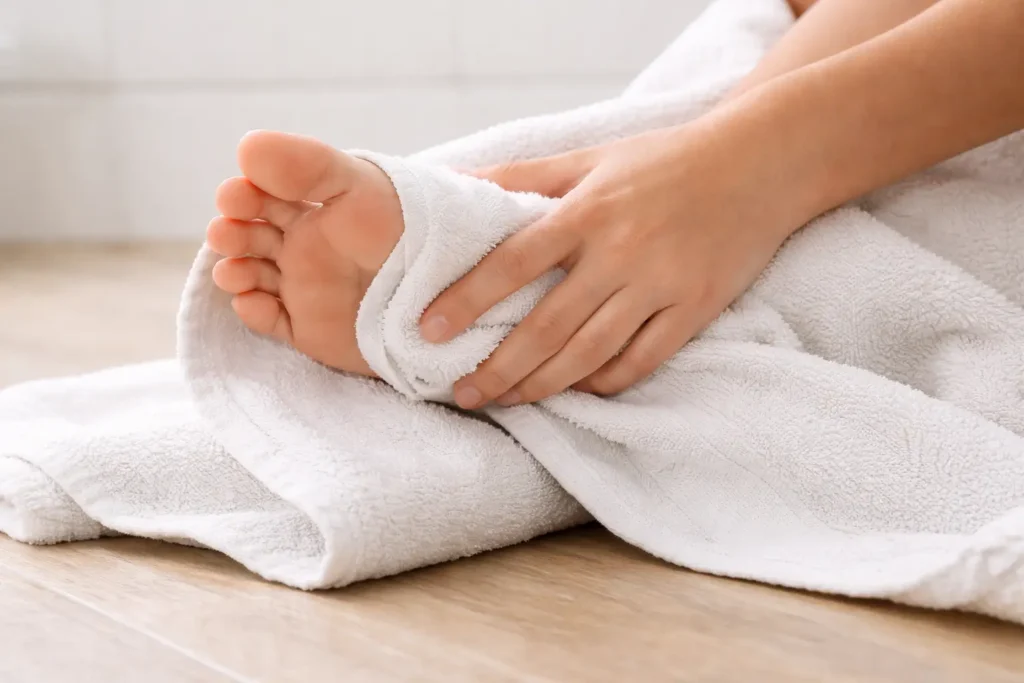
Dry Feet Completely Before Putting on Socks or Shoes
This step is often skipped — and it matters.
After washing:
-
Pat feet dry with a towel
-
Dry between toes
-
Wait a few minutes before putting on socks
Moisture left behind allows bacteria to grow immediately.
Use Foot Powder or Antiperspirant to Control Sweat
Foot powders absorb moisture and reduce odor-causing bacteria. Antiperspirants go one step further by reducing sweat production itself.
Look for products designed specifically for feet, especially if sweating is your main trigger.
👉 For a complete list, read my post on the best foot powders for sweaty feet.
Apply Antifungal or Antibacterial Treatments When Needed
If odor is severe, persistent, or accompanied by itching or peeling skin, fungus may be involved. Over-the-counter antifungal creams or sprays can help eliminate odor at its source.
Natural Remedies for Foot Smell
Many people prefer natural solutions, especially for mild to moderate foot odor.
Baking Soda for Foot Odor: Does It Actually Work?
Baking soda helps absorb moisture and neutralize odors. You can:
-
Sprinkle it into shoes overnight
-
Lightly dust feet before socks
It’s effective short-term but not a complete solution for heavy sweating.
Vinegar Foot Soaks to Kill Odor-Causing Bacteria
Vinegar changes the pH of your skin, making it harder for bacteria to survive.
How to use:
-
Mix one part vinegar with two parts warm water
-
Soak feet for 15–20 minutes
-
Dry thoroughly afterward
Avoid if you have cuts or cracked skin.
Essential Oils That Help Reduce Foot Smell
Tea tree oil and eucalyptus oil have antibacterial and antifungal properties. Add a few drops to a foot soak or dilute with a carrier oil before applying to skin.
Never apply essential oils undiluted.
When Natural Remedies Aren’t Enough
Natural remedies can help control mild odor, but if foot smell keeps returning, sweating is likely the underlying issue. In those cases, stronger treatments are usually necessary.
How to Prevent Foot Smell Long Term
Quick fixes are helpful, but prevention is where lasting results come from. If sweating is the root cause of your foot odor, learning how to stop sweaty feet can make a dramatic difference in preventing smell long term.
Reduce Excessive Foot Sweating
Since sweat fuels odor, controlling moisture is the most effective long-term remedy. Options include:
-
Foot antiperspirants
-
Prescription-strength treatments
-
Lifestyle changes that reduce heat and moisture
Addressing sweat often eliminates odor entirely.
Choose Socks That Keep Feet Dry
Sock material matters more than most people realize. Wearing the wrong socks can trap moisture all day, which is why choosing the best socks for sweaty feet is one of the easiest ways to reduce foot odor. Be sure to look for:
-
Moisture-wicking fabrics
-
Merino wool blends
-
Breathable athletic socks
Avoid cheap cotton socks that trap moisture.
Rotate Shoes to Let Them Fully Dry
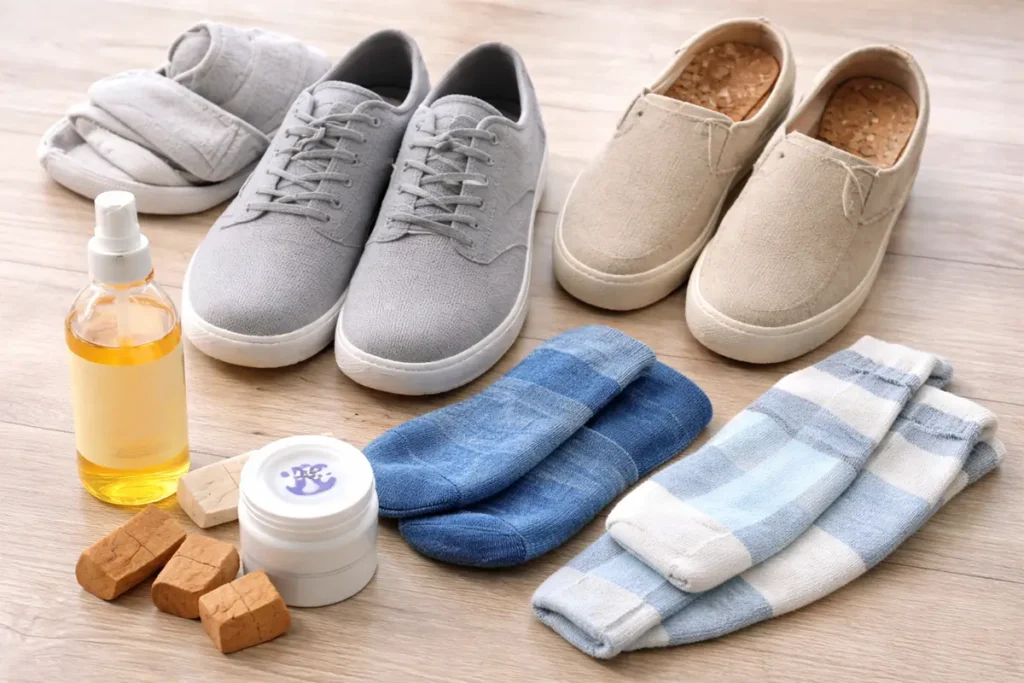
Wearing the same shoes daily prevents them from drying out completely. Rotate between pairs and allow at least 24 hours of drying time.
Removing insoles can speed this up.
Use Shoe Deodorizers and Drying Methods
Shoe sprays, cedar shoe trees, and moisture-absorbing inserts all help reduce odor buildup inside footwear.
Best Shoes and Socks for Preventing Foot Odor
Your footwear choices can either solve or worsen foot smell. Shoes that don’t breathe trap sweat and bacteria, so finding the best shoes for sweaty feet can significantly reduce odor buildup.
Why Breathable Shoes Matter
Breathable materials allow moisture to escape instead of trapping it against your feet. Mesh and leather generally perform better than plastic or rubber-based shoes.
Materials to Avoid If You Have Smelly Feet
Avoid:
-
Non-breathable synthetics
-
Rubber soles with no ventilation
-
Shoes with poor airflow
These create a sealed environment where bacteria thrive.
Best Sock Fabrics for Sweaty or Smelly Feet
Top choices include:
-
Merino wool
- Alpaca fiber
-
Bamboo blends
-
Performance athletic fabrics
These help keep feet dry and reduce odor naturally.
When Foot Smell Is a Sign of Hyperhidrosis
For some people, foot odor isn’t just a hygiene issue — it’s a medical one.
Symptoms of Excessive Foot Sweating
Signs include:
-
Constant damp feet
-
Socks soaked within hours
-
Odor that returns quickly after washing
This may indicate plantar hyperhidrosis.
Why Regular Remedies Don’t Always Work
If sweating is excessive, powders and sprays may only mask odor temporarily. Without controlling sweat, bacteria will keep returning.
Treatments for Foot Hyperhidrosis
Managing excessive sweating often requires targeted hyperhidrosis treatments that go beyond basic hygiene or odor-masking products.Treatment options range from clinical-strength antiperspirants to prescription therapies and devices. Managing sweat often resolves odor completely.
When to See a Doctor About Foot Smell
Most cases can be handled at home, but some require medical attention.
Signs of Fungal or Bacterial Infections
See a doctor if you notice:
-
Persistent itching
-
Cracked or peeling skin
-
Redness or burning
-
Odor that doesn’t improve with treatment
Prescription Treatments for Severe Cases
Doctors can prescribe stronger antifungals, antiperspirants, or other therapies when over-the-counter options fail.
Frequently Asked Questions
What is the fastest remedy for foot smell?
Washing thoroughly, drying completely, and using a foot antiperspirant or powder provides the quickest relief.
Can foot odor go away permanently?
Yes — especially when excessive sweating is controlled and shoes and socks are managed properly.
How often should I wash my feet to prevent odor?
Once daily is enough for most people, but those with heavy sweating may benefit from washing twice daily.
Why do my feet smell even after showering?
Odor often returns because moisture remains trapped in socks or shoes, allowing bacteria to regrow quickly.
Final Thoughts: Finding the Right Remedy for Foot Smell
Foot smell isn’t just unpleasant — it can affect confidence, comfort, and daily life. The most effective remedy combines proper hygiene, sweat control, and smart footwear choices.
If you’ve tried everything and odor keeps coming back, excessive sweating may be the real issue — and addressing that can finally put the problem to rest.
👉 If you struggle with sweat-related odor in other areas too, you may also want to read my guide to the best moisture-wicking underwear for men — it can make a huge difference in staying dry and minimizing odor.