
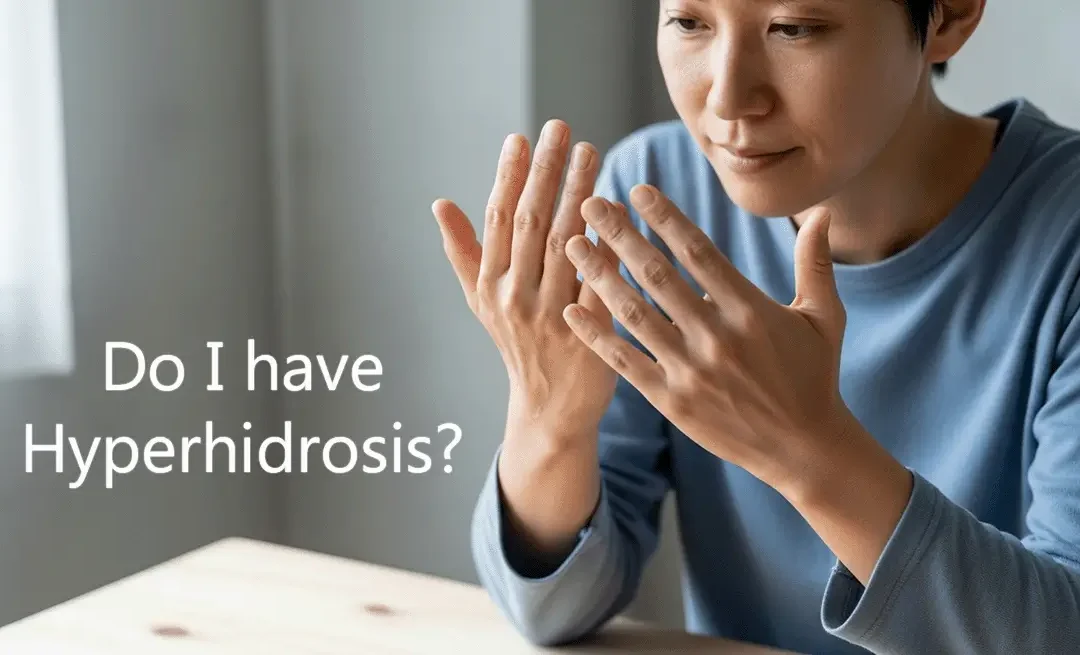
Excessive sweating can be frustrating, embarrassing, and confusing—especially when you’re not sure whether what you’re experiencing is “normal” or something more. If you’ve ever wondered how to tell if you have hyperhidrosis, you’re not alone.
Hyperhidrosis is a medical condition characterized by excessive sweating that goes beyond what’s needed to regulate body temperature. Many people live with it for years before realizing there’s a name for what they’re experiencing—and that help is available.
This guide will walk you through the key signs, symptoms, and differences between normal sweating and hyperhidrosis, so you can better understand what’s happening with your body and decide what to do next.
What Is Hyperhidrosis?
Hyperhidrosis is a condition that causes abnormally excessive sweating, even when you’re not hot, exercising, or stressed. The sweating often occurs symmetrically and can interfere with daily activities, work, and social interactions.
There are two main types:
Primary Hyperhidrosis
-
Usually starts in childhood or adolescence
-
Affects specific areas like hands, feet, underarms, or face
-
Not caused by another medical condition
-
Often runs in families
Secondary Hyperhidrosis
-
Caused by an underlying medical condition or medication
-
Can occur anywhere on the body
-
Often begins in adulthood
-
May happen during sleep
Understanding which type you may have is an important step toward proper treatment.
📌 Persistent sweating despite treatment is common in hyperhidrosis — this explains why antiperspirants don’t always work for some people even with proper use.
Common Signs You May Have Hyperhidrosis
While everyone sweats, hyperhidrosis has some clear indicators that go beyond typical perspiration.
You Sweat Excessively Without a Clear Trigger
If you sweat heavily even when you’re cool, resting, or calm, this is one of the strongest signs of hyperhidrosis. Many people notice sweating while sitting still, working at a desk, or relaxing at home.
Sweating Is Localized to Specific Areas
Hyperhidrosis often affects:
-
Palms of the hands
-
Soles of the feet
-
Underarms
-
Face or scalp
- Chest and back
If your symptoms include cold and sweating feet, this can also be a sign of plantar hyperhidrosis.
If you consistently sweat in the same areas on both sides of the body, that symmetry is another clue.
Sweat Interferes With Daily Life
Ask yourself:
-
Do you avoid handshakes?
-
Do your feet soak through socks and shoes?
-
Do sweat marks show through clothing within minutes?
-
Do you change clothes multiple times per day?
For some people, symptoms show up in specific situations like sweaty hands while driving, which can be both uncomfortable and unsafe. For others, it might be more casual, like sweaty hands while gaming.
When sweating impacts confidence, productivity, or relationships, it’s more than a minor inconvenience.
Over-the-Counter Antiperspirants Don’t Help
If clinical-strength antiperspirants barely make a difference—or stop working quickly—this may indicate hyperhidrosis rather than normal sweating.
❓ Curious whether natural remedies work? See my post where I break down the most popular natural options and discuss how effective they are at treating hyperhidrosis.
If this resonates, try the Sweat Control Reset
A simple, easy to follow daily routine to help manage hyperhidrosis. No gimmicks or huge time investment. Just practical steps that are proven to be effective.
How Much Sweating Is “Too Much”?
There’s no exact measurement you can do at home, but doctors generally consider sweating excessive when:
-
It happens at least once per week
-
It’s bilateral and symmetrical
-
It started before age 25 (for primary hyperhidrosis)
-
It disrupts daily activities
-
It stops during sleep (primary type)
If several of these apply to you, hyperhidrosis is a strong possibility.
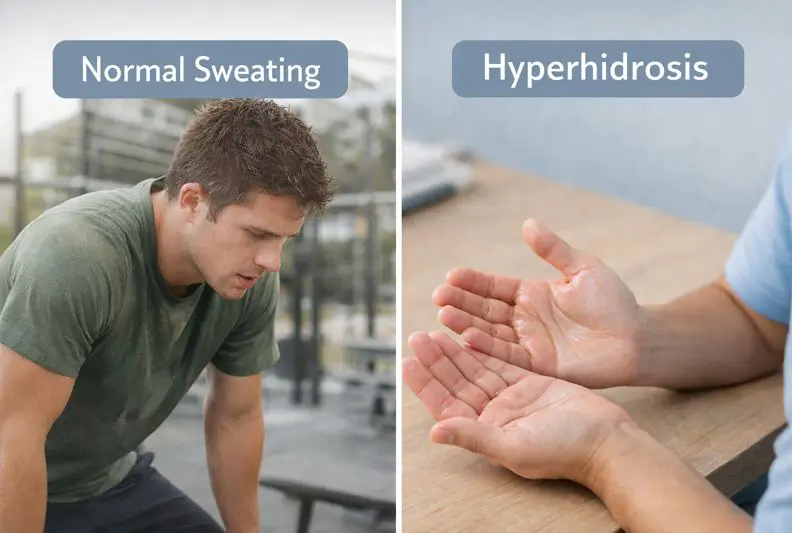
Is It Hyperhidrosis or Normal Sweating?
Here’s a simple comparison:
Normal Sweating
-
Triggered by heat, exercise, or stress
-
Stops once the trigger is gone
-
Varies day to day
-
Doesn’t significantly impact daily life
Hyperhidrosis
-
Occurs without triggers
-
Persistent and frequent
-
Affects specific body areas
-
Causes emotional or practical distress
If your sweating feels excessive, unpredictable, and uncontrollable, it’s worth looking deeper.
Can Anxiety Cause Hyperhidrosis?
Anxiety can worsen sweating, but it’s often not the root cause. Many people with hyperhidrosis sweat first—and then feel anxious because of it.
This distinction matters because treating the sweating itself often reduces anxiety, not the other way around.
For many people, symptoms become especially noticeable in professional environments, where excessive sweating at work can affect confidence and daily performance.
When Should You Talk to a Doctor?
You should consider speaking with a healthcare professional if:
-
Sweating starts suddenly or worsens rapidly
-
You sweat during sleep
-
Sweating is accompanied by weight loss, fever, or chest pain
-
Over-the-counter solutions haven’t helped
A doctor can rule out secondary causes and confirm whether you have hyperhidrosis.
If you’re unsure how to bring it up, this guide on how to talk to your doctor about excessive sweating can help you feel more confident going into the visit.
Frequently Asked Questions About Hyperhidrosis
How do I know if I have hyperhidrosis or just sweat a lot?
You may have hyperhidrosis if you sweat excessively without clear triggers like heat or exercise, if the sweating happens regularly, and if it interferes with daily activities. Hyperhidrosis sweating is often localized to areas such as the hands, feet, underarms, or face and tends to occur symmetrically on both sides of the body.
What are the first signs of hyperhidrosis?
Early signs of hyperhidrosis often include:
-
Sweaty palms or feet even when resting
-
Sweat soaking through socks or clothing quickly
-
Difficulty gripping objects due to moisture
-
Avoiding social situations because of sweating
For many people, symptoms begin in childhood or the teenage years.
Can hyperhidrosis start suddenly?
Primary hyperhidrosis usually develops gradually at a young age. However, sudden or worsening sweating in adulthood may indicate secondary hyperhidrosis, which can be caused by medical conditions or medications. If sweating starts suddenly, it’s important to talk to a doctor.
Does hyperhidrosis happen during sleep?
Primary hyperhidrosis typically stops during sleep. If you wake up drenched in sweat, this may point to secondary hyperhidrosis and should be evaluated by a healthcare professional.
Is hyperhidrosis caused by anxiety?
Anxiety can worsen sweating, but it does not usually cause hyperhidrosis. Many people with hyperhidrosis experience anxiety because of their sweating, not the other way around. Treating the sweating itself often helps reduce anxiety symptoms.
Can hyperhidrosis go away on its own?
Many people who realize they have hyperhidrosis eventually wonder "does hyperhidrosis go away with age?", especially after dealing with excessive sweating for years. Hyperhidrosis does not usually go away without treatment, but symptoms can fluctuate over time. The good news is that there are effective management options available, ranging from topical treatments to medical therapies.
Is hyperhidrosis common?
Yes. Hyperhidrosis affects an estimated 2–5% of the population, though many people remain undiagnosed. Because excessive sweating is often embarrassing to talk about, the condition is more common than most people realize.
What to Do If You Think You Have Hyperhidrosis
If this article resonates with you, know this: you’re not weak, unhygienic, or alone. Hyperhidrosis affects millions of people, and there are effective treatments available.
Next steps may include:
-
Improving antiperspirant application techniques
-
Exploring lifestyle adjustments
-
Learning about medical and non-invasive treatments. For people with sweaty hands or feet, one of the most effective non-invasive treatments is iontophoresis. I explain how it works and who it helps most in my guide to iontophoresis for sweaty hands and feet.
-
Talking to a doctor who understands the condition
Once you confirm excessive sweating isn’t just situational, choosing the best option for treating hyperhidrosis becomes critical.
Awareness is the first step—and you’ve already taken it.