
This post contains affiliate links. If you make a purchase, I may earn a commission.
If your feet smell bad even after washing them regularly, sweat may be the real problem. Excess moisture creates the perfect environment for odor-causing bacteria, which is why many people with sweaty feet also struggle with persistent foot odor.
The good news is that using the right antiperspirant for smelly feet can make a major difference. By reducing sweat production, foot antiperspirants help limit the moisture that bacteria thrive on. In many cases, this not only helps control odor but also keeps your socks and shoes fresher throughout the day.
In this guide, we’ll cover how antiperspirants work for sweaty feet, what ingredients to look for, how to apply them correctly, and some of the best options for controlling foot odor caused by sweating.
| Product | Best For | Strength | Pros | Cons |
|---|---|---|---|---|
| Certain Dri Prescription Strength | Severe Foot Sweating | Very Strong | Clinical-level sweat reduction, long-lasting | May irritate sensitive skin |
| ZeroSweat Antiperspirant Lotion | Moderate Foot Sweating | Strong | Gentler formula, good sweat control | Less effective for extreme sweating |
| SweatBlock Foot Lotion | Light to Moderate Sweating | Moderate to Strong | Easy to apply, dependable daily control | May require reapplication |
| Carpe Foot Lotion | Sensitive Skin | Moderate | Skin-friendly, comfortable for everyday use | Not ideal for heavy sweating |
| SweatBlock Body Wipes | Precise Application | Moderate to Strong | Very easy to apply, dries quickly | Only 10 wipes per pack |
| Duradry Body Wipes | On the Go Use | Moderate | Great Value, Unscented | Not as strong as other options |
Best Antiperspirants for Smelly Feet
Here are the top products I have personally tried and would recommend to anyone looking to stop foot sweat and get rid of smelly feet.
Best for Heavy Sweating
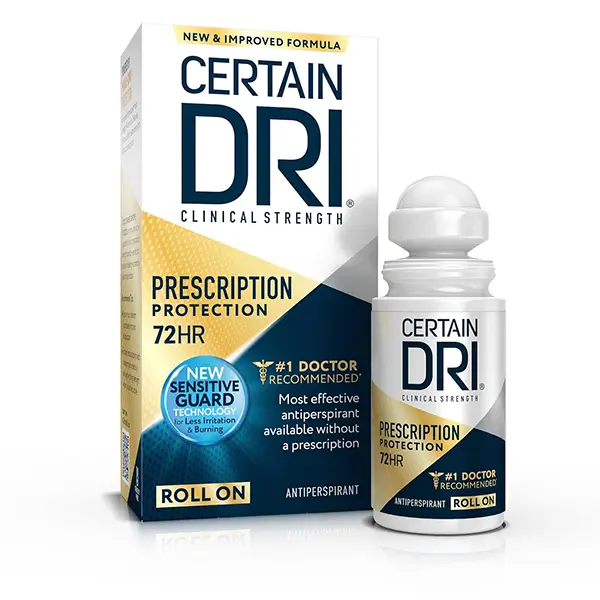
Certain Dri Prescription Strength Clinical Antiperspirant
Credit: Amazon
Best for: Excessive sweating that doesn't respond to milder products.
Active Ingredient: Aluminum Chloride 15%
This is one of the strongest OTC antiperspirants you can find. It's formulated to work overnight and can dramatically decrease the amount of sweat produced. Due to its strength, you should apply a thin layer and see how your skin reacts. Then you can increase the amount of product, if necessary.
Pros:
- Most effective at stopping sweat
- Long-lasting results
- Works overnight
Cons:
- Can irritate skin if used too much
- Needs careful application
Real-world take: I have used Certain Dri roll on antiperspirant for many years now and it's been my gold standard for reducing sweat. It's reliable, effective, and has a very reasonable price. I also like that it goes on clear and there is no fragrance. Often times you can scale back application frequency once you've established a good base of protection. If your feet sweat heavily, and you just want something that works, this one gets the job done.
Best for Moderate Sweating
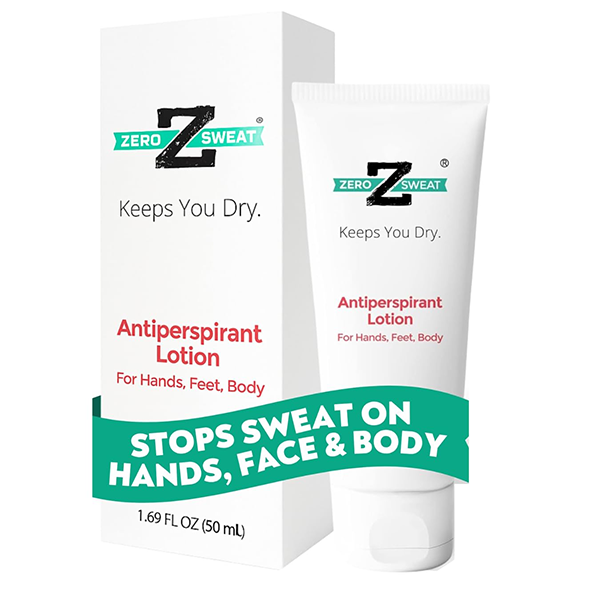
ZeroSweat Antiperspirant Lotion
Credit: Amazon
Best for: Moderate sweating.
Active Ingredient: Aluminum Sesquichlorohydrate 20%
This antiperspirant comes in a lotion form and is easy to apply. They recommend you wash and fully dry the area first, then apply a small pea-sized amount. After rubbing the product into the skin, you must wait for it to air dry and fully absorb.
Pros:
- Easy to apply
- Long-lasting results
- Reasonable price
Cons:
- Can irritate skin if used too much
- Leaves a residue on skin surface
Real-world take: If you don't need the strongest possible sweat control, or if your skin doesn't tolerate aluminum chloride very well, ZeroSweat is an excellent choice. The active ingredient can be less irritating while also providing solid control. The lotion form is very easy to apply to feet and as a bonus you also get added sweat protection on your hands when applying. Just be aware that if your hands don't sweat much, you will likely want to wash them after applying so that your skin doesn't get too dry. I also noticed the lotion leaves behind a bit of residue, but that didn't really bother me since it was being used on my feet. As with most antiperspirants, I recommend applying it at night for better results.
Best for Light to Moderate Sweating
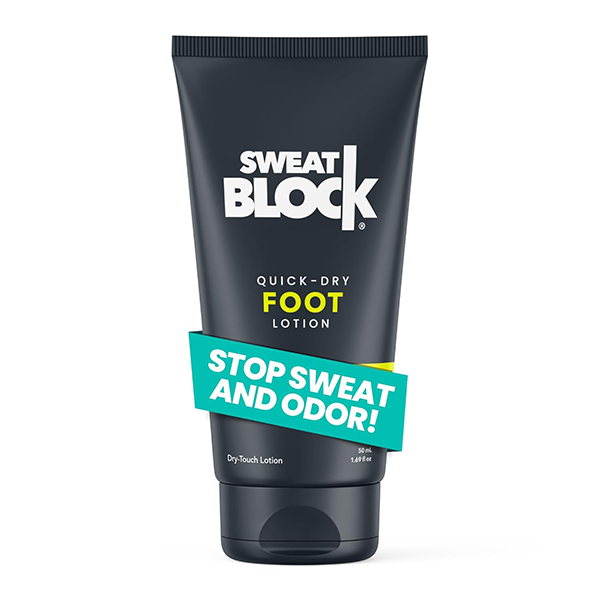
SweatBlock Quick-Dry Foot Lotion
Credit: Amazon
Best for: Light to moderate sweating.
Active Ingredient: Aluminum Sesquichlorohydrate 17.5%
Another lotion option that is easy to apply. The application process is also similar to ZeroSweat. It does have a lower concentration of the active ingredient, making it good for people needing light to moderate sweat control.
Pros:
- Easy to apply
- Long-lasting results
- Good texture without residue
Cons:
- Not strong enough for heavier sweating
- May require multiple daily applications at first
Real-world take: SweatBlock is another excellent lotion option for those who have moderate foot sweat. I really like the texture and quick-dry formula of this one. It goes on smoothly and doesn't have that filmy residue feel after applying it. Because it is a lower strength, you may need to apply more often during the first few days of use to develop a good baseline of protection, and then reduce frequency to maintain.
Best for Sensitive Skin
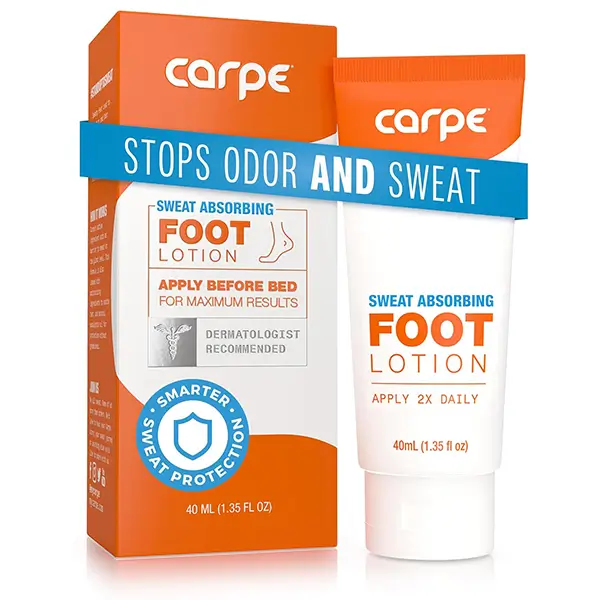
Carpe Sweat Absorbing Foot Lotion
Credit: Amazon
Best for: Sensitive Skin.
Active Ingredient: Aluminum Sesquichlorohydrate 15%
Carpe is a popular name in the antiperspirant field. Their foot lotion has the same active ingredient as the other lotions in this list, but at a lower concentration making it ideal for those who have more sensitive skin.
Pros:
- Easy to apply
- Mild eucalyptus scent
- Gentle on skin
Cons:
- Not strong enough for heavier sweating
- Requires consistent daily use for maximum effectiveness
Real-world take: If you experience mild foot sweating, or have sensitive skin that requires a more gentle product, Carpe foot lotion is definitely worth trying. In my testing I found it to be effective at reducing sweat, but it does require consistent daily application. It also takes some time to reach that maximum protection level. I didn't notice significant reduction until after several weeks of consistent use. As for the texture, it's similar to SweatBlock with minimal residue feel. The lotion does have a mild eucalyptus scent which can be nice, as well.
Best for Precise Application
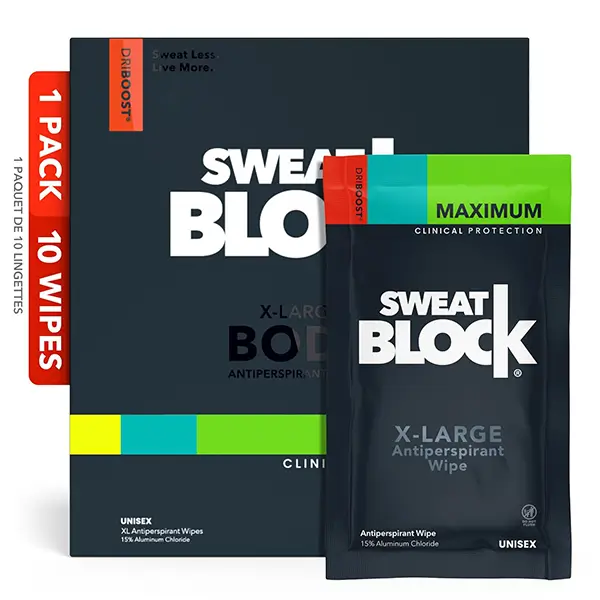
SweatBlock Body Wipes
Credit: Amazon
Best for: Precise Application.
Active Ingredient: Aluminum Chloride 15%
SweatBlock antiperspirant wipes are designed to be applied to multiple areas of the body, including feet. The wipe form allows for easy application to specific areas, such as between toes. It's recommended the area be washed and dried before applying at bedtime and then washed again in the morning.
Pros:
- Easy to apply
- Excellent sweat control
- Works quickly
Cons:
- Could irritate sensitive skin
- Price is on the higher end
Real-world take: These antiperspirant wipes from SweatBlock are great for applying to feet. The towlets make it super easy to apply, the product goes on clear, and it allows you to thoroughly cover the area. I also like that you can use them on other parts of the body, if needed. Since they contain aluminum chloride, they are very effective for heavier sweating. This also means you do not need to apply as frequently once you build a solid base of protection. In my experience, I only needed to reapply a couple times a week. The main drawback is price, as each package only contains 10 wipes.
Best for On-the-go Use
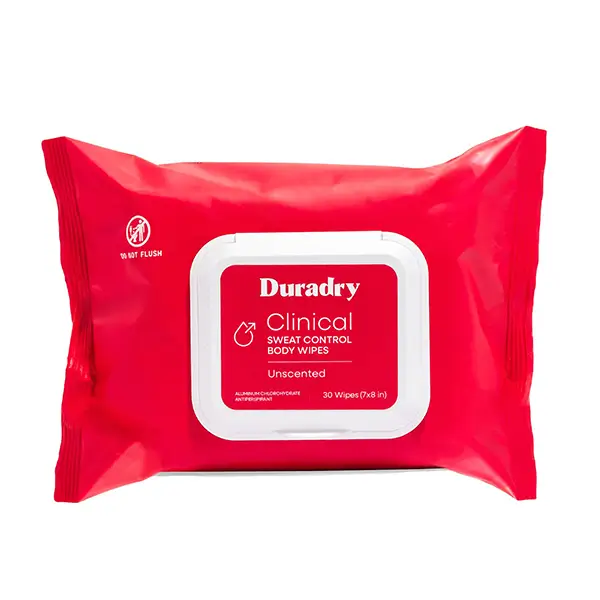
Duradry Body Wipes
Credit: Amazon
Best for: On-the-go Use.
Active Ingredient: Aluminum Chlorohydrate 20%
These sweat control wipes from Duradry are also made for full body use. They come unscented, go on clear, and dry quickly. As with the other products on this list, it is recommended that you apply to a clean, dry surface for best results.
Pros:
- Easy application
- Good sweat control
- Reasonably priced
Cons:
- Not as strong as the SweatBlock wipes
Real-world take: If you're looking for a better value, the Duradry wipes are an excellent choice. With 30 wipes per pack, I was able to get consistent sweat protection for several weeks. They weren't quite as strong as SweatBlock, but still significantly reduced my sweat level. The small package, number of wipes, and ease of application makes these a great option for on-the-go use. It's super easy to toss these in a backpack or tote and use them on the fly. Like the SweatBlock wipes, they can be used on other areas of the body, which is another added bonus.
Can Antiperspirant Help Smelly Feet?
Yes — especially if your foot odor is caused by excessive sweating.
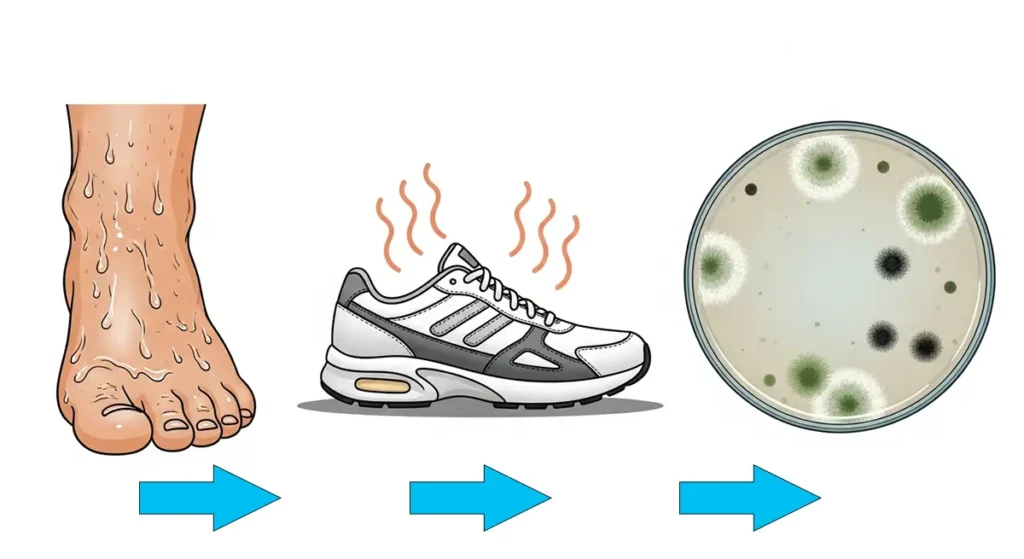
Many people assume sweat itself smells bad, but sweat is actually odorless. The problem starts when moisture gets trapped inside socks and shoes. Warm, damp environments allow bacteria to multiply quickly, and those bacteria create the unpleasant smell associated with sweaty feet.
That’s why antiperspirants can be so effective.
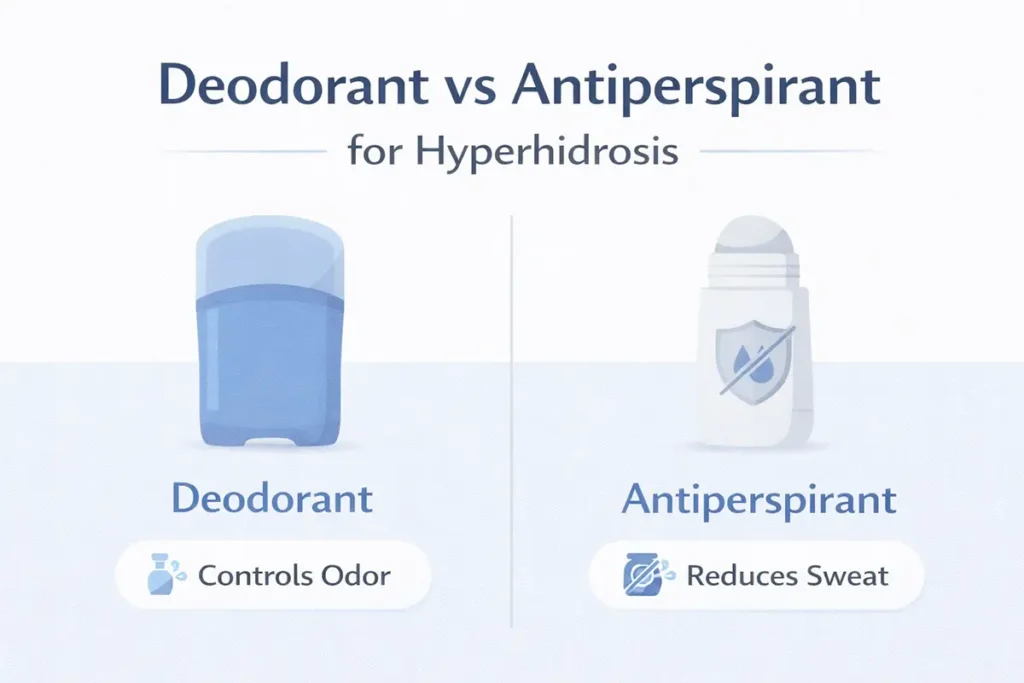
Unlike regular deodorants that mainly mask odor with fragrance, antiperspirants reduce the amount of sweat your feet produce in the first place. Less moisture means fewer bacteria and less odor buildup throughout the day.
For some people, simply using a clinical strength antiperspirant for feet can dramatically improve both sweating and odor within a few days.
If your feet sweat heavily no matter the season or activity level, you may also be dealing with plantar hyperhidrosis, a condition that causes excessive sweating on the soles of the feet.
Why Feet Sweat and Smell So Much
Feet naturally contain a high concentration of sweat glands. In fact, each foot has roughly 250,000 sweat glands, which explains why feet can sweat so heavily compared to other parts of the body.
Unfortunately, shoes and socks trap heat and moisture. Once sweat builds up, bacteria begin feeding on dead skin cells and sweat residue. This process produces the strong odor many people struggle with.
Several factors can make sweaty foot odor worse, including:
- Wearing the same shoes every day
- Non-breathable footwear
- Synthetic socks that trap moisture
- Stress or anxiety
- Hot weather
- Exercise
- Hyperhidrosis
For some people, odor becomes noticeable even after a short time in shoes. Others may notice that their shoes continue smelling bad even after their feet are washed. That usually means bacteria and moisture have already built up inside the footwear itself.
Antiperspirant vs Deodorant for Smelly Feet
A lot of people use these terms interchangeably, but deodorants and antiperspirants work very differently.
| Antiperspirant | Deodorant |
|---|---|
| Reduces sweat production | Masks odor |
| Uses aluminum-based ingredients | Uses fragrance and antibacterial agents |
| Helps keep feet dry | Helps reduce smell temporarily |
| Targets the source of moisture | Mainly treats symptoms |
If sweating is the main reason your feet smell, antiperspirants are usually the better choice.
That doesn’t mean deodorants are useless. Some foot deodorants contain antibacterial ingredients that can help reduce odor-causing bacteria. However, if your feet stay constantly damp, odor often returns quickly because the moisture problem was never addressed.
Using an antiperspirant for sweaty feet attacks the problem closer to the source.
What to Look for in an Antiperspirant for Smelly Feet
Not all foot antiperspirants work equally well. Some are designed for mild sweating, while others are strong enough for severe foot perspiration.
Here are the most important things to look for.
Aluminum Chloride
Aluminum chloride is one of the most effective ingredients for reducing excessive sweating. It works by temporarily blocking sweat ducts, which lowers the amount of sweat reaching the skin’s surface.
Clinical-strength formulas often contain higher concentrations of aluminum chloride and tend to work best for people with severe sweaty feet.
If you’ve tried basic products without success, this ingredient is usually worth looking for.
Clinical Strength Formulas
People with heavy foot sweating often need stronger products than standard over-the-counter deodorants.
Clinical strength antiperspirants for feet are specifically designed for excessive perspiration and generally provide longer-lasting sweat protection.
However, stronger formulas can sometimes irritate sensitive skin, especially if applied to damp or freshly shaved skin.
Sprays vs Roll-Ons vs Creams
Foot antiperspirants come in several different forms.
Sprays are convenient for daily use, especially before putting on shoes. Roll-ons and creams usually provide stronger sweat protection but require a little more time and consistency.
The best antiperspirant for feet often depends on how severe your sweating is and how comfortable you are with the application process.
How to Apply Antiperspirant to Your Feet Correctly
Many people assume foot antiperspirants don’t work when the real issue is improper application.
Here’s how to get the best results.
1. Wash and Dry Your Feet Thoroughly
Your feet should be completely dry before applying antiperspirant. Moisture can dilute the active ingredients and increase irritation.
Pay special attention to drying between the toes.
2. Apply at Night
Nighttime application is usually most effective because sweat glands are less active while you sleep.
This gives the antiperspirant time to form temporary plugs inside the sweat ducts.
3. Use a Thin Layer
More product does not necessarily mean better results.
Applying too much can increase irritation and leave residue inside socks or shoes.
4. Wear Clean Socks the Next Day
Fresh socks help reduce bacteria and prevent odor from building back up quickly.
Moisture-wicking socks are especially helpful if you deal with excessive sweating regularly.
5. Stay Consistent
Most antiperspirants for sweaty feet work best after several consecutive applications.
Some people notice improvement within a few days, while others may need one to two weeks for maximum results.
Other Ways to Stop Smelly Feet
Even the best antiperspirant for smelly feet works better when combined with good moisture-control habits.
Wear Moisture-Wicking Socks
Cotton socks often hold moisture against the skin for long periods. Moisture-wicking socks help move sweat away from the feet and dry more quickly.
This can significantly reduce odor throughout the day.
Rotate Your Shoes
Wearing the same shoes every day prevents them from fully drying out.
If possible, alternate between at least two pairs of shoes to reduce moisture buildup and bacterial growth.
Use Foot Powder
Foot powders can absorb moisture and help keep feet drier between antiperspirant applications.
Some powders also contain antifungal or antibacterial ingredients.
Choose Breathable Shoes
Shoes made from breathable materials allow better airflow and reduce heat buildup.
Heavy, insulated footwear often traps moisture and worsens sweaty feet smell.
Wash Your Feet Daily
Regular washing helps remove sweat, bacteria, and dead skin cells that contribute to odor.
Antibacterial soap may help some people, especially if odor is severe.
When Antiperspirants Don’t Work
Sometimes foot odor persists even after reducing sweat.
If that happens, another issue may be contributing to the problem.
Athlete’s Foot
Fungal infections can cause odor, itching, peeling skin, and irritation between the toes.
Treating the fungal infection may be necessary before odor improves fully.
Severe Hyperhidrosis
People with plantar hyperhidrosis sometimes require stronger treatments than over-the-counter products.
Options may include:
- Prescription antiperspirants
- Iontophoresis
- Botox injections
- Medical evaluation from a dermatologist or podiatrist
Shoe Contamination
Old shoes can continue harboring bacteria even after your feet are clean.
In some cases, replacing heavily contaminated shoes is necessary to fully eliminate odor.
Medical Conditions
Certain medical conditions can contribute to unusual body odor or excessive sweating.
If symptoms appear suddenly or become severe, it’s a good idea to speak with a healthcare professional.
Frequently Asked Questions
Can you use regular antiperspirant on your feet?
Yes, many people use regular antiperspirants on their feet successfully. However, products specifically designed for feet or excessive sweating may work better for severe perspiration.
What is the best antiperspirant for sweaty feet?
The best foot antiperspirant depends on how severe your sweating is. Clinical-strength formulas with aluminum chloride usually work best for excessive sweating and persistent odor.
How long does foot antiperspirant take to work?
Some people notice improvement within a few days, but stronger results often develop after one to two weeks of consistent use.
Is foot odor caused by sweat?
Sweat itself is odorless. Foot odor develops when bacteria break down sweat and dead skin cells in warm, moist environments.
Should I use deodorant or antiperspirant on my feet?
If sweating is the main issue, antiperspirants are usually more effective because they reduce moisture directly. Deodorants mainly mask odor temporarily.
Can antiperspirants help shoe odor too?
Yes. By reducing foot sweat, antiperspirants can help prevent moisture from soaking into shoes, which may reduce long-term shoe odor buildup.
Final Thoughts
If your feet constantly smell despite good hygiene, excessive sweating may be the underlying cause. In that case, using an antiperspirant for smelly feet can be one of the most effective ways to control both moisture and odor.
The key is consistency. Applying a quality foot antiperspirant correctly — especially at night on dry skin — can significantly reduce sweating over time. Pairing that with moisture-wicking socks, breathable shoes, and proper foot hygiene usually produces the best results.
For mild cases, basic antiperspirant may be enough. For more severe sweating, clinical-strength products designed for hyperhidrosis often work much better.
And if nothing seems to help, it may be worth looking into underlying conditions like plantar hyperhidrosis or fungal infections that require additional treatment.